Introduction
Choosing the best porcelain tile solutions for high-traffic commercial flooring is one of the most important decisions in commercial construction because the wrong material can create long-term maintenance costs, repairs, and operational disruptions.
High-traffic spaces such as hotels, shopping malls, hospitals, restaurants, and corporate buildings require flooring that can handle constant wear while maintaining aesthetics and performance.
That’s why architects, developers, contractors, and procurement teams increasingly choose porcelain tiles for commercial flooring. They offer superior durability, low maintenance requirements, design flexibility, and better long-term ROI compared to many traditional flooring materials.
According to IBEF, India exported 589 million sq. meters of tiles products, making it the world’s second-largest ceramic exporter—highlighting the growing global demand for durable porcelain solutions.
In this guide, we’ll explore the best porcelain tile solutions for high-traffic commercial flooring and help businesses make smarter long-term investments.
What Are the Best Porcelain Tiles for High-Traffic Commercial Flooring?
For most high-traffic commercial spaces, full-body porcelain tiles are considered the best choice because they offer exceptional durability, low water absorption, scratch resistance, and long-term cost efficiency.
Large-format porcelain tiles work best for luxury commercial spaces like hotels and premium retail stores where aesthetics matter. Anti-slip porcelain tiles are ideal for hospitals, restaurants, kitchens, and other safety-focused environments.
The right solution depends on traffic intensity, maintenance requirements, safety needs, and design preferences.
Why High-Traffic Commercial Floors Fail
Most commercial flooring failures begin during the buying stage when businesses prioritize low upfront costs over long-term performance. Materials that seem affordable during installation often create higher expenses through repairs, maintenance, and early replacement.
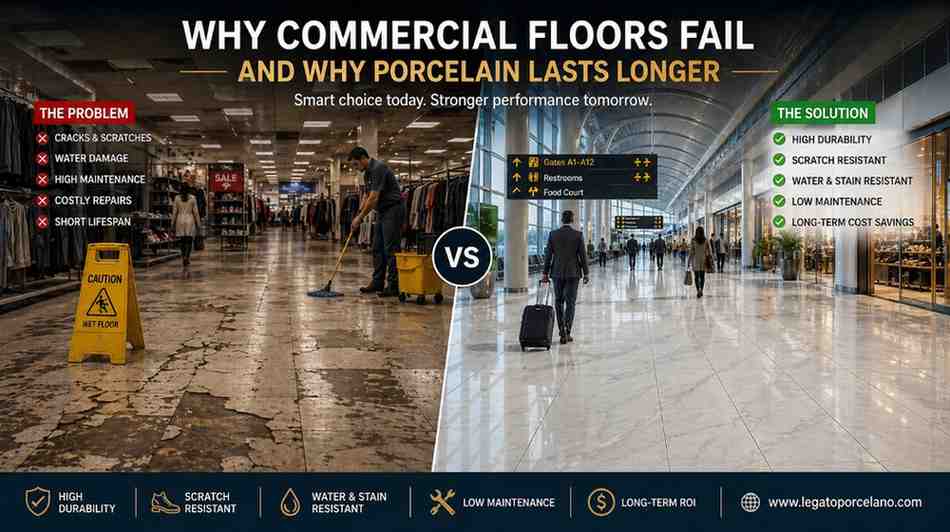
In high-traffic environments like malls, hospitals, airports, and retail stores, flooring failures can disrupt operations, increase maintenance costs, and negatively impact customer experience.
Common reasons commercial floors fail include:
- choosing residential-grade materials
- poor installation quality
- moisture exposure
- heavy rolling loads
- chemical damage
- weak maintenance systems
Businesses that think long-term typically avoid these problems by investing in better materials upfront. Commercial buyers should also follow recognized tile installation standards to reduce long-term flooring failures.
Understanding Traffic Levels Before Selecting Commercial Tiles
Not every commercial space requires the same level of flooring durability. Selecting tiles based on actual foot traffic, rolling load pressure, and daily wear helps businesses avoid overspending—or worse, underinvesting in flooring that fails too early.
| Traffic Level | Daily Usage Intensity | Common Commercial Spaces | Key Flooring Challenges | Recommended Tile Type |
|---|---|---|---|---|
| Light Traffic | Low foot movement | Boutique stores, executive cabins, private offices, luxury showrooms | Focus on aesthetics, minimal wear | Polished porcelain tiles, decorative large-format tiles |
| Medium Traffic | Regular daily movement | Restaurants, schools, clinics, mid-sized retail stores | Spills, scratches, frequent cleaning | Matte porcelain tiles, double charge vitrified tiles |
| Heavy Traffic | Constant daily movement | Hotels, hospitals, corporate buildings, shopping malls | Continuous foot traffic, equipment movement | Full-body porcelain tiles, high-density vitrified tiles |
| Extreme Traffic | Very high + heavy loads | Airports, railway stations, metro stations, public infrastructure | Heavy luggage movement, carts, long-term abuse | Heavy-duty full-body porcelain tiles, industrial-grade commercial tiles |
Key Benefits of Porcelain Flooring
Porcelain flooring remains one of the most preferred choices for commercial spaces because it solves both operational and design challenges. It handles heavy foot traffic, resists moisture, stains, scratches, and chemicals, and requires far less maintenance than materials like hardwood, vinyl, or natural stone.
Modern manufacturing technology also allows porcelain tiles to replicate premium materials such as marble, wood, concrete, and natural stone without the maintenance burden. This gives businesses both durability and design flexibility.
Commercial buyers should also evaluate technical specifications before finalizing tiles. Look for low water absorption rates (typically below 0.5%), high PEI ratings for wear resistance, proper slip resistance for wet areas, and tile thickness that matches traffic requirements.
These technical factors often determine long-term performance in demanding commercial environments.
Best Commercial Porcelain Tile Types for High-Traffic Flooring
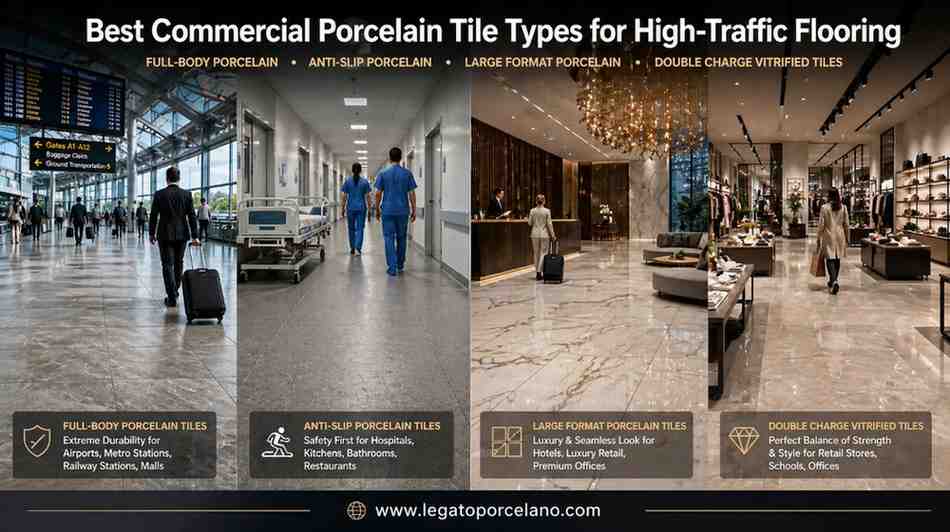
Not every commercial project requires the same type of porcelain tile. The ideal choice depends on traffic intensity, safety requirements, design preferences, and environmental conditions. Selecting the right tile type helps businesses improve durability while reducing long-term maintenance and replacement costs.
Full-Body Porcelain Tiles
Full-body porcelain tiles are designed for extreme durability. Since the color and design run throughout the entire tile body, scratches, chips, and wear remain far less visible over time. These tiles are commonly used in airports, railway stations, shopping malls, and public infrastructure projects where flooring experiences constant heavy traffic and rolling loads.
Double Charge Vitrified Tiles
Double charge vitrified tiles offer an excellent balance between durability and aesthetics. They are widely used in hotels, corporate offices, and retail stores where businesses need strong flooring performance without compromising visual appeal. These tiles work especially well in spaces that prioritize both design and functionality.
Anti-Slip Porcelain Tiles
Anti-slip porcelain tiles are ideal for environments where safety is a major concern. Their textured surface provides better grip in moisture-prone areas such as restaurants, commercial kitchens, hospitals, and poolside spaces. They help reduce slip-related accidents while maintaining durability.
Large Format Porcelain Tiles
Large format porcelain tiles are often chosen for premium commercial interiors because they create a seamless and modern appearance with fewer grout lines. They are commonly installed in hotel lobbies, premium office spaces, and luxury retail stores where businesses want a sophisticated, high-end visual experience.
Choosing the Right Tile Size for Commercial Spaces
Tile size directly impacts installation speed, grout visibility, design aesthetics, and long-term maintenance. Selecting the right size helps commercial spaces balance functionality with visual appeal.
| Tile Size | Best Applications | Why It Works |
|---|---|---|
| 600×600 mm | Offices, schools, clinics | Cost-effective, easy to install, practical for everyday use |
| 600×1200 mm | Retail stores, hotels, corporate spaces | Creates a modern look with fewer grout lines |
| Large Slabs | Luxury commercial projects, hotel lobbies, premium showrooms | Delivers seamless, high-end aesthetics |
| 20mm Pavers | Outdoor walkways, terraces, commercial exterior areas | Built for outdoor durability and weather resistance |
Not every commercial project requires the same flooring material. In mixed-use developments, buyers often compare porcelain with other flooring categories before finalizing specifications. This guide on best tiles for flooring in 2026 provides broader material comparisons.
Best Flooring Solutions by Industry
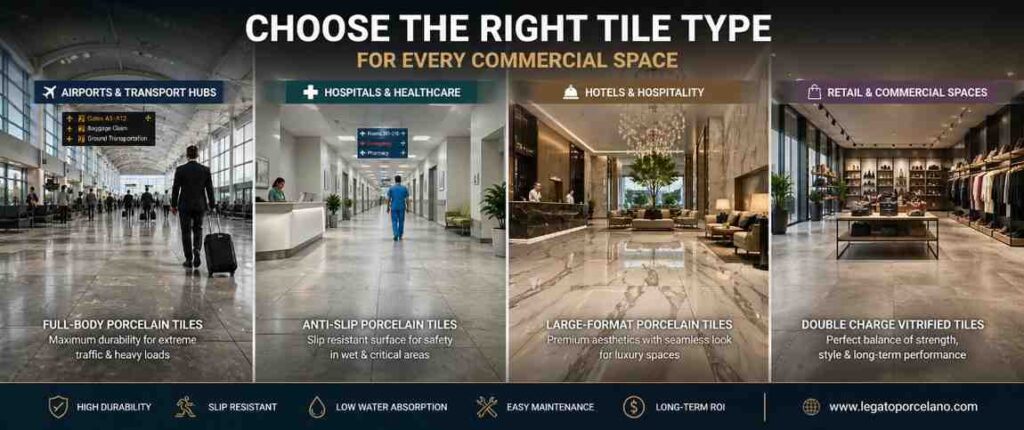
Different industries have different flooring requirements. While hospitals prioritize hygiene and slip resistance, hotels focus on aesthetics and durability. Retail stores often need scratch resistance, while airports demand maximum strength for constant heavy traffic.
| Industry | Key Need | Recommended Tile |
|---|---|---|
| Hotels | Luxury + durability | Large-format marble-look porcelain |
| Hospitals | Hygiene + safety | Matte anti-slip porcelain |
| Restaurants | Stain resistance | Anti-slip porcelain |
| Retail stores | Scratch resistance | Double charged vitrified |
| Airports | Extreme durability | Full-body porcelain |
| Offices | Modern aesthetics | Large-format porcelain |
| Schools | Cost efficiency | Durable matte porcelain |
Porcelain vs Other Flooring Materials
Many flooring materials appear affordable during installation, but their long-term repair, maintenance, and replacement costs often become significantly higher in commercial environments. This is where porcelain typically delivers stronger long-term ROI.
| Flooring Type | Lifespan | Maintenance | Replacement Frequency |
|---|---|---|---|
| Porcelain | 20–50 years | Low | Very Low |
| Vinyl | 5–15 years | Medium | Medium |
| Hardwood | 5–20 years | High | High |
| Carpet | 3–10 years | High | High |
| Natural Stone | 20+ years | High | Medium |
Businesses comparing multiple flooring options often evaluate porcelain, vitrified tiles, natural stone, vinyl, and hardwood before making final decisions. For a deeper comparison of vitrified categories, explore our guide on types of vitrified tiles in India.
Installation Matters More Than Most Buyers Realize
Even premium porcelain tiles can fail if installation quality is poor. Subfloor preparation, adhesive quality, grout selection, leveling accuracy, and expansion joints all impact long-term durability. Working with experienced commercial installers helps businesses avoid cracks, uneven surfaces, and premature failures.
Maintaining Commercial Porcelain Floors
One of porcelain flooring’s biggest advantages is low maintenance. Daily cleaning typically requires basic sweeping and mopping, while periodic deep cleaning helps maintain appearance in high-traffic zones. Annual inspections can help identify grout issues or minor repairs before they become costly problems.
Common Buyer Mistakes
Many businesses make avoidable mistakes during flooring selection.
These include:
- focusing only on price
- ignoring slip resistance
- choosing poor-quality suppliers
- selecting incorrect finishes
- overlooking installation quality
Avoiding these mistakes helps protect long-term investments.
How to Choose the Right Commercial Tile Manufacturer
Selecting the right manufacturer is just as important as choosing the right tile type. Product consistency, delivery timelines, certifications, and large-scale production capabilities can directly impact commercial project success.
For international buyers sourcing from India, Morbi remains one of the world’s largest ceramic manufacturing hubs. According to Gujarat government data, the region contributes nearly 80–90% of India’s tile exports, making it a major sourcing destination for global buyers.
Before finalizing a supplier, evaluate:
- manufacturing capacity
- product certifications
- export experience
- design variety
- quality consistency
- lead times
- customization capabilities
Many architects, builders, and importers prefer manufacturers that offer both large-format collections and commercial-grade durability standards for large projects. Legato Porcelano is one of several export-focused manufacturers serving global commercial buyers.
Frequently Asked Questions (FAQ’s)
Full-body porcelain tiles are often the best option for extremely high-traffic spaces because they offer excellent durability, scratch resistance, and low water absorption. Large-format and anti-slip porcelain tiles are also popular depending on design and safety requirements.
High-quality commercial porcelain tiles can last anywhere from 20 to 50 years depending on traffic volume, installation quality, and maintenance practices. Proper installation significantly increases lifespan.
Both porcelain and vitrified tiles perform well in commercial projects, but the right choice depends on durability needs, design preferences, traffic volume, and budget. Many buyers compare both before making final decisions.
Matte and anti-slip porcelain tiles are typically recommended for restaurants, hospitals, kitchens, and other moisture-prone areas because they offer better grip and improved safety.
600×600 mm and 600×1200 mm tiles are commonly used for offices, retail spaces, and hotels. Large slabs are often preferred for luxury commercial interiors that require seamless aesthetics.
Look for manufacturers with strong production capacity, export experience, certifications, and consistent product quality. Companies like Legato Porcelano are often considered by global buyers for large commercial projects because of their wide product range and export capabilities.
Final Thoughts
Choosing the right commercial flooring isn’t just about aesthetics—it directly impacts maintenance costs, safety, operational efficiency, and long-term ROI.
From full-body porcelain tiles for airports to anti-slip solutions for hospitals and large-format designs for premium retail spaces, the right selection depends on your project’s specific requirements.
Businesses that prioritize long-term durability over short-term savings often see better performance and lower replacement costs over time. Choosing the best porcelain tile solutions for high-traffic commercial flooring helps businesses reduce long-term operational costs.
