Introduction
Vitrified tiles have revolutionized the Indian flooring and wall cladding industry, offering unmatched durability, aesthetic versatility, and low maintenance. As architects, builders, and homeowners increasingly demand premium tile solutions, understanding the different types of vitrified tiles in India available in India becomes essential for making informed procurement and design decisions.
This comprehensive guide explores all major types of vitrified tiles manufactured and distributed across India, their technical specifications, applications, and comparative advantages. Whether you’re specifying tiles for a luxury residential project or sourcing bulk quantities for commercial developments, this resource will equip you with the knowledge needed to select the optimal vitrified tile solution.
What Are Vitrified Tiles?
Vitrified tiles are manufactured through a process called vitrification, where a mixture of silica, clay, and feldspar is baked at extremely high temperatures (above 1200°C). This process reduces porosity to less than 0.5%, creating a glass-like, non-porous surface that offers superior strength, water resistance, and stain resistance compared to traditional ceramic tiles.
For large construction or export projects, many buyers also evaluate the best porcelain tile manufacturer in India to ensure advanced production technology, consistent tile quality, and reliable international supply.
According to the India Brand Equity Foundation (IBEF), the Indian ceramic tile industry has grown rapidly due to construction demand and now plays a major role in global tile exports.
The Five Main Types of Vitrified Tiles in India
1. Soluble Salt Vitrified Tiles
Soluble salt vitrified tiles represent the most economical segment of the vitrified tile category. These tiles feature a design or pattern that penetrates approximately 2-3mm into the tile body, created by introducing soluble salts during the manufacturing process.
Key Characteristics:
- Pattern depth: 2-3mm beneath the surface
- Water absorption: Less than 0.5%
- Thickness range: 8-12mm
- Surface finish: Polished or matt
- Price range: Budget to mid-range
Applications: Residential flooring, light commercial spaces, areas with moderate foot traffic, apartments, and budget-conscious projects.
Advantages: Cost-effective, wide design variety, decent durability for residential use, good stain resistance when properly sealed.
Limitations: Pattern wears off over time in high-traffic areas, visible edge color difference when cut, requires careful installation.
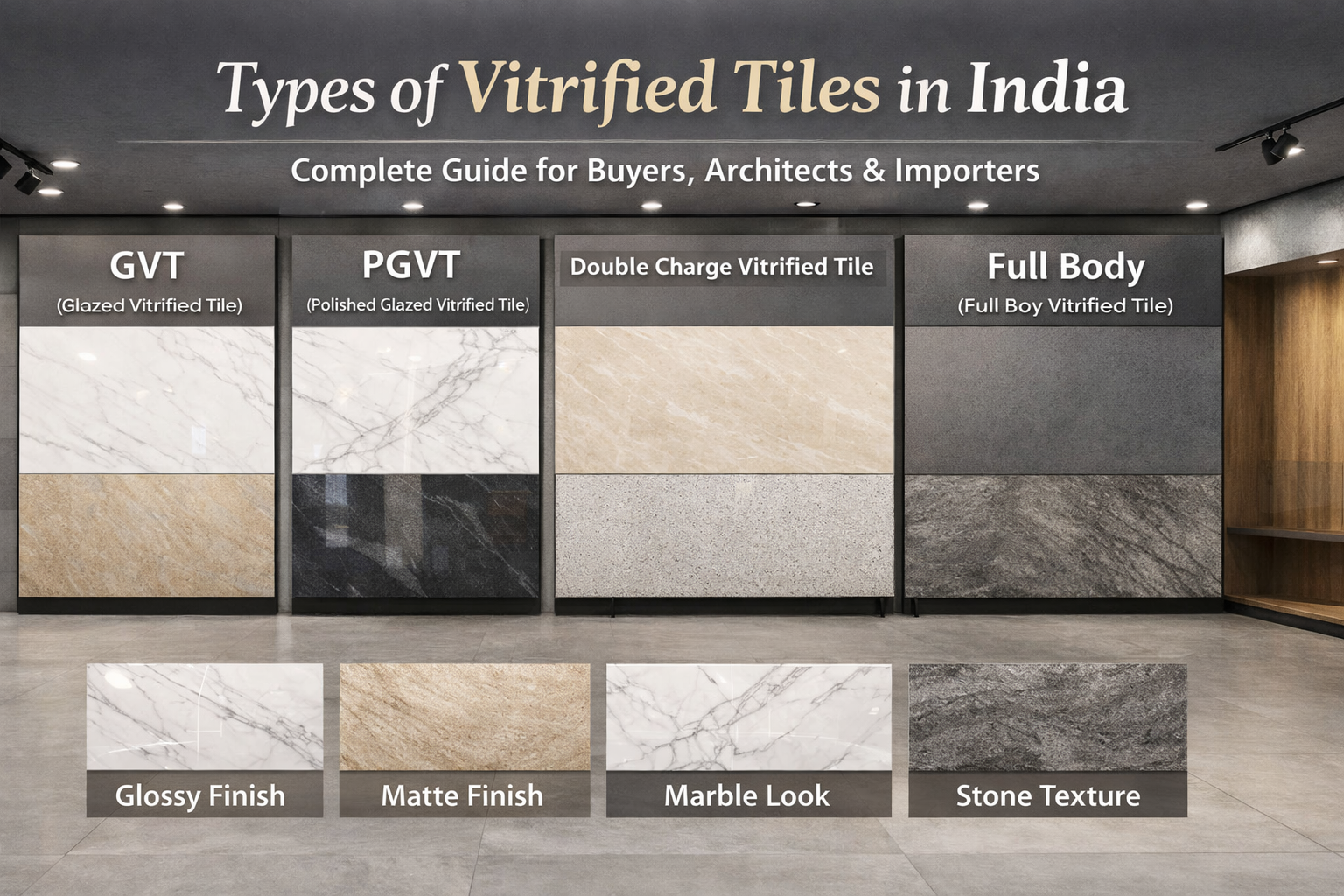
2. Double Charge Vitrified Tiles
Double charge vitrified tiles are manufactured using a specialized double-charging process where two layers of material are pressed together, creating a design that penetrates approximately 3-4mm into the tile body. This deeper penetration makes them significantly more durable than soluble salt variants.
Key Characteristics:
- Pattern depth: 3-4mm through-body design
- Water absorption: Less than 0.3%
- Thickness range: 10-12mm
- Breaking strength: Higher than soluble salt
- Surface hardness: 6-7 on Mohs scale
Applications: High-traffic commercial spaces, retail environments, corporate offices, hotels, airports, shopping malls, and institutional buildings.
Advantages: Enhanced durability, pattern remains visible even after wear, better resistance to abrasion, suitable for heavy foot traffic, maintains aesthetic appeal longer.
Limitations: Higher cost than soluble salt tiles, limited design options compared to glazed variants, still shows color difference at edges when cut.
3. Full Body Vitrified Tiles
Full body vitrified tiles are manufactured with uniform composition and color throughout the entire tile thickness, making them the most durable vitrified tile option available. The consistent body composition ensures that the tile appearance remains unchanged even with significant wear, chipping, or edge cutting.
Key Characteristics:
- Uniform color throughout entire thickness
- Water absorption: Less than 0.1%
- Thickness range: 10-20mm
- Breaking strength: Highest among vitrified tiles
- Wear resistance: Excellent, PEI rating 4-5
Applications: Industrial facilities, warehouses, production floors, heavy commercial applications, airports, metro stations, parking lots, and areas requiring maximum durability.
Advantages: No visible wear pattern, chips and cuts don’t show color difference, exceptional durability, ideal for heavy machinery areas, longest lifespan, minimal maintenance requirements.
Limitations: Limited design options (typically solid colors or subtle patterns), premium pricing, heavier weight requires stronger substrate support.
4. Glazed Vitrified Tiles (GVT)
Glazed vitrified tiles combine the strength of vitrified tile bodies with the aesthetic versatility of ceramic glazing. A layer of glaze is applied to the vitrified tile surface before firing, enabling unlimited design possibilities including realistic wood, marble, stone, fabric, and abstract patterns through digital printing technology.
Key Characteristics:
- Glazed surface layer over vitrified body
- Water absorption: Less than 0.5%
- Thickness range: 8-12mm
- Design versatility: Unlimited patterns and textures
- Surface options: Glossy, matt, rustic, textured
Applications: Residential spaces, designer projects, hospitality sector, boutique commercial spaces, feature walls, luxury bathrooms, living rooms, and areas where aesthetics are paramount.
Advantages: Unlimited design possibilities, realistic replication of natural materials, stain-resistant glazed surface, hygienic and easy to clean, wide color spectrum, textured finishes available, cost-effective way to achieve premium looks.
Limitations: Glaze may chip or scratch if subjected to heavy impact, not recommended for heavy industrial use, quality varies significantly between manufacturers, requires careful handling during installation.
5. Polished Vitrified Tiles (PVT)
Polished vitrified tiles undergo an additional mechanical polishing process after firing, creating a mirror-like glossy surface that reflects light beautifully. These tiles are manufactured without glazing, with the polish achieved through abrasive polishing of the vitrified tile surface.
Key Characteristics:
- Mirror-finish polished surface
- Water absorption: Less than 0.3%
- Thickness range: 10-12mm
- Surface hardness: 7-8 on Mohs scale
- Reflectivity: High gloss finish
Applications: Premium residential projects, luxury apartments, corporate lobbies, showrooms, galleries, upscale retail stores, and spaces requiring high aesthetic appeal.
Advantages: Premium glossy appearance, enhances space perception through light reflection, extremely hard and durable surface, sophisticated aesthetic, increases property value, suitable for both floors and walls.
Limitations: Shows scratches and scuff marks easily, slippery when wet (requires anti-skid treatment for certain areas), requires regular maintenance to preserve shine, higher cost, installation requires skilled labor.
Comparative Analysis: Choosing the Right Type
| Type | Durability | Cost | Design Options | Best For | Maintenance |
| Soluble Salt | Moderate | Low | Limited | Residential, Light Commercial | Low |
| Double Charge | High | Moderate | Moderate | Commercial, High Traffic | Low |
| Full Body | Excellent | High | Limited | Industrial, Heavy Duty | Very Low |
| Glazed (GVT) | Good | Moderate | Unlimited | Designer Spaces, Residential | Low |
| Polished (PVT) | High | High | Moderate | Premium Residential, Lobbies | Moderate |
Technical Considerations for Specification
Water Absorption and Porosity
All vitrified tiles maintain water absorption below 0.5% as per BIS standards, but variations exist. Full body tiles typically achieve less than 0.1%, making them ideal for wet areas, while soluble salt tiles may reach up to 0.5%. For exterior applications, swimming pool surrounds, or areas with moisture exposure, specify tiles with the lowest absorption rates.
Breaking Strength and Load Bearing
Breaking strength, measured in Newtons, indicates the load a tile can withstand before failure. Full body vitrified tiles offer the highest breaking strength (exceeding 2000N), followed by double charge variants. For areas supporting heavy equipment or vehicular traffic, minimum breaking strength of 1800N is recommended.
Surface Slip Resistance
Slip resistance becomes critical for safety, especially in commercial and institutional projects. Unpolished and textured GVT variants offer the best slip resistance (R10-R11 rating), while polished vitrified tiles require additional anti-skid treatments for wet areas. Always specify appropriate slip resistance ratings based on application.
Size and Thickness Options
The Indian market now offers vitrified tiles in sizes ranging from 600x600mm to 1200x2400mm large format tiles. Thickness varies from 8mm for wall tiles to 20mm for heavy-duty industrial applications. Large format tiles minimize grout lines and create seamless appearances but require perfectly level substrates and skilled installation.
Application-Specific Recommendations
For Residential Projects
Homeowners should consider glazed vitrified tiles for living areas and bedrooms, offering aesthetic versatility at reasonable costs. Double charge or polished vitrified tiles work well for high-traffic areas like hallways and foyers. Kitchen floors benefit from matt finish GVT for slip resistance, while bathrooms require low water absorption variants with anti-skid properties.
For Commercial Developments
Commercial projects demand durability alongside aesthetics. Double charge vitrified tiles offer the optimal balance for offices, retail stores, and hospitality projects. Entrance areas and high-traffic zones should utilize full body tiles to ensure longevity. Glazed variants can be specified for feature walls and decorative applications.
For Industrial Applications
Industrial facilities require full body vitrified tiles with minimum 15mm thickness and maximum breaking strength. Chemical resistance becomes crucial for pharmaceutical and chemical plants. Anti-static variants should be specified for electronics manufacturing facilities.
Quality Standards and Certifications
When sourcing vitrified tiles in India, ensure compliance with IS 15622:2006 standards set by the Bureau of Indian Standards. Reputable manufacturers like Legato Porcelano maintain certifications including ISO 9001 for quality management and ISO 14001 for environmental compliance. Request test certificates for water absorption, breaking strength, and chemical resistance before large-volume procurement.
Installation and Maintenance Considerations
Proper installation significantly impacts vitrified tile performance and longevity. Use appropriate tile adhesives based on substrate type and tile size. Large format tiles require specialized leveling systems and skilled applicators. Ensure adequate expansion joints every 3-4 meters to accommodate thermal expansion.
Maintenance requirements vary by type. Polished tiles require regular cleaning with pH-neutral cleaners to maintain shine, while full body and double charge tiles need minimal maintenance beyond routine cleaning. Avoid acidic cleaners that can damage surfaces and grout lines.
Emerging Trends in Vitrified Tiles
Today, many global buyers source products from Morbi because leading porcelain tile manufacturers in India operate advanced factories and export high-quality tiles worldwide.
According to Mordor Intelligence, the Indian ceramic tiles market is expected to grow significantly due to urbanization and infrastructure development.
Large format tiles (800x1600mm and 1200x2400mm) are gaining popularity for creating seamless contemporary spaces. Wood-look planks in vitrified formats offer the warmth of wood with tile durability. Textured and three-dimensional surfaces add tactile dimensions to interior design.
Making the Right Choice with Legato Porcelano
Selecting the appropriate vitrified tile type requires balancing aesthetic preferences, functional requirements, budget constraints, and long-term performance expectations. Legato Porcelano offers comprehensive tile solutions across all vitrified tile categories, manufactured using state-of-the-art technology and quality-controlled processes that meet international standards.
For architects and specifiers, Legato Porcelano provides technical support including sample tiles, CAD drawings, and specification assistance. Builders and developers benefit from competitive bulk pricing and reliable supply chains. Dealers and distributors can access diverse product portfolios catering to varied market segments.
Understanding the distinct characteristics, advantages, and ideal applications of each vitrified tile type empowers you to make informed decisions that deliver lasting value, whether for residential comfort, commercial functionality, or industrial durability.
Conclusion
Understanding the different types of vitrified tiles in India helps buyers, architects, and project developers select the most suitable flooring solution. Options such as double charge, full body, soluble salt, GVT, PGVT, and nano vitrified tiles are widely used across residential and commercial construction projects.
However, as modern architecture continues to evolve, many builders are increasingly choosing advanced porcelain tiles and large-format porcelain slabs because of their superior strength, lower porosity, and broader design possibilities.
India’s rapidly growing ceramic tile industry, particularly the Morbi manufacturing cluster, has positioned the country as a major global supplier of high-quality tiles for both domestic and international markets.
FAQ’S
What are the main types of vitrified tiles used in India?
The most common types of vitrified tiles include double charge vitrified tiles, full body vitrified tiles, glazed vitrified tiles (GVT/PGVT), and soluble salt vitrified tiles. Each type offers different durability, design options, and suitability for residential or commercial flooring.
Which vitrified tiles are best for heavy-traffic areas?
Full body vitrified tiles and double charge vitrified tiles are best for heavy-traffic areas like malls, airports, and offices because they are highly durable, scratch-resistant, and maintain their appearance even after long-term use.
What is the difference between GVT and PGVT tiles?
GVT (Glazed Vitrified Tiles) use digital glaze printing for designs, while PGVT (Polished Glazed Vitrified Tiles) are polished after glazing, creating a glossy finish. PGVT tiles are preferred for premium interiors and decorative flooring.
Are vitrified tiles better than ceramic tiles?
Yes, vitrified tiles are generally stronger, denser, and less porous than ceramic tiles. Their low water absorption and higher durability make them more suitable for modern residential and commercial flooring applications.
Where are vitrified tiles commonly used?
Vitrified tiles are widely used in homes, offices, shopping malls, hotels, airports, and commercial buildings due to their durability, stain resistance, and availability in modern finishes such as marble, stone, and wood textures.
How do you choose the right vitrified tile type?
Choose vitrified tiles based on traffic level, design requirements, and surface finish. Full body or double charge tiles suit high-traffic areas, while glazed vitrified tiles are ideal for decorative interiors and modern architectural spaces.
