Introduction
Choosing the best tiles for flooring in 2026 requires balancing aesthetic appeal, durability, maintenance requirements, and budget considerations. With technological advancements in tile manufacturing and evolving design trends, today’s flooring solutions offer unprecedented performance characteristics alongside stunning visual options. This comprehensive guide examines the best tile options for residential and commercial applications, helping architects, builders, developers, and homeowners make informed decisions.
If you are sourcing tiles for large construction or export projects, it is also important to understand how to choose the right porcelain tile manufacturer in India to ensure consistent quality, modern production technology, and reliable global supply.
Understanding Modern Tile Flooring Categories
The tile industry has evolved significantly, with manufacturers like Legato Porcelano developing advanced formulations that address specific performance requirements. Modern flooring tiles fall into several distinct categories, each engineered for particular applications and environments.
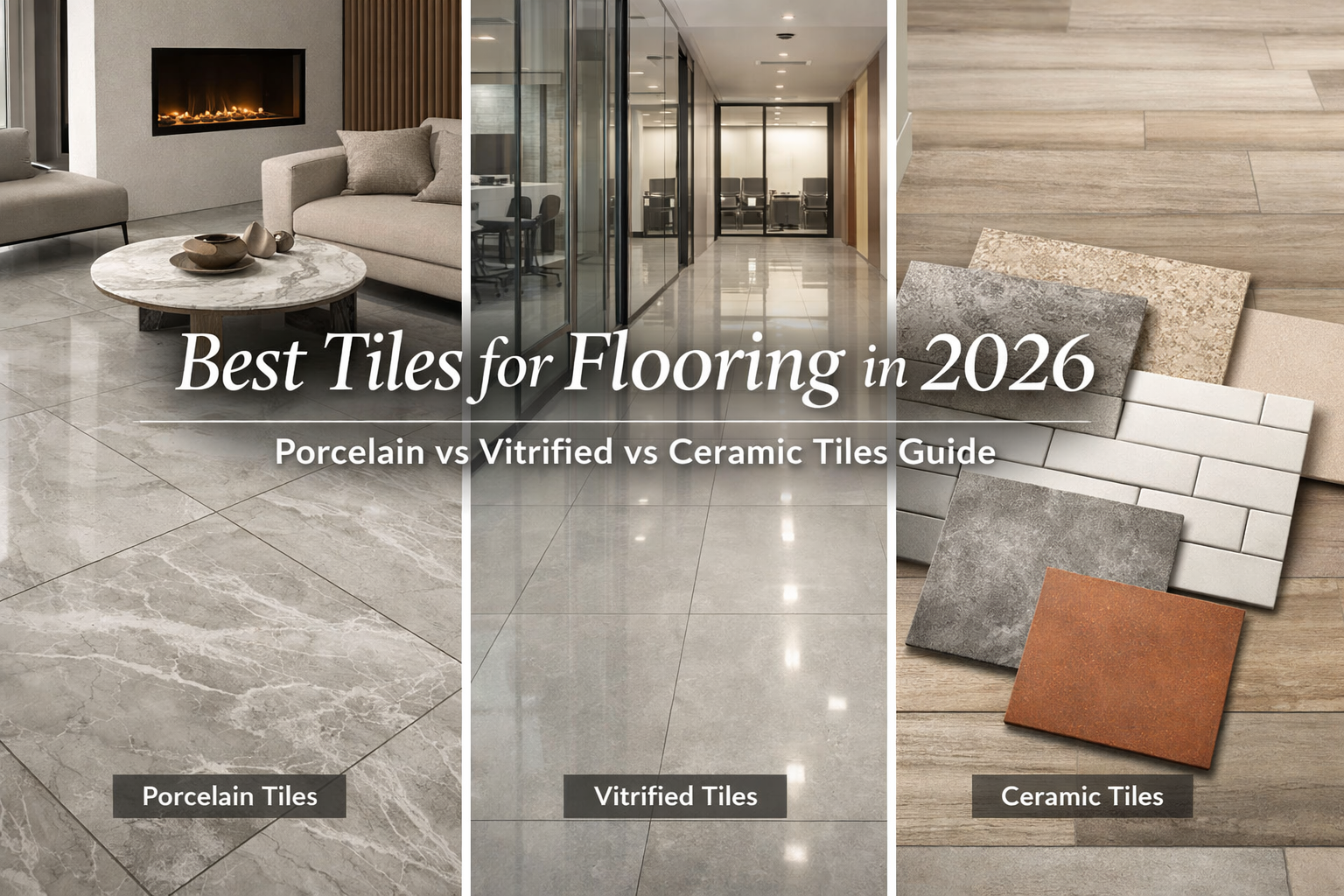
Porcelain Tiles: The Industry Gold Standard
Porcelain tiles represent the pinnacle of tile technology in 2026, manufactured through high-temperature firing processes that create exceptionally dense, non-porous surfaces. These tiles feature water absorption rates below 0.5%, making them ideal for both interior and exterior applications.
Key advantages of porcelain flooring:
- Superior durability with PEI ratings of 4-5 for heavy commercial traffic
- Exceptional frost resistance for outdoor installations
- Minimal maintenance requirements due to non-porous surface
- Extensive design versatility including wood-look, stone-look, and contemporary patterns
- Through-body coloring options that hide chips and wear
- Chemical and stain resistance ideal for commercial kitchens and laboratories
Porcelain tiles excel in high-traffic commercial environments, outdoor patios, and any application requiring maximum durability. Modern manufacturing techniques enable large format tiles up to 1600x3200mm, creating seamless visual expanses with minimal grout lines.
Vitrified Tiles: Engineered Performance
Vitrified tiles utilize vitrification technology that creates glass-like, non-porous surfaces through hydraulic pressing and high-temperature firing. These tiles offer exceptional strength-to-weight ratios and come in multiple finishes.
Vitrified tile subcategories include:
- Soluble Salt Tiles: Color penetrates 2-3mm depth, suitable for medium traffic areas
- Double Charge Tiles: 3-4mm color depth provides enhanced durability
- Full Body Tiles: Uniform color throughout the tile body, ideal for heavy commercial use
- Glazed Vitrified Tiles (GVT): Digital printing on vitrified base combines aesthetics with performance
Vitrified tiles from manufacturers like Legato Porcelano feature advanced nano-technology surface treatments that enhance stain resistance and reduce maintenance. These tiles particularly suit commercial lobbies, retail spaces, and residential living areas requiring both beauty and durability.
Many modern architectural projects now use large format tiles to create seamless flooring surfaces with minimal grout lines and a luxurious visual appearance.
Ceramic Tiles: Cost-Effective Solutions
Ceramic tiles remain popular for residential applications where budget considerations are paramount. While less dense than porcelain, quality ceramic tiles offer reliable performance in appropriate applications.
Modern ceramic tiles feature improved formulations with water absorption rates between 3-6%, making them suitable for interior residential floors in low to moderate traffic areas. Advanced glazing technologies provide scratch resistance and visual depth previously unavailable in this category.
Natural Stone Tiles: Timeless Luxury
Natural stone tiles including marble, granite, limestone, and slate deliver unmatched natural beauty with unique variations in every piece. These materials appeal to high-end residential and commercial projects where distinctive aesthetics justify premium pricing.
Considerations for natural stone flooring:
- Requires periodic sealing to maintain stain resistance
- Hardness varies significantly between stone types
- Higher installation costs due to weight and cutting requirements
- Distinctive veining and color variation create one-of-a-kind installations
- Certain stones (marble, limestone) susceptible to acid etching
Comparing Top Tile Options for 2026
| Tile Type | Water Absorption | Durability (PEI) | Maintenance | Cost Range | Best Applications |
|---|---|---|---|---|---|
| Porcelain | <0.5% | 4-5 | Very Low | Moderate | All areas, indoor/outdoor |
| Vitrified (GVT) | <0.5% | 3-4 | Low | Moderate | Commercial, residential high-traffic |
| Ceramic | 3-6% | 2-3 | Moderate | Low | Residential interior walls and floors |
| Marble | 0.2-0.5% | 3-4 | High | High | Luxury residential, feature areas |
| Granite | <0.4% | 4-5 | Low-Moderate | High | High-end commercial and residential |
Selecting Tiles by Application
Commercial Spaces and High-Traffic Areas
Commercial installations demand tiles with superior wear resistance, easy maintenance, and slip resistance. Porcelain tiles with PEI rating 4 or 5 provide optimal performance in retail environments, office buildings, and hospitality venues. Full-body vitrified tiles offer comparable durability with design flexibility.
For 2026, large format tiles (600x1200mm and larger) dominate commercial specifications, reducing grout lines that collect dirt and creating contemporary visual impact. Rectified edges enable minimal grout joints (2mm), further enhancing cleanability and modern aesthetics.
Residential Living Spaces
Living rooms, dining areas, and hallways benefit from tiles that balance aesthetics with practical durability. Wood-look porcelain tiles continue trending in 2026, offering the warmth of hardwood with superior moisture resistance and zero maintenance.
Glazed vitrified tiles with matte or semi-polished finishes provide slip resistance while maintaining elegant appearance. Digital printing technology enables photorealistic reproductions of marble, concrete, and exotic woods at fraction of natural material costs.
Wet Areas: Bathrooms and Kitchens
Moisture resistance becomes critical in bathrooms, kitchens, and utility areas. Porcelain and vitrified tiles with water absorption below 0.5% prevent moisture penetration that causes substrate damage and mold growth.
Essential specifications for wet areas:
- Slip resistance rating R10 or higher (R11-R13 for commercial bathrooms)
- Minimal water absorption (<0.5%)
- Chemical resistance to cleaning products
- Smaller format tiles (300x600mm or less) for proper drainage slopes
- Textured or matte finishes for enhanced traction
Outdoor Flooring Solutions
Exterior applications require frost-proof tiles with minimal water absorption to prevent freeze-thaw damage. Porcelain pavers specifically engineered for outdoor use feature enhanced thickness (20mm) and slip-resistant surfaces suitable for pool decks, patios, and walkways.
Outdoor tiles must meet ASTM C1028 standards with wet DCOF (Dynamic Coefficient of Friction) values above 0.42. Anti-slip surface treatments and textured finishes provide safety in wet conditions.
2026 Tile Design Trends
Contemporary tile design in 2026 emphasizes several key aesthetic directions that influence specification decisions:
Large Format Tiles: Slabs measuring up to 1600x3200mm create dramatic, seamless surfaces with minimal grout interruption. These formats particularly suit open-plan living spaces and commercial installations.
Natural Material Replication: Advanced digital printing and texturing technologies reproduce marble, travertine, concrete, and wood with remarkable fidelity. Designers achieve luxury aesthetics without natural material limitations.
Terrazzo Revival: Modern interpretations of classic terrazzo combine sustainability (recycled content) with contemporary color palettes. Both authentic terrazzo tiles and porcelain reproductions gain popularity.
Textured Surfaces: Three-dimensional surface treatments add tactile interest while enhancing slip resistance. Manufacturers like Legato Porcelano offer embossed, brushed, and structured finishes that complement minimalist interiors.
Sustainable Options: Eco-conscious specifications increasingly demand tiles with recycled content, low VOC emissions, and sustainable manufacturing processes. Look for products with third-party environmental certifications.
Technical Specifications That Matter
Understanding PEI Ratings
The Porcelain Enamel Institute (PEI) rating system classifies tile durability on scale from 0-5. Proper specification requires matching PEI rating to traffic intensity:
- PEI 0-1: Wall applications only
- PEI 2: Light residential traffic (bathrooms)
- PEI 3: Moderate residential traffic (all residential areas)
- PEI 4: Heavy residential and moderate commercial traffic
- PEI 5: Heavy commercial and industrial traffic
Slip Resistance Standards
Safety considerations mandate proper slip resistance specification, particularly in wet areas and commercial settings. The DCOF AcuTest measures wet slip resistance, with values above 0.42 considered suitable for level interior spaces.
European DIN 51130 R-ratings (R9-R13) provide additional classification, with R10 minimum recommended for commercial kitchens and R11-R13 for industrial applications.
Water Absorption and Frost Resistance
Water absorption directly correlates with freeze-thaw durability and overall tile density. ANSI classifications include:
- Impervious: <0.5% absorption (porcelain, vitrified)
- Vitreous: 0.5-3% absorption
- Semi-vitreous: 3-7% absorption (ceramic)
- Non-vitreous: >7% absorption
Only impervious tiles rated for exterior use in freeze-thaw climates.
Installation Considerations
Proper installation proves as critical as tile selection for long-term performance. Key factors include:
Substrate Preparation: Ensure flatness within 1/8 inch over 10 feet for large format tiles. Uncoupling membranes prevent crack transmission from substrate to tile.
Adhesive Selection: Match thin-set mortar to tile type and size. Large format tiles require premium large-and-heavy-tile (LHT) mortars with extended open time.
Grout Joint Sizing: Rectified tiles enable minimal joints (2-3mm), while cushion-edge tiles require 3-6mm joints. Larger joints accommodate dimensional variation and provide thermal expansion space.
Movement Joints: Install expansion joints every 20-25 feet in both directions for interior floors, and every 12-16 feet for exterior installations.
Maintenance Best Practices
Longevity and appearance retention depend on appropriate maintenance protocols:
For porcelain and vitrified tiles, daily sweeping or vacuuming removes abrasive particles. Weekly damp mopping with pH-neutral cleaners maintains appearance without damaging grout or surface finishes. Avoid oil-based cleaners that create slippery buildup.
Natural stone tiles require periodic sealing (annually or biannually depending on stone type and traffic). Use stone-specific cleaners that won’t etch calcium-based stones like marble and limestone.
Grout maintenance extends tile floor lifespan. Apply penetrating grout sealers after installation cure period and reapply according to manufacturer recommendations. Epoxy grouts eliminate sealing requirements in commercial applications.
Why Legato Porcelano for Your Flooring Project
Selecting tiles from established manufacturers ensures consistent quality, technical support, and product availability throughout project timelines. Legato Porcelano specializes in premium porcelain and vitrified tile solutions engineered for demanding residential and commercial applications.
Their product range encompasses the latest design trends with technical specifications that meet international standards. For architects, builders, and developers requiring reliable tile solutions with comprehensive technical documentation and project support, Legato Porcelano provides end-to-end tile flooring expertise.
Making Your Final Selection
Choosing the best tiles for flooring in 2026 requires evaluating multiple factors specific to your project:
- Define performance requirements: Traffic intensity, moisture exposure, slip resistance needs
- Establish budget parameters: Balance initial costs with lifecycle maintenance expenses
- Consider aesthetic goals: Coordinate with overall design vision and architectural style
- Evaluate installation complexity: Factor contractor experience and substrate conditions
- Review manufacturer support: Technical documentation, warranties, and availability
The tile flooring landscape in 2026 offers unprecedented options combining beauty, durability, and sustainability. Whether specifying for commercial developments or residential projects, today’s porcelain and vitrified tiles deliver performance that justifies investment while creating spaces that inspire.
For professional guidance on selecting optimal tile solutions for your specific application, consult with experienced tile specialists who understand both aesthetic trends and technical requirements. The right flooring choice provides decades of reliable service while maintaining visual appeal that enhances property value.
FAQ’s Section
What are the best tiles for flooring in 2026?
Porcelain tiles are considered the best flooring tiles in 2026 due to their durability, low water absorption, scratch resistance, and modern design options suitable for residential, commercial, and architectural flooring projects.
Which tile is better for flooring: porcelain or vitrified?
Porcelain tiles are generally better for flooring because they are denser, more durable, and highly resistant to moisture, stains, and heavy foot traffic compared to standard vitrified tiles.
What size tiles are best for modern flooring?
Large format tiles such as 600×600 mm, 800×800 mm, and 1200×1200 mm are ideal for modern flooring because they create a seamless appearance, reduce grout lines, and make spaces look larger.
Which tiles are best for high-traffic areas?
Full-body porcelain tiles and double-charge vitrified tiles are best for high-traffic areas because they offer superior durability, scratch resistance, and long-term performance in commercial or public spaces.
Are porcelain tiles good for residential flooring?
Yes, porcelain tiles are excellent for residential flooring because they are durable, easy to maintain, water-resistant, and available in various finishes such as matte, polished, stone-look, and marble-look designs.
How long do floor tiles typically last?
High-quality porcelain or vitrified floor tiles can last 20–30 years or more with proper installation and maintenance, making them a long-term and cost-effective flooring solution.
