Introduction
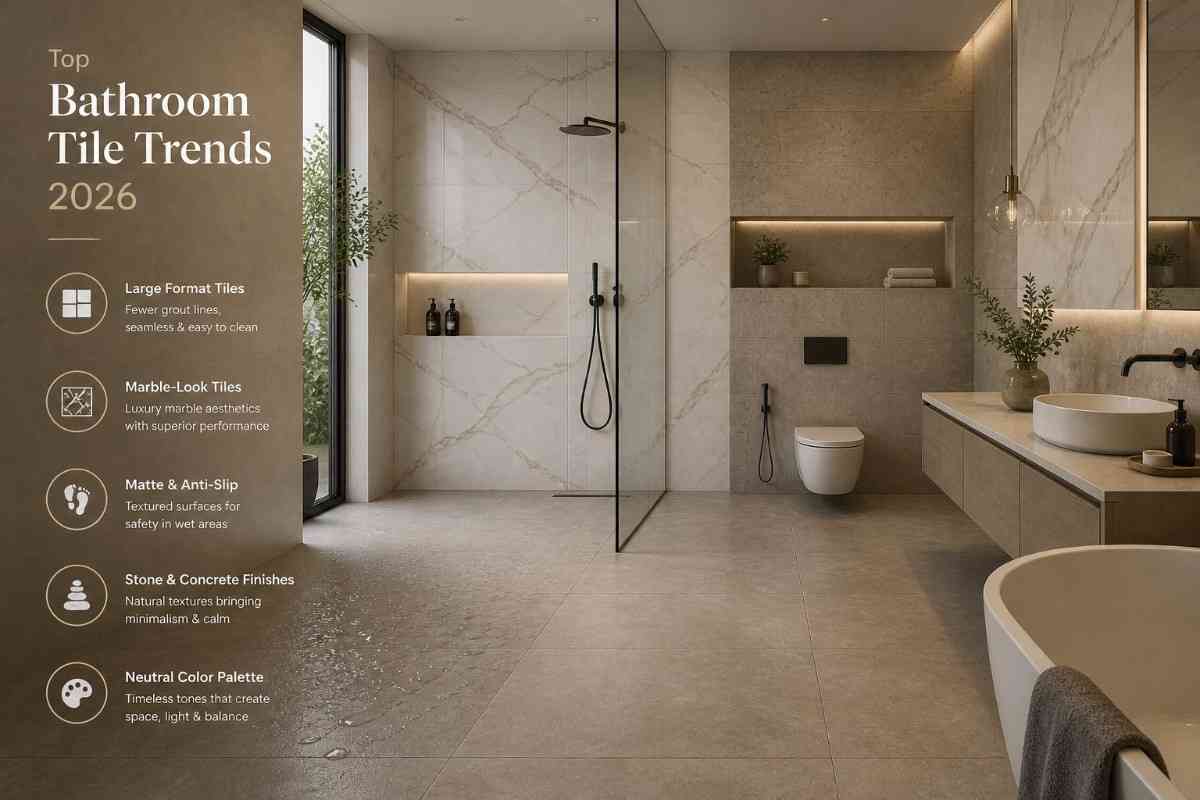
Bathrooms in 2026 are no longer treated as purely functional spaces—they are becoming performance-driven environments where durability, hygiene, and safety matter as much as design.
This shift is one of the main reasons why porcelain tiles are dominating modern construction. Unlike traditional materials, porcelain offers low porosity, high strength, and long-term reliability, making it ideal for wet environments like bathrooms.
At the same time, the industry itself is evolving. According to the official IBEF report on India’s ceramic sector, the country has become one of the largest producers and exporters globally, with strong growth in premium porcelain segments (read more:
So this is not just a design trend—it’s a global material shift.
What Actually Defines Bathroom Porcelain Tiles
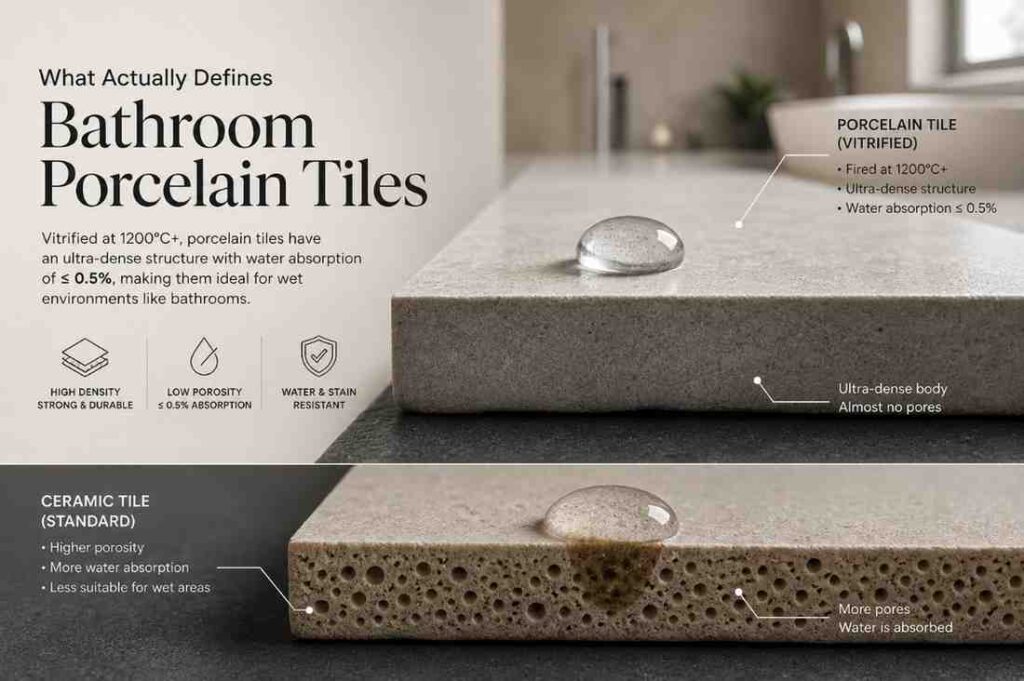
Bathroom porcelain tiles are vitrified tiles fired at extremely high temperatures (1200°C+), resulting in a dense and low-porosity structure.
From a technical perspective, tiles with water absorption below 0.5% are ideal for bathrooms, which is why porcelain consistently outperforms ceramic alternatives.
If you want a deeper understanding of how vitrified tiles are classified, you can explore this detailed guide: This classification helps you understand why porcelain is considered the top-tier category for wet applications.
Why Demand for Bathroom Porcelain Tiles Is Increasing
The rise in demand is driven by a combination of design evolution and performance requirements.
First, modern architecture is shifting toward low-maintenance materials. Natural stones like marble may look premium, but they require sealing and regular upkeep.
Second, hygiene awareness has increased significantly. Non-porous surfaces like porcelain prevent water absorption and reduce bacterial growth.
Third, the production ecosystem has matured. Regions like Morbi now contribute a major share of India’s ceramic exports, reinforcing global trust in Indian manufacturers official Gujarat government release: All these factors together explain why porcelain tiles are becoming the default choice in modern bathrooms.
Top Bathroom Porcelain Tile Trends 2026
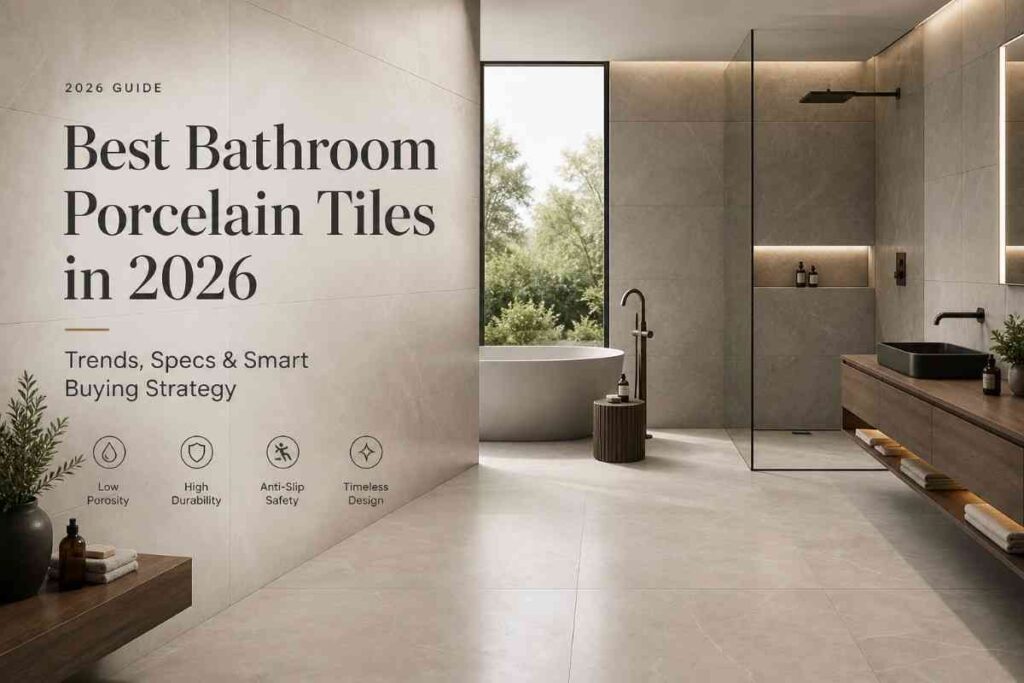
Understanding trends is not enough—you need to understand the logic behind them.
Large Format Tiles: A Hygiene-Driven Shift
Large-format tiles (600×1200 mm and above) are gaining popularity because they reduce grout lines, which are the main areas where dirt and moisture accumulate.
As a result, bathrooms become easier to clean and maintain, while also achieving a seamless visual look. This aligns with the broader shift toward large-format surfaces in flooring, which is explored in detail in this article on modern tile trends
Marble-Look Tiles: From Natural Luxury to Engineered Performance
Marble-look porcelain tiles are not just about aesthetics—they solve real problems associated with natural marble, such as porosity, staining, and inconsistency.
By using advanced digital printing, these tiles offer the same visual appeal while delivering better durability and lower maintenance. This reflects a broader industry shift toward engineered materials that outperform natural ones.
Matte & Anti-Slip Tiles: Safety as a Priority
One of the most important but often ignored factors in bathrooms is slip resistance.
Tiles with R10–R11 ratings are considered ideal for bathroom floors because they provide sufficient grip in wet conditions. Choosing polished or glossy tiles for floors may look appealing initially, but it significantly increases the risk of slipping.
From a professional standpoint, this is not just a design decision—it’s a safety requirement.
Stone & Concrete Finishes: Minimalism with Functionality
Modern bathrooms are increasingly influenced by minimalist design principles, which favor natural textures like stone and concrete.
These finishes create a calm and timeless look while also being practical, as they hide water spots and stains better than high-gloss surfaces.
Neutral Color Palettes: Designed for Space and Light
Neutral colors such as beige, grey, and taupe dominate bathroom design because they enhance light reflection and create a sense of openness.
They also offer long-term flexibility, allowing the space to adapt to different interior styles over time without requiring renovation.
Types of Bathroom Porcelain Tiles
Choosing the right type is essential for performance.
- Glazed porcelain (GVT) → ideal for walls
- Polished porcelain (PGVT) → luxury wall finishes
- Full-body tiles → strong flooring option
- Textured tiles → best for anti-slip floors
If you want broader material comparison insights, this flooring guide is useful: compete Guidance of best Tiles fo flooring
Technical Specifications (What Experts Actually Check)
| Parameter | Ideal Range | Standard Reference | Why It Matters |
|---|---|---|---|
| Water Absorption | ≤ 0.5% | ISO 13006 | Prevents moisture damage |
| Slip Resistance | R10–R11 | DIN 51130 | Safety in wet areas |
| Thickness | 8–10 mm | Industry standard | Structural stability |
| PEI Rating | 3–4 | ASTM C1027 | Wear resistance |
| Breaking Strength | >1300 N | ISO 10545-4 | Durability |
From a professional standpoint, these specifications are non-negotiable for bathroom applications.
Porcelain vs Other Materials (Reality Check)
Porcelain consistently performs better than alternatives.
- Porcelain → low maintenance, high durability
- Marble → high maintenance, risk-prone
- Ceramic → moderate performance
- Granite → strong but limited design flexibility
This is why porcelain is replacing traditional materials across projects.
Installation: Where Most Fail
Even the best tiles fail if installation is poor.
- Waterproofing membrane is essential
- Correct adhesive (C2TES1) is required
- Surface leveling must be precise
- Joint spacing must be consistent
Industry standards like those from the Tile Council of North America highlight how critical installation is for long-term performance (reference:
Cost vs Lifecycle ROI
Porcelain tiles may have a slightly higher upfront cost, but they offer better long-term value.
- No sealing required
- Minimal maintenance
- 15–25 years lifespan
This makes them more cost-effective over time compared to marble or ceramic.
Common Buyer Mistakes
- Choosing glossy tiles for floors
- Ignoring slip resistance
- Selecting wrong tile size
- Poor grout planning
- Focusing only on price
These mistakes lead to higher maintenance and safety risks.
What These Trends Actually Mean
All trends point to three major shifts:
- Decoration → performance-driven design
- Small tiles → large seamless surfaces
- Natural materials → engineered alternatives
This is the real reason porcelain tiles dominate in 2026.
Choosing the Right Supplier
Supplier selection plays a major role in quality and consistency.
You should evaluate:
- Certifications (ISO, ASTM)
- Production capability
- Export experience
- Design innovation
Within India’s ceramic ecosystem, especially in Morbi, manufacturers have built strong global credibility. Companies like Legato Porcelano focus on premium porcelain surfaces designed for modern architectural needs.
Future Trends (2026–2030)
Looking ahead, innovation will drive the next phase:
- Anti-bacterial tiles
- Eco-friendly manufacturing
- Advanced digital printing
- Seamless slab applications
Porcelain is evolving into a high-performance architectural material.
Key Takeaways
- Porcelain tiles offer durability and low maintenance
- Matte anti-slip tiles are essential for safety
- Large-format tiles improve hygiene and aesthetics
- Technical specs matter more than design
- Supplier choice impacts long-term success
FAQs
The best bathroom tiles are matte-finish porcelain tiles with an R10–R11 slip resistance rating and water absorption below 0.5%, ensuring safety, durability, and low maintenance.
Look for manufacturers with ISO certifications, consistent quality control, and export experience. Companies like Legato Porcelano are known for focusing on high-performance porcelain surfaces designed for modern architectural applications.
Yes, porcelain tiles are denser and less porous than ceramic tiles, making them more resistant to moisture, stains, and wear in high-humidity environments like bathrooms.
Large-format tiles such as 600×600 mm or 600×1200 mm are ideal because they reduce grout lines, improve hygiene, and create a seamless, premium look.
No, porcelain tiles are non-porous and do not require sealing. Regular cleaning with mild solutions is sufficient to maintain their appearance and performance over time.
Yes, Indian porcelain tiles are widely exported and meet global standards. Manufacturers such as Legato Porcelano supply tiles to multiple countries, offering a balance of design innovation, quality, and competitive pricing.
