Introduction
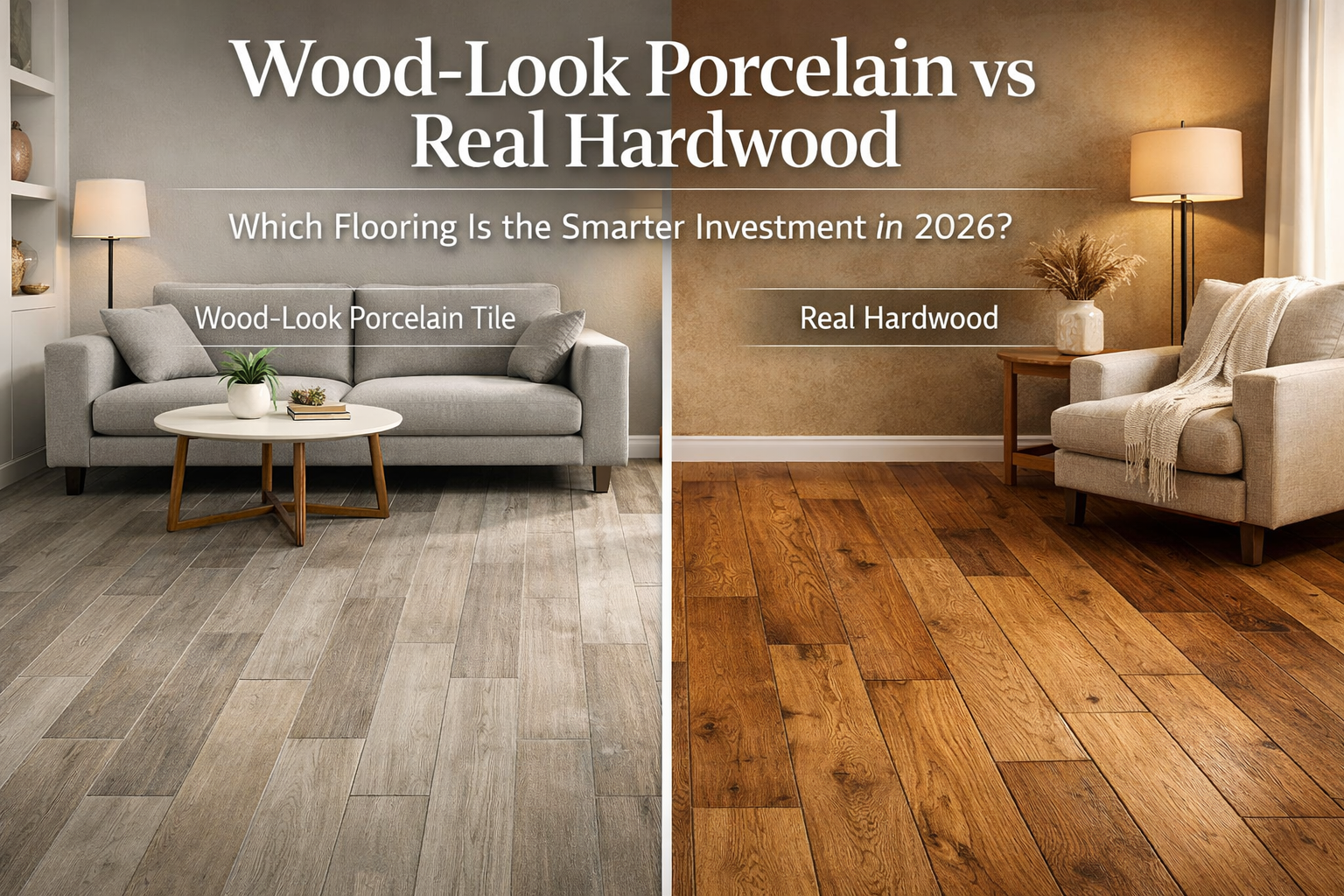
The decision between wood-look porcelain tile and real hardwood flooring represents one of the most significant choices architects, builders, and developers face in modern construction and renovation projects. As we advance through 2026, technological innovations in porcelain manufacturing have created wood-effect tiles virtually indistinguishable from authentic hardwood, while concerns about moisture damage, maintenance costs, and long-term durability continue to influence material selection decisions.
This comprehensive analysis examines both flooring solutions through the lens of professional applications, evaluating performance metrics, cost considerations, installation requirements, and environmental factors that impact commercial and residential projects.
Understanding Modern Wood-Look Porcelain Technology
Contemporary wood-look porcelain tile has evolved dramatically from early iterations. Today’s premium manufacturers like Legato Porcelano utilize advanced digital printing technologies, including high-definition inkjet systems that reproduce wood grain patterns with microscopic accuracy. These tiles feature multiple surface textures, randomized plank patterns, and rectified edges that create seamless installations mimicking traditional hardwood floors.
According to standards defined by the Tile Council of North America (TCNA), which classifies porcelain tiles as materials with extremely low porosity and high durability.
Modern wood-effect porcelain incorporates several key technological features:
- Digital variation technology: Each tile displays unique grain patterns, eliminating repetitive appearances common in earlier generations
- Textured surface treatments: Embossed finishes synchronized with printed grain patterns create tactile authenticity
- Rectified precision cutting: Allows for minimal grout lines (2-3mm) that enhance the hardwood aesthetic
- Through-body coloration: Premium tiles extend color throughout the thickness, minimizing visible wear over decades
- Multiple format options: Plank sizes ranging from 6″x36″ to 12″x48″ accommodate various design preferences
For projects requiring seamless flooring and large architectural surfaces, many designers also prefer large format porcelain tile collections that combine durability with modern design flexibility.
Performance Comparison: Critical Factors for Professionals
Water Resistance and Moisture Performance
This represents the most decisive performance distinction between the two materials. Porcelain tile achieves water absorption rates below 0.5%, qualifying it as impervious to moisture according to ANSI standards. This characteristic makes wood-look porcelain suitable for bathrooms, basements, laundry rooms, commercial kitchens, and other moisture-prone environments where hardwood would fail catastrophically.
Real hardwood, even when properly sealed, remains hygroscopic—it absorbs and releases moisture in response to environmental humidity. This natural behavior causes dimensional changes, cupping, warping, and potential mold growth in high-humidity conditions. Professional installations in moisture-variable environments require extensive subfloor preparation, vapor barriers, and controlled acclimation periods that increase project complexity and cost.
Durability and Scratch Resistance
Porcelain tile rates 7-8 on the Mohs hardness scale, significantly harder than most hardwood species (typically 2-5 on the Janka hardness scale). This translates to superior scratch resistance in high-traffic commercial applications, institutional settings, and active residential environments. Porcelain surfaces resist impact damage from dropped objects, furniture movement, and pet claws without the surface degradation common in hardwood.
However, hardwood offers a unique advantage: it can be refinished multiple times throughout its lifespan. A solid hardwood floor 3/4″ thick can undergo 4-7 refinishing cycles, effectively erasing decades of wear and allowing for design updates. Porcelain cannot be refinished—surface damage, while rare, becomes permanent.
Industry research from Mordor Intelligence highlights that India has become one of the fastest-growing ceramic tile manufacturing hubs due to large-scale production capacity and export-oriented tile factories
If you’re comparing porcelain with other tile materials used in modern construction, our guide on the types of vitrified tiles available in India explains how different tile categories perform in residential and commercial environments.
Thermal Performance and Underfloor Heating Compatibility
Wood-look porcelain demonstrates excellent thermal conductivity, making it the preferred choice for radiant floor heating systems increasingly popular in modern construction. Porcelain efficiently transfers heat from underfloor systems to living spaces while maintaining dimensional stability across temperature fluctuations.
Hardwood’s natural insulating properties actually impede heat transfer in radiant systems, reducing efficiency. Additionally, temperature cycling accelerates wood movement, potentially causing gaps, cupping, and finish deterioration that void manufacturer warranties in many cases.
Installation Considerations for Professional Applications
Subfloor Requirements
Porcelain installation demands rigid, level subfloors with deflection not exceeding L/360 under live loads. Concrete slabs require proper curing and moisture testing. Wood subfloors need reinforcement with cement backer board or uncoupling membranes. Substrate preparation typically represents 30-40% of installation labor costs.
Hardwood installation over wood subfloors proves simpler, using nail-down or glue-down methods. However, concrete installations require moisture barriers and floating floor systems, adding complexity. Hardwood also requires controlled job site conditions during and after installation—temperature between 60-80°F and relative humidity of 35-55%.
Installation Timeline and Site Conditions
Porcelain installation can proceed in virtually any weather conditions since the material requires no acclimation period. Grout cure times of 24-72 hours determine project timelines. Immediate light traffic becomes possible, though full cure requires 28 days for optimal performance.
Hardwood flooring requires 3-7 day acclimation periods in the installation environment before work begins. Installation proceeds more quickly than tile, but finishing (if unfinished wood is used) adds 3-5 days including sanding, staining, and multiple polyurethane coats with cure times between applications.
Maintenance Requirements and Long-Term Care
Wood-look porcelain requires minimal ongoing maintenance—regular sweeping and periodic damp mopping with pH-neutral cleaners maintains appearance indefinitely. The material resists staining from common household substances, requires no periodic sealing, and maintains color stability under UV exposure.
Professional cleaning in commercial settings uses standard floor equipment without special considerations. Chemical resistance allows use of stronger cleaning agents when necessary for sanitation requirements in healthcare or food service applications.
Hardwood maintenance demands significantly more attention and expense. Protective finishes require reapplication every 3-5 years in residential settings, annually in commercial applications. Surface cleaning must avoid excess water. Seasonal humidity control prevents dimensional changes. High-traffic areas develop wear patterns requiring interim screening and recoating between full refinishing cycles.
Environmental and Sustainability Considerations
The sustainability comparison presents nuanced considerations for environmentally conscious projects. Responsibly harvested hardwood from FSC-certified sources represents a renewable, carbon-sequestering material with excellent environmental credentials. End-of-life hardwood can be reclaimed, repurposed, or safely biodegraded.
Porcelain manufacturing requires significant energy input for firing at temperatures exceeding 1200°C. However, the material’s extreme durability, elimination of refinishing chemicals, and 50+ year lifespan without replacement offset initial environmental impacts. Many manufacturers now incorporate recycled content and implement carbon reduction programs in production facilities.
Transportation impacts favor locally sourced materials—hardwood from regional forests or porcelain from domestic manufacturers like Legato Porcelano reduces embodied carbon from shipping. According to the European Ceramic Industry Association, ceramic materials such as porcelain tiles are known for their durability and long service life, which can reduce replacement cycles and contribute to lower lifecycle environmental impact.
Aesthetic Considerations and Design Flexibility
Real hardwood delivers authentic visual warmth, unique grain patterns, and subtle color variations that many designers consider irreplaceable. The material develops a natural patina over time, adding character. Species selection offers diverse appearance options from light maple to dark walnut.
Modern wood-look porcelain achieves remarkable visual fidelity, fooling even trained eyes in many installations. However, careful product selection matters—budget-grade porcelain displays obvious repetition and artificial appearance. Premium collections from specialized manufacturers offer hundreds of unique plank faces with authentic texture mapping.
Porcelain provides design advantages in pattern flexibility, mixing plank sizes, and creating decorative borders impossible with hardwood. The material transitions seamlessly from interior to exterior applications, enabling continuous design language across thresholds.
Application-Specific Recommendations for Professionals
| Wood-Look Porcelain Tiles – Best Applications | Real Hardwood Flooring – Best Applications |
|---|---|
| Bathrooms, laundry rooms, and other moisture-prone areas | Climate-controlled residential living spaces |
| Basement installations below grade | Historic renovation projects requiring authentic materials |
| Commercial kitchens and food service environments | Upper-floor installations in multi-story residences |
| High-traffic retail and institutional spaces | Projects where refinishing capability justifies long-term investment |
| Radiant floor heating installations | Spaces prioritizing acoustic warmth and natural materials |
| Coastal properties with humidity challenges | Environments with controlled humidity year-round |
| Rental properties requiring low maintenance | Luxury residential projects where authentic materials enhance property value |
Making the Strategic Decision: Framework for Professionals
Material selection should follow a systematic evaluation of project-specific factors:
Prioritize wood-look porcelain when:
Moisture exposure exists, maintenance budgets are constrained, installation timelines are aggressive, radiant heating is specified, or commercial durability requirements exceed hardwood capabilities.
Prioritize real hardwood when:
Authentic material aesthetics justify premium investment, climate control ensures stable conditions, refinishing capability provides long-term value, or client preferences specifically demand natural wood despite performance trade-offs.
Many sophisticated projects incorporate both materials strategically—porcelain in moisture-prone areas and hardwood in climate-controlled living spaces, creating optimal performance while respecting budget constraints.
Future Trends and Emerging Considerations
As we progress through 2026, several trends influence the wood-look porcelain versus hardwood decision. Manufacturing innovations continue improving porcelain authenticity, with tactile technologies and matte finishes enhancing realism. Wider format tiles (up to 12″x120″) reduce grout lines further, strengthening the hardwood illusion.
Sustainability pressures increasingly favor durable materials requiring minimal lifecycle inputs. Building certification programs like LEED and WELL recognize porcelain’s longevity and low maintenance as sustainability advantages, potentially influencing material selection in certified projects.
Smart building integration and sensor technologies deploy more readily in porcelain installations, enabling condition monitoring and preventive maintenance in commercial applications.
Conclusion:
Both wood-look porcelain and real hardwood flooring deliver exceptional performance when appropriately specified. Professional selection requires evaluating moisture conditions, traffic patterns, maintenance capabilities, budget constraints, and aesthetic priorities specific to each project. Understanding the nuanced advantages of each material enables architects, builders, and developers to optimize flooring specifications for performance, value, and client satisfaction.
FAQ’s Section
Is wood-look porcelain tile better than hardwood?
Wood-look porcelain tiles are more durable, water-resistant, and easier to maintain than hardwood. Hardwood offers authentic natural beauty, but porcelain performs better in kitchens, bathrooms, and high-traffic areas.
Are porcelain wood-look tiles waterproof?
Yes. Porcelain tiles absorb less than 0.5% water, making them highly moisture-resistant. This allows them to perform well in bathrooms, kitchens, laundry rooms, and even outdoor areas.
Which lasts longer: porcelain tile or hardwood?
Porcelain tiles usually last longer because they resist scratches, stains, and moisture damage. Hardwood can also last decades but often requires refinishing and careful maintenance over time.
Is porcelain flooring cheaper than hardwood?
Installation costs can be similar, but porcelain often becomes cheaper over time. Hardwood requires periodic refinishing and maintenance, while porcelain flooring typically needs only basic cleaning.
Where should wood-look porcelain tiles be used?
Wood-look porcelain tiles work best in moisture-prone or high-traffic areas such as kitchens, bathrooms, basements, commercial spaces, and outdoor patios where hardwood may not perform well.
Are wood-look porcelain tiles good for high-traffic areas?
Yes. Porcelain tiles are extremely durable and scratch-resistant, making them ideal for busy homes, retail stores, offices, and commercial spaces with heavy daily foot traffic.
Can wood-look porcelain tiles be used outdoors?
Yes. Exterior-grade porcelain tiles are frost-resistant, UV-stable, and moisture-resistant, making them suitable for patios, terraces, balconies, and pool areas.
