Introduction
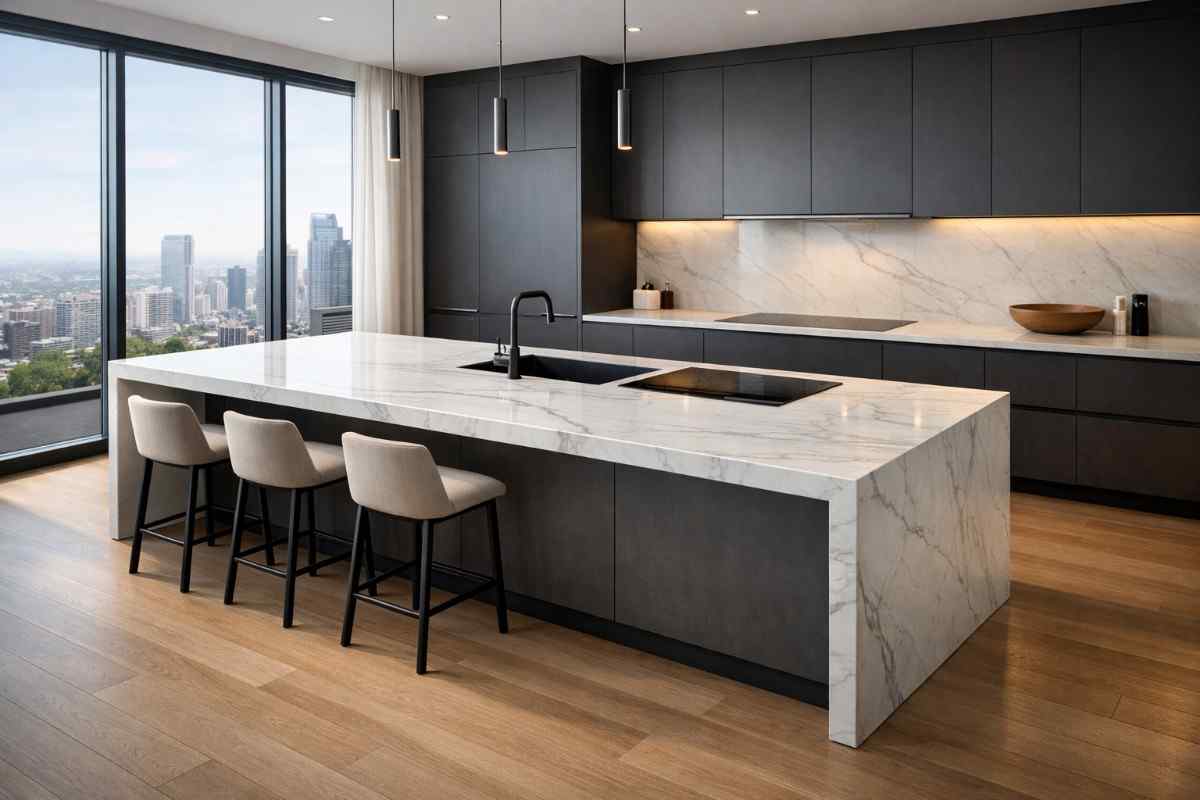
Modern kitchen design has moved far beyond basic functionality. Today, kitchens are visual focal points of residential and commercial spaces, where aesthetics, durability, and seamless surfaces play an important role. One material that is rapidly transforming contemporary kitchen design is large format porcelain slabs.
With their minimal joints, high durability, and premium appearance, porcelain slabs are becoming a preferred material for architects, designers, and homeowners looking to create seamless kitchen countertops and islands. Compared to traditional materials like granite, marble, or quartz, porcelain slabs offer advanced performance while maintaining elegant aesthetics.
According to industry research, the global ceramics sector continues to expand as architects and developers increasingly adopt durable ceramic surfaces in modern construction.
In this article explains how design seamless kitchen countertops using large format porcelain slabs, including slab dimensions, fabrication techniques, sustainability advantages, and architectural applications.
Understanding Seamless Countertop Design in Modern Kitchens
Seamless countertop design is a key principle in modern kitchen planning. Designers aim to create surfaces that appear visually uninterrupted, enhancing the sense of space and material elegance.
In open-plan kitchens, countertops are often visible from living and dining areas. Visible seams or multiple surface transitions can disrupt the visual continuity of the interior.
Large format porcelain slabs help solve this challenge. Because these slabs are manufactured in oversized dimensions, architects can cover large countertop areas using a single piece or only one seam, creating a much cleaner architectural finish.
A porcelain slab is a large-format ceramic surface produced through high-pressure compaction and high-temperature firing, resulting in a dense and durable architectural material.
What Makes Porcelain Slabs a High-Performance Countertop Material
Porcelain slabs are engineered ceramic materials designed for demanding architectural applications. Their technical properties make them particularly suitable for kitchen environments where durability and hygiene are essential.
Low Water Absorption
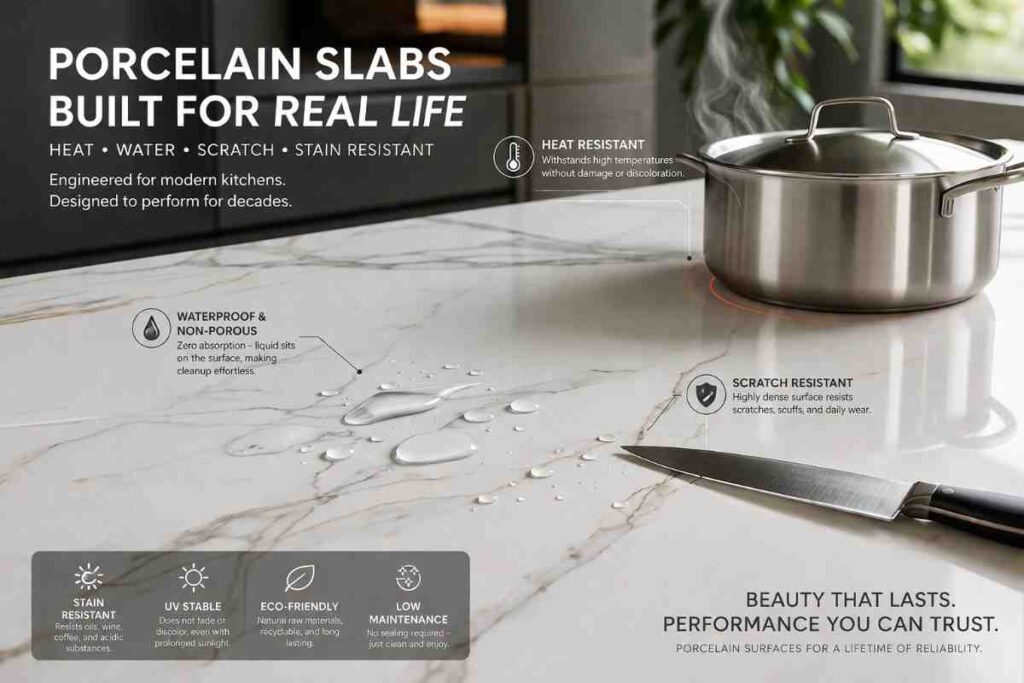
Porcelain typically has water absorption below 0.5%, which prevents moisture penetration and reduces the risk of staining. This property is especially important for kitchen countertops where spills and food preparation are common.
Heat Resistance
Porcelain surfaces can tolerate high temperatures without structural damage. This allows hot cookware or baking trays to be placed on the countertop without causing surface deformation or discoloration.
Scratch and Impact Resistance
The dense ceramic structure of porcelain provides excellent resistance to scratches and abrasion. Compared with many natural stones or composite materials, porcelain maintains its surface integrity even in high-use kitchens.
UV Stability and Chemical Resistance
Porcelain surfaces do not fade under sunlight and resist common kitchen substances such as oils, wine, acids, and cleaning chemicals. This stability makes porcelain slabs suitable for both residential and commercial kitchen applications.
Slab Sizes That Enable Seamless Countertops
One of the most important advantages of porcelain slabs is their large manufacturing format.
| Slab Size | Typical Application |
|---|---|
| 1200 × 2400 mm | countertops and backsplashes |
| 1200 × 2700 mm | extended kitchen surfaces |
| 1600 × 3200 mm | large islands and luxury kitchens |
These dimensions allow designers to fabricate long countertop surfaces using fewer pieces, which significantly reduces visible seams.
Thickness Options
Porcelain slabs are also produced in multiple thicknesses depending on structural requirements:
- 6 mm – wall cladding
- 9 mm – lightweight surfaces
- 12 mm – common countertop thickness
- 15–20 mm – heavy-duty countertops
For kitchen countertops, 12 mm and 20 mm are the most widely used thicknesses because they provide both strength and fabrication flexibility.
Sustainability Advantages for Modern Construction
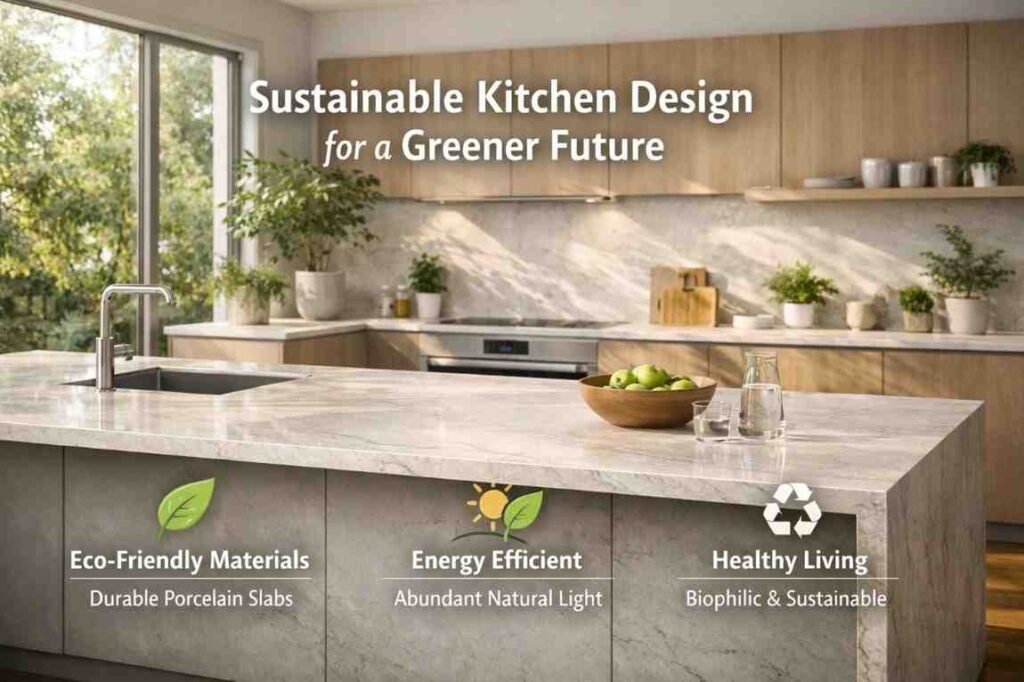
Sustainability has become an important factor in architectural material selection. Porcelain slabs offer several environmental benefits that align with sustainable building practices.
Long Lifecycle
Porcelain surfaces are extremely durable and can last for decades without significant degradation. This long service life reduces the need for material replacement and lowers lifecycle environmental impact.
Reduced Maintenance
Unlike natural stone surfaces that require periodic sealing, porcelain surfaces are generally non-porous and require minimal maintenance. This reduces the need for chemical treatments and cleaning products.
Eco-Friendly Material Use
Large slab formats reduce installation waste because fewer pieces are needed to cover large surfaces. This improves material efficiency during construction.
Industry reports on ceramic industry growth analysis show that ceramic materials are gaining popularity globally because of their durability and environmental performance.
Comparison With Alternative Countertop Materials
Architects often evaluate porcelain slabs alongside other countertop materials.
| Feature | Porcelain Slabs | Granite | Marble |
|---|---|---|---|
| Seamless Potential | Excellent | Moderate | Moderate |
| Heat Resistance | Excellent | Excellent | Good |
| Stain Resistance | Excellent | Moderate | Low |
| Maintenance | Very low | Moderate | High |
| UV Resistance | Excellent | Excellent | Moderate |
Because of these advantages, porcelain is increasingly selected for large kitchen islands and seamless countertop installations. evaluating surface materials often compares countertops with other surfaces used in interiors such as the best tiles for flooring in modern architecture.
Applications of Large Format Porcelain Slabs in Kitchen Design
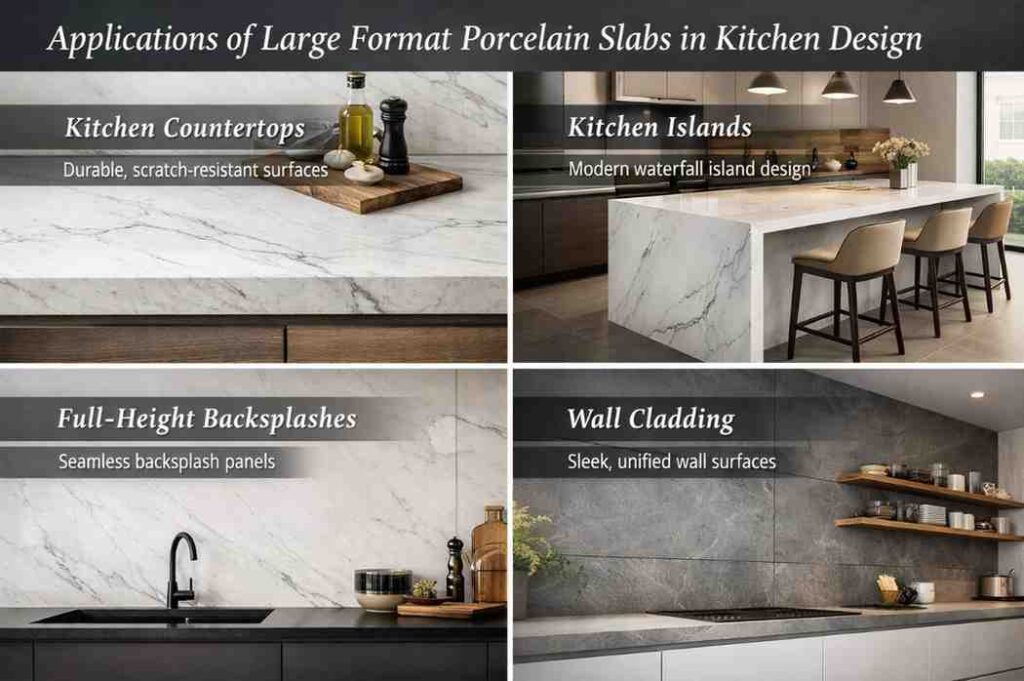
Large format porcelain slabs can be used in various kitchen applications, allowing designers to create cohesive, durable, and visually seamless spaces.
Kitchen Countertops
Porcelain slabs provide strong, scratch-resistant surfaces suitable for everyday kitchen use. Their non-porous nature makes them hygienic, stain-resistant, and easy to maintain for long-term performance.
Kitchen Islands
Large slabs enable elegant island designs with minimal joints and continuous patterns. They are commonly used to create modern waterfall islands that enhance the overall visual appeal of the kitchen.
Full-Height Backsplashes
Using large porcelain slabs as backsplashes eliminates grout lines and creates a clean, seamless look. This also makes the surface easier to clean compared to traditional tiled backsplashes.
Wall Cladding
Porcelain slabs can be installed on kitchen walls to create a unified design with countertops. This approach helps maintain consistent textures and colors across the entire kitchen space.
Large-format porcelain slabs are increasingly used in modern Kitchen Countertops because they allow expansive surfaces with minimal joints. This creates a seamless aesthetic that enhances both hygiene and visual appeal in contemporary kitchen designs.
Fabrication Techniques That Reduce Visible Seams
Waterjet Cutting Technology
Advanced waterjet cutting systems allow fabricators to cut porcelain slabs with extremely high precision. This accuracy ensures tight joints and clean edge profiles during installation.
Mitered Edge Fabrication
Mitered edges allow fabricators to create thicker edge profiles while maintaining the structural efficiency of thinner slabs. This technique is commonly used in luxury kitchen countertops.
Strategic Seam Placement
When seams are unavoidable, installers typically position them near sinks, cabinet divisions, or natural design transitions. This reduces their visual impact within the kitchen layout.
Professional fabrication and installation are essential for achieving a seamless result in large slab countertop projects.
Why Architects Are Increasingly Choosing Porcelain Slabs
Several architectural trends are contributing to the growing adoption of porcelain slabs in modern kitchens.
Seamless Interior Design
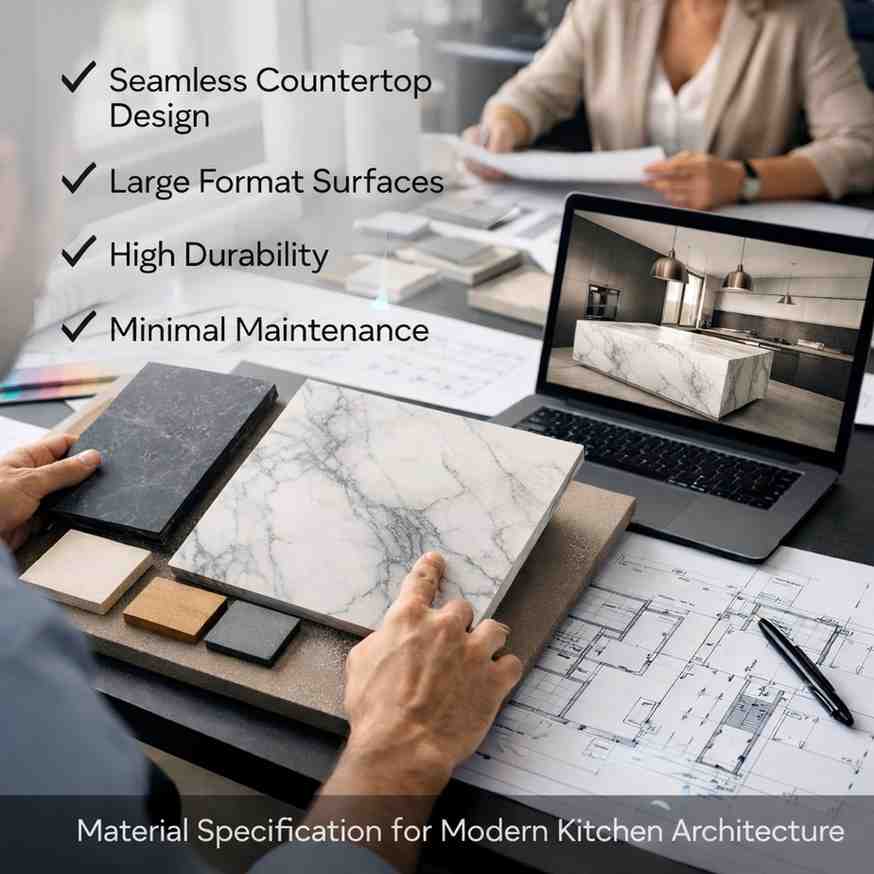
Contemporary kitchens favor clean surfaces and minimal visual clutter. Large porcelain slabs support this design philosophy by creating uninterrupted material planes.
Open-Plan Living Spaces
Modern homes increasingly combine kitchen, dining, and living areas. Seamless countertops help integrate these spaces visually.
Advanced Surface Design
Modern digital printing technology allows porcelain slabs to replicate natural materials such as marble, limestone, concrete, and metal textures with remarkable realism.
Manufacturers such as Legato Porcelano produce architectural porcelain slabs engineered for contemporary interior and commercial applications. Evaluating suppliers may also consider guidance on choosing the right porcelain tile manufacturer when specifying materials for large-scale projects.
Key Takeaways
- Large format porcelain slabs allow architects to design countertops with minimal seams.
- Slab sizes up to 1600 × 3200 mm enable large kitchen islands.
- Porcelain surfaces offer excellent heat, scratch, and stain resistance.
- The material requires very little maintenance compared with natural stone.
- Porcelain slabs support modern architectural trends toward seamless surfaces.
FAQ‘s
Yes. Porcelain slabs are highly durable, heat-resistant, and stain-resistant, making them well suited for kitchen countertops.
No. Porcelain surfaces are non-porous and generally do not require sealing, unlike natural stone materials.
Large slabs such as 1600 × 3200 mm are commonly used because they allow wide countertop spans with fewer seams.
Yes. Porcelain slabs are frequently used for waterfall designs because they allow continuous vertical surfaces.
Porcelain countertops are highly resistant to scratches, stains, heat, and moisture, making them suitable for long-term kitchen use.
