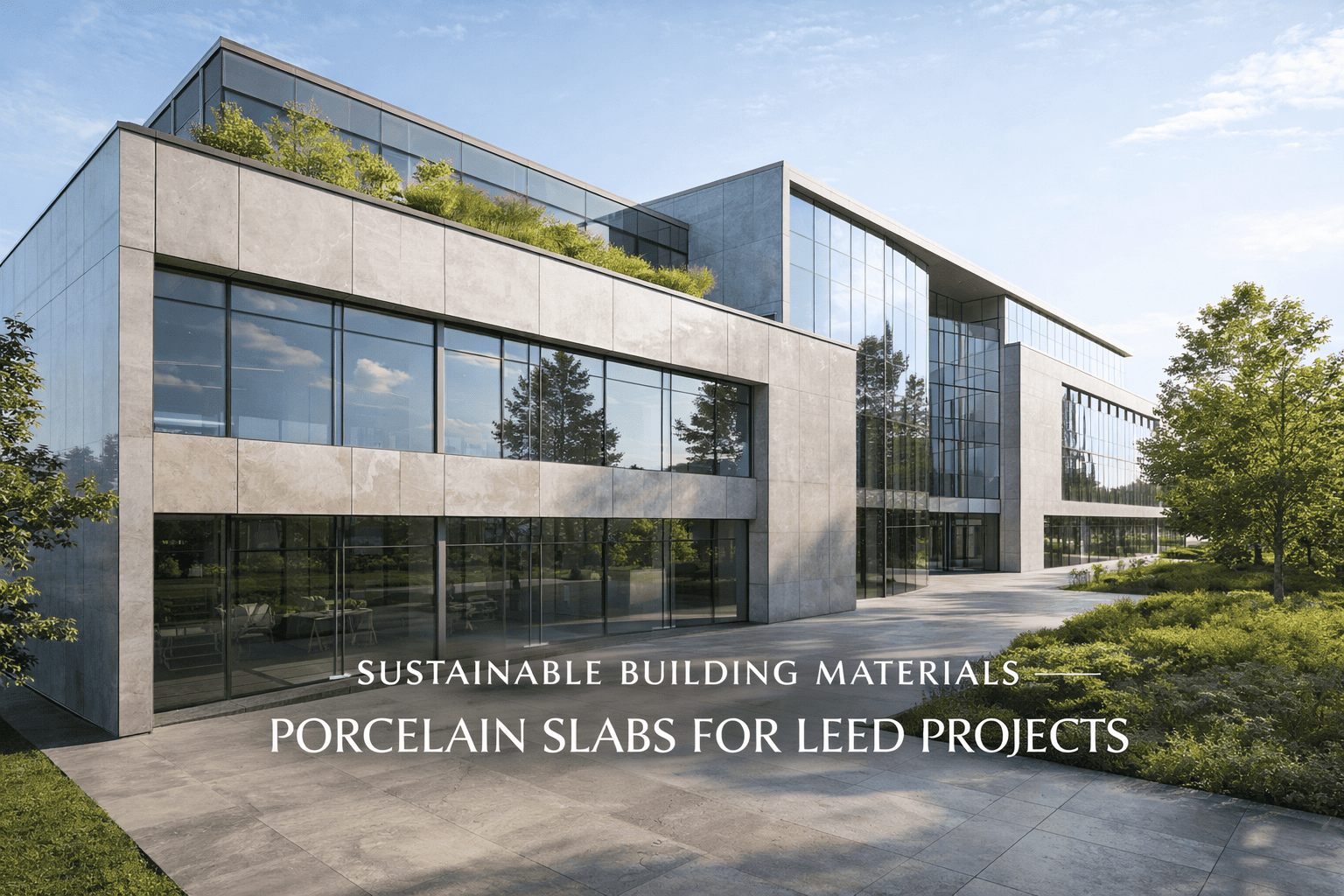
Porcelain slabs help architects achieve LEED credits by offering low VOC emissions, long lifecycle durability, minimal maintenance, and efficient material use. Their large-format design reduces installation waste and supports environmentally responsible construction, making them a reliable surface material for sustainable building projects.
Introduction
Sustainable construction has become a defining priority in modern American architecture. Developers and architects increasingly pursue certifications such as LEED (Leadership in Energy and Environmental Design) to reduce environmental impact while improving long-term building performance.
Achieving these sustainability benchmarks requires careful material selection. Architects must balance durability, environmental footprint, indoor air quality, and lifecycle efficiency when specifying architectural surfaces.
Porcelain slabs have emerged as a practical solution in this context. Their dense mineral composition, large-format design, and exceptional durability align well with sustainable building strategies used in both residential and commercial projects.
This article explores how porcelain slabs support LEED certification goals, contribute to environmentally responsible architecture, and help designers deliver high-performance buildings across the United States.
Understanding Sustainable Architecture and LEED Certification
Green building standards such as LEED evaluate how efficiently buildings use resources throughout their lifecycle.
For architects working on commercial developments, hospitality projects, or residential buildings, certification often depends on several key design factors:
- responsible material sourcing
- indoor environmental quality
- lifecycle durability
- waste reduction during construction
- energy and maintenance efficiency
Material specification plays a critical role in achieving these goals.
Porcelain slabs are increasingly used because they combine durability with efficient material use. Manufactured from refined natural minerals such as clay, feldspar, and silica, these slabs are produced through high-pressure compaction and extremely high firing temperatures.
A porcelain slab is a large-format ceramic surface manufactured using high-pressure compaction and high-temperature firing to create a dense, durable architectural material.
industry research from IBEF also shows that ceramic materials continue to gain global relevance due to their durability and versatility in construction Because of these properties, porcelain slabs integrate naturally into sustainable architectural strategies.
What Makes Porcelain Slabs a High-Performance Material
Beyond sustainability benefits, porcelain slabs are valued for their exceptional technical performance in architecture.
Modern large-format slabs offer a combination of structural stability, resistance, and design flexibility that makes them suitable for demanding building environments.
Key performance characteristics include:
Low Water Absorption
Porcelain slabs typically have water absorption rates below 0.5%, making them ideal for wet areas such as bathrooms, spas, and outdoor terraces. Their dense structure prevents moisture penetration and helps maintain long-term durability even in humid environments.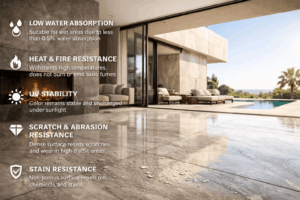
Heat and Fire Resistance
Porcelain is manufactured at extremely high temperatures, which gives it excellent resistance to heat and fire. It does not burn, deform, or release toxic fumes, making it suitable for kitchens, fireplaces, and outdoor applications.
UV Stability
Porcelain surfaces maintain their color and finish even after long exposure to sunlight. This UV resistance makes them a reliable choice for exterior façades, balconies, and outdoor architectural surfaces.
Scratch and Abrasion Resistance
The dense ceramic composition of porcelain slabs provides strong resistance to scratches and abrasion. This makes them ideal for high-traffic environments such as hotels, airports, and commercial spaces.
Stain Resistance
Porcelain slabs feature a non-porous surface that prevents liquids, oils, and pigments from penetrating the material. This ensures easy cleaning and helps maintain a clean, elegant appearance over time.
These characteristics contribute directly to longer building lifecycles and reduced replacement needs.
Typical slab sizes used in architecture include:
| Size | Benefit |
| 1200 × 2400 mm | Ideal for interior walls and flooring |
| 1200 × 2700 mm | Reduced grout lines and cleaner aesthetics |
| 1600 × 3200 mm | Seamless luxury architectural surfaces |
Common thickness options include:
- 6 mm – wall cladding
- 9 mm – interior wall applications
- 12 mm – flooring and countertops
- 15–20 mm – heavy-duty commercial surfaces
These large formats allow architects to design continuous surfaces with minimal joints.
Sustainability Advantages for Modern Construction
Porcelain slabs support sustainability not only through their composition but also through their lifecycle performance.
Long Lifecycle Durability
Durable materials reduce the frequency of renovation and replacement.
Porcelain slabs can last decades without significant deterioration, reducing long-term environmental impact.
Reduced Maintenance
Unlike many natural stones, porcelain surfaces typically require:
- no sealing
- minimal cleaning chemicals
- simple maintenance routines
This reduces both operational costs and environmental impact.
Material Efficiency
Large slabs cover more surface area, which reduces:
- grout joints
- adhesive usage
- cutting waste during installation
Less material waste contributes to responsible construction practices.
Natural Mineral Composition
Porcelain slabs are primarily composed of natural minerals.
Advancements in ceramic manufacturing technology continue improving production efficiency and sustainability across the global ceramic industry.
How Porcelain Slabs Support LEED Credits
While porcelain slabs alone do not guarantee LEED certification, they contribute to multiple credit categories within sustainable building frameworks.
Low Emitting Materials
Porcelain slabs generally contain no VOC emissions, which supports indoor air quality standards required in green building design.
Durable Construction Materials
LEED programs reward materials that extend building lifecycles because porcelain slabs resist moisture, scratches, and stains, they significantly reduce replacement frequency.
Waste Reduction During Construction
Large slab formats help reduce:
- material waste
- grout usage
- installation components
This contributes to more efficient construction practices.
Responsible Manufacturing Improvements
Many modern ceramic manufacturers incorporate:
- recycled materials
- energy-efficient kiln systems
- water recycling technology
Manufacturers such as Legato Porcelano produce large-format porcelain slabs engineered for modern architectural interiors and commercial projects.
Comparison With Alternative Materials
Architects often evaluate porcelain slabs against natural stone and engineered surfaces when selecting materials for sustainable projects.
| Material | Durability | Maintenance | Environmental Impact | Cost Efficiency |
| Porcelain Slabs | Very high | Minimal | Lower lifecycle impact | High |
| Marble | Moderate | Requires sealing | Quarry extraction impact | High |
| Quartz | High | Moderate | Resin-based materials | Moderate |
| Granite | High | Requires sealing | Heavy quarrying | Moderate |
Porcelain offers an important advantage: consistent performance with minimal maintenance requirements.
This balance helps architects manage both sustainability goals and long-term operational costs.
Architectural Applications in Real Projects
Porcelain slabs are now widely used across both residential and commercial architecture.
Interior designers and architects frequently specify them for:
- kitchen countertops
- bathroom walls
- luxury flooring
- shower surrounds
- feature walls
In commercial architecture, porcelain slabs appear in:
- hotel lobbies
- retail environments
- restaurants
- corporate interiors
They are also widely used in exterior architecture, including façade systems, terraces, and outdoor kitchens.
Architects exploring real-world design possibilities often study different large-format porcelain slab applications to understand how these materials perform across hospitality, residential, and commercial spaces.
Why Architects Are Choosing Porcelain Slabs
Several architectural trends have accelerated the adoption of porcelain slabs in modern construction.
Seamless Architectural Surfaces
Large-format slabs create continuous surfaces with minimal joints, improving both aesthetics and hygiene.
Design Versatility
Digital printing technology allows porcelain to replicate:
- marble
- concrete
- wood
- metal finishes
This flexibility allows architects to maintain design creativity without sacrificing durability.
Performance Across Different Climates
Porcelain slabs perform consistently across varying climate conditions, including freeze-thaw environments.
When specifying flooring materials for high-traffic buildings, architects often compare different ceramic surfaces to determine the best tiles for flooring in modern architecture.
Material selection also depends on manufacturing quality and certification standards. Many project teams evaluate suppliers carefully when choosing the right porcelain tile manufacturer for international construction projects.
Conclusion
As sustainability becomes a core priority in modern architecture, material selection plays a critical role in achieving green building goals.
Porcelain slabs contribute to these objectives by offering:
- exceptional durability
- low VOC emissions
- minimal maintenance
- efficient material usage
Their large-format design reduces installation waste while supporting seamless architectural aesthetics.
For architects pursuing LEED certification and environmentally responsible construction, porcelain slabs provide a balanced combination of performance, sustainability, and design flexibility.
Key Takeaways
- Porcelain slabs help architects support LEED sustainability goals.
- Large-format slabs reduce construction waste and installation materials.
- Non-porous surfaces improve hygiene and indoor environmental quality.
- Their durability reduces long-term maintenance and replacement cycles.
- Porcelain slabs are widely used across residential and commercial architecture.
FAQ’s Section
Porcelain slabs can support several LEED categories including low-emitting materials, durable construction materials, and reduced construction waste. Their long lifecycle also supports sustainability goals.
Yes. Porcelain slabs are made primarily from natural minerals and are extremely durable, which reduces replacement cycles and environmental impact.
Large slabs cover more surface area with fewer joints, reducing installation materials and construction waste.
Typical architectural porcelain slabs include sizes such as 1200 × 2400 mm, 1200 × 2700 mm, and 1600 × 3200 mm.
Yes. Porcelain slabs are UV resistant, moisture resistant, and durable, making them suitable for terraces, façade systems, and outdoor flooring.
