Quick Answer
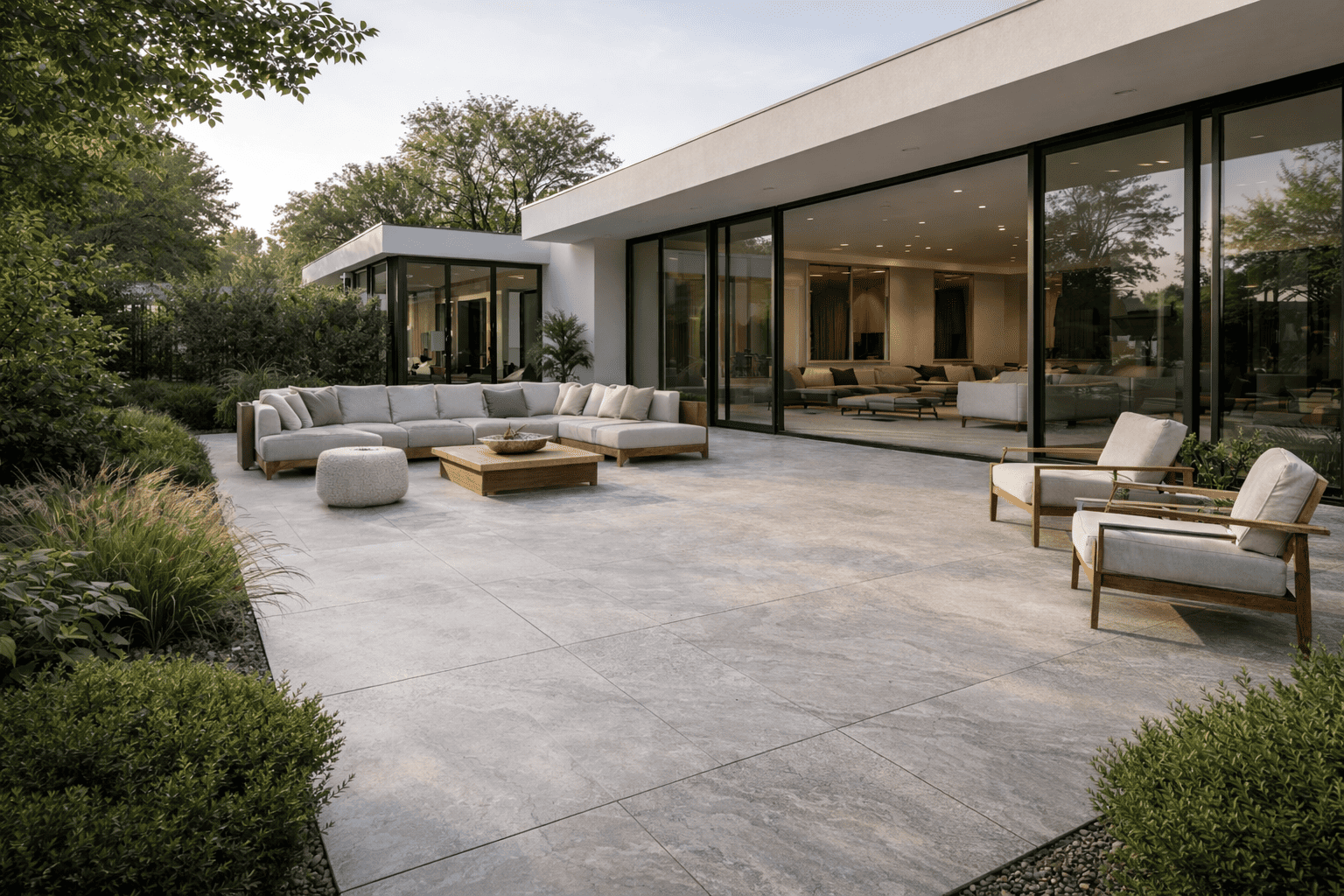
Outdoor porcelain slabs are engineered to withstand harsh US climate conditions, including freeze–thaw cycles, UV exposure, and extreme heat. Their ultra-low water absorption, dense structure, and color-stable glazing make them ideal for patios, terraces, façades, and outdoor kitchens with minimal maintenance.
Introduction
Outdoor architectural surfaces in the United States must perform in some of the most demanding climate conditions in the world. From freeze–thaw cycles in northern states to extreme summer heat in the Southwest and intense UV exposure in coastal regions, exterior materials are constantly tested by the environment.
For architects and builders, selecting outdoor flooring and cladding materials that remain stable, safe, and visually consistent over time is a major challenge. Natural stone, concrete, and wood often suffer from cracking, fading, moisture absorption, or high maintenance requirements.
Large-format porcelain slabs have emerged as a high-performance solution for modern outdoor architecture. Engineered with dense ceramic compositions and advanced firing technology, these surfaces offer exceptional resistance to temperature swings, sunlight, moisture, and heavy traffic.
This article explores how outdoor porcelain slabs perform across US climate zones and why architects increasingly specify them for patios, terraces, façades, and outdoor living spaces.
As global demand for high-performance ceramic materials grows, manufacturing clusters like Morbi in Gujarat have become key suppliers to international markets, accounting for nearly 80–90% of India’s ceramic exports.
Understanding Outdoor Materials in US Climate Zones
The United States spans multiple climate zones, each presenting unique challenges for outdoor surfaces.
Architects must design for:
- Freeze–thaw cycles in northern states such as Minnesota, Michigan, and New York
- Extreme heat and sun exposure in states like Arizona, Texas, and Nevada
- High humidity and storms in Florida and coastal regions
- Seasonal temperature swings in midwestern regions
These conditions can cause many outdoor materials to deteriorate over time.
Typical problems include:
- Cracking due to water expansion during freezing
- Surface fading from UV exposure
- Heat damage or warping
- Moisture absorption leading to staining or mold growth
Porcelain slabs address these issues through advanced manufacturing processes involving high-pressure compaction and kiln firing above 1200°C, creating an extremely dense and stable material.
What Makes Porcelain Slabs a High-Performance Outdoor Material
Porcelain slabs are considered one of the most technically advanced ceramic surfaces available in construction today.
A porcelain slab is a large-format ceramic panel produced using high-pressure compaction and high-temperature firing to create an ultra-dense architectural surface.
Several performance properties make porcelain particularly suitable for outdoor environments.
