Quick Answer
Outdoor porcelain slabs are engineered to withstand harsh US climate conditions, including freeze–thaw cycles, UV exposure, and extreme heat. Their ultra-low water absorption, dense structure, and color-stable glazing make them ideal for patios, terraces, façades, and outdoor kitchens with minimal maintenance.
Introduction
Outdoor architectural surfaces in the United States must perform in some of the most demanding climate conditions in the world. From freeze–thaw cycles in northern states to extreme summer heat in the Southwest and intense UV exposure in coastal regions, exterior materials are constantly tested by the environment.
For architects and builders, selecting outdoor flooring and cladding materials that remain stable, safe, and visually consistent over time is a major challenge.
Large-format porcelain slabs have emerged as a high-performance solution for modern outdoor architecture.
Understanding Outdoor Materials in US Climate Zones
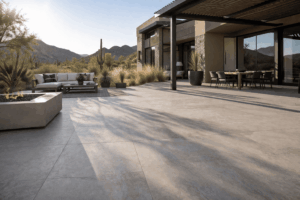
The United States spans multiple climate zones, each presenting unique challenges for outdoor surfaces.
Architects must design for:
- Freeze–thaw cycles in northern states such as Minnesota, Michigan, and New York
- Extreme heat and sun exposure in states like Arizona, Texas, and Nevada
- High humidity and storms in Florida and coastal regions
- Seasonal temperature swings in midwestern regions
These conditions can cause many outdoor materials to deteriorate over time.
Typical problems include:
- Cracking due to water expansion during freezing
- Surface fading from UV exposure
- Heat damage or warping
- Moisture absorption leading to staining or mold growth
What Makes Porcelain Slabs a High-Performance Outdoor Material
Ultra-Low Water Absorption
Outdoor materials must resist water penetration to survive freeze–thaw cycles.
Porcelain slabs typically have water absorption rates below 0.5%, preventing moisture infiltration and expansion during freezing conditions.
Freeze–Thaw Resistance
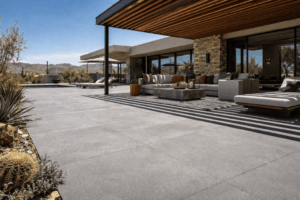
Porcelain’s dense structure prevents cracking caused by freezing water, making it suitable for:
- Outdoor terraces
- Rooftop decks
- Pool surrounds
- Exterior walkways
UV Stability
- Excellent UV resistance
- Long-term color stability
- Minimal fading under direct sunlight
Heat Resistance
Porcelain slabs are naturally heat resistant and maintain structural stability even under prolonged sun exposure.
Scratch and Stain Resistance
- Dirt
- Sand
- Furniture movement
- Food spills
Architectural Applications in Outdoor Projects
Outdoor Flooring and Patios
Large slabs create elegant outdoor living spaces with minimal joints and a clean visual appearance.
Pool Decks
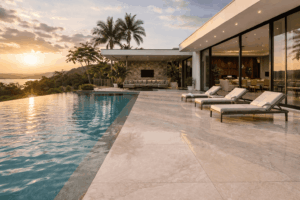
- Slip-resistant textures
- Chlorine resistance
- Low heat absorption
Exterior Wall Cladding
Architects use porcelain for ventilated façade systems due to its durability and lightweight structure.
Outdoor Kitchens
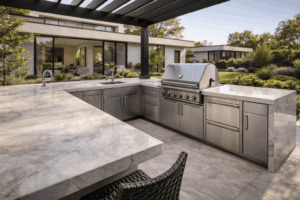
- Heat from grills
- Food stains
- Weather exposure
Conclusion
Outdoor architectural materials must withstand demanding environmental conditions including freeze–thaw cycles, UV exposure, moisture, and extreme heat.
Porcelain slabs provide a durable alternative engineered specifically for long-term performance. Their ultra-low water absorption, UV stability, scratch resistance, and heat tolerance make them suitable for patios, terraces, façades, and outdoor kitchens.
Key Takeaways
- Porcelain slabs resist freeze–thaw cycles, UV exposure, and extreme heat.
- Ultra-low water absorption prevents cracking from freezing moisture.
- Large-format slabs create seamless outdoor surfaces.
- Minimal maintenance compared with natural stone or concrete.
- Architects widely specify porcelain slabs for patios, façades, and pool decks.
FAQ Section
Are porcelain slabs suitable for freeze–thaw climates?
Yes. Their extremely low water absorption prevents moisture expansion during freezing temperatures.
Do outdoor porcelain slabs fade in sunlight?
No. Pigments are fired into the surface, providing excellent UV resistance.
What thickness is best for outdoor flooring?
Outdoor flooring typically uses 15 mm or 20 mm porcelain slabs for structural strength.
Are porcelain slabs slippery when wet?
Outdoor slabs often include anti-slip textured finishes designed for safety.
How long do outdoor porcelain slabs last?
When installed properly, they can last decades with minimal maintenance.
