Brand: Legato Porcelano
Category: Bathroom Porcelain Tiles
Reading Time: ~8 Minutes
→ Part of the: Porcelain Tiles for Bathroom — Complete Guide › Spa-Inspired Bathroom Design
Part of the Porcelain Tiles for Bathroom Pillar | Related: Large Format Bathroom Tiles | Marble Look Bathroom Tiles
Introduction
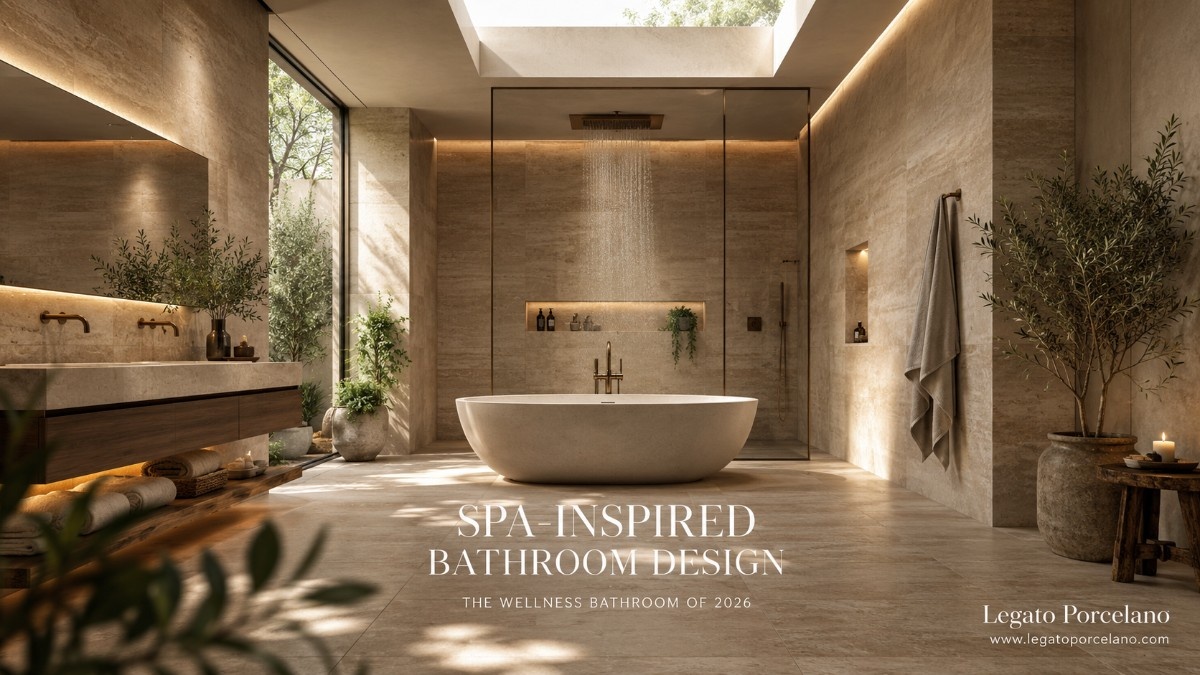
A successful spa inspired bathroom design is driven by material selection, surface continuity, and sensory comfort — not decoration alone. Across luxury hospitality, premium residential projects, and modern wellness architecture, designers and developers are increasingly specifying warm stone-look porcelain surfaces, large-format layouts, matte finishes, and biophilic material palettes to create calmer and more restorative bathroom environments.
According to the 2026 bathroom trend report published by Fixr, wellness-focused bathrooms, natural materials, and spa-inspired layouts are now among the strongest specification trends influencing the global bathroom industry. The shift reflects growing demand for surfaces that combine visual warmth with long-term durability, moisture resistance, low maintenance, and architectural consistency across large-scale projects.
This is where porcelain becomes central to modern spa bathroom specification. Large-format stone-look porcelain tiles deliver the organic character of natural stone while meeting the performance requirements expected in contemporary hospitality, residential, and commercial environments. Industry sources including Edward Martin and Bedrosians Tile & Stone continue to highlight the rise of warm earth-tone palettes, matte textures, and seamless tile applications as defining directions in 2026 bathroom design.
THE FORMULA — BEFORE YOU READ FURTHER
Stone-look or travertine-look large-format matte porcelain. Warm earth palette — clay, sand, mushroom, sage. Continuous floor-to-ceiling tile surface, minimal grout lines, tonal grout. Indirect ambient lighting. Radiant floor heating. Rainfall shower. Live moisture-tolerant plants. Zero visual clutter. Every element working to reduce sensory stimulation — not increase it.
Why the Spa Bathroom Has Become the Most Important Room in the Home
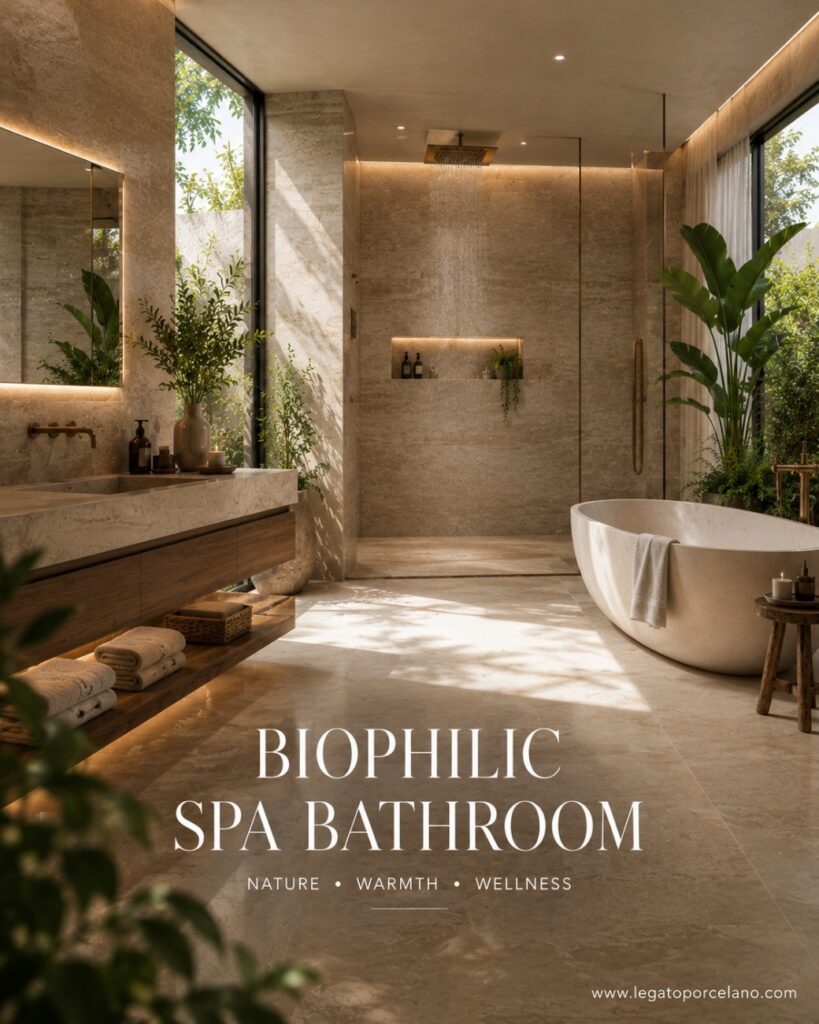
The bathroom’s evolution from a functional utility room into a primary wellness space is documented, not speculative. According to Studio M Designs, cited in Fixr’s 2026 industry report, the defining bathroom design trend of 2026 is bringing the outdoors in — featuring biophilic elements, natural light, organic materials, and spaces that nurture wellness and foster connection to nature.
This shift reflects something deeper than interior design trend cycles. People are investing in home wellness environments because the alternative — relying on external destinations for restoration — has become less available and less sufficient. The bathroom is the one space in most homes with inherent privacy, inherent warmth and water proximity, and inherent sensory potential. It is the room most suited to becoming a genuine wellness environment. The question is not whether to design it that way — it is how.
External Reference: Fixr.com — 2026 Bathroom Design Trends Report (101 Expert Survey) | Ideal Magazine — Biophilic Minimalist Bathroom: 2026’s Ultimate Trend
” The 2026 bathroom design trend is about bringing the outdoors in. Featuring abundant natural light, lush plants, and organic materials, these spaces become serene, calming retreats that nurture wellness.” — Studio M Designs, cited in Fixr 2026 Bathroom Design Trends Report
Tile Selection: The Foundation of Every Spa Bathroom
In a spa-inspired bathroom, the tile is not the decoration — it is the environment. It covers the majority of every visible surface and determines the room’s sensory register before any fixture, accessory, or lighting decision is made. Getting the tile right is the most consequential single decision in spa bathroom design.
Stone-Look and Travertine-Look Porcelain
The tile material most consistently associated with spa environments is natural stone — marble, travertine, limestone, slate. The warmth, texture, and organic variation of stone is irreplaceable as a sensory reference for relaxation. Stone-look and travertine-look porcelain delivers this visual and tactile language with the performance characteristics that a bathroom demands: ≤0.5% water absorption per ANSI A137.1, no sealing requirement, and resistance to every bathroom chemical and thermal cycle.
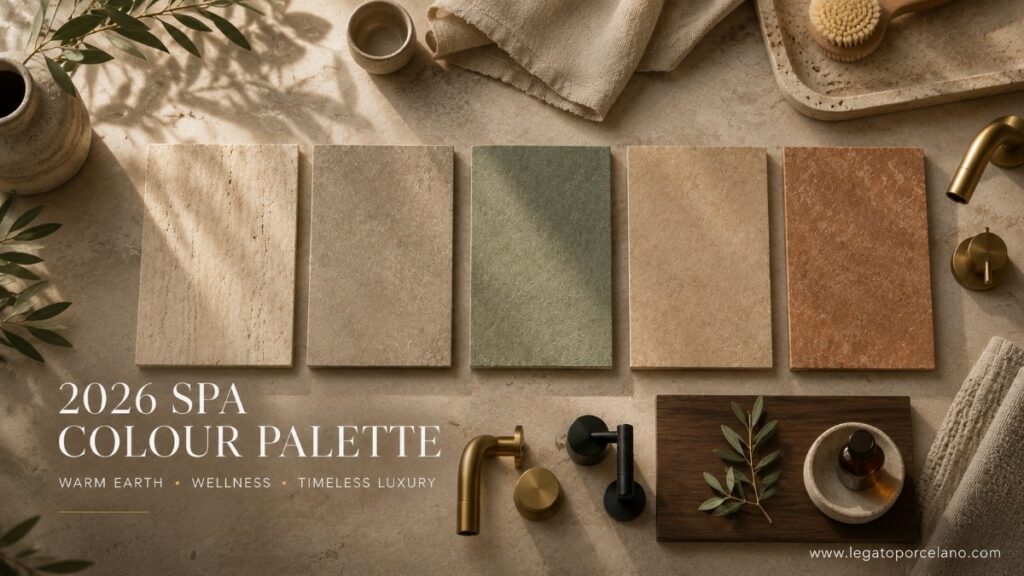
Per American Olean’s published spa tile design guide, stone-look porcelain with subtle veining and soft contrasts creates a calming visual that feels elevated yet inviting — perfect for spa settings where relaxation is the functional goal. The 2026 colour direction, tracked by Edward Martin’s 2026 trend analysis, favours soft clay, warm sand, muted beige, mushroom, and sage — tones that soften architectural lines and pair effortlessly with natural light.
Related reading: Marble Look Bathroom Tiles — Design & Selection Guide
Large Format for Spatial Continuity
Spa bathrooms are defined by the absence of visual interruption. The most effective tile strategy for achieving this: large-format porcelain — 60×60 cm, 60×120 cm, or 80×80 cm — applied continuously across floor and walls with minimal tonal grout joints. Each reduction in grout line density removes a visual boundary that the brain processes as a spatial limit. The result is a room that reads as a single continuous surface — the same quality produced by the stone and travertine surfaces in the finest destination spas.
Tile drenching — carrying the same tile across floor, walls, and shower area — is among the most named design approaches in 2026 professional trend reports, including Block Renovation’s 2026 bathroom tile analysis. In a spa bathroom context, it is not a trend choice. It is the logical endpoint of the design intent: maximum continuity, minimum visual noise.
Related reading: Large Format Bathroom Tiles — Design & Installation Guide
Matte and Honed Finishes — The Spa Standard
High-gloss tile has no place as a primary surface in a spa bathroom. Spa design is built on the reduction of sensory stimulation — glare, visual intensity, reflective surfaces all work against the restorative intent. Matte and honed porcelain finishes absorb and diffuse light, creating softer, warmer, more enveloping environments. Per Edward Martin’s 2026 bathroom design trend report, matte and satin finishes are particularly popular in wellness-oriented bathrooms precisely because they reduce glare while improving underfoot traction and creating a sensory register more associated with natural stone than engineered surface.
Related reading: Matte vs Glossy Porcelain Tiles — Which Finish for Your Bathroom?
Colour & Palette: The Warm Earthy Direction of 2026
Colour in a spa bathroom is not decoration — it is environmental tone-setting. The palette determines the room’s psychological register from the moment of entry.
Warm Earthy Neutrals — The Dominant Direction
The cool grey and clinical white palettes that defined bathroom design through the 2010s are giving way to warmer, more grounding tones. Per Bedrosians’ 2026 tile colour analysis and Surfaces Galore’s 2025–2026 trend report, warm neutrals — sand, clay, mushroom, beige, muted sage, and soft terracotta — now dominate professional bathroom specifications. These colours feel restorative and grounding rather than stark. Importantly, IRPINO Construction’s 2026 bathroom design analysis confirms that 70% of polled designers favour transitional and timeless design, not trend-chasing: these warm earth tones have the permanence of natural stone references rather than the volatility of fashion colour cycles.
Sage and Biophilic Greens
Green has emerged as the most significant colour addition to spa bathroom design in 2025 and 2026. Per IRPINO Construction’s survey data, 64% of designers identified sage as a leading trend colour, with 43% pointing to olive. Brown-based greens in muted, nature-referenced tones work precisely because they carry the psychological associations of the outdoors — the same mechanism that makes biophilic design effective. Sage and soft olive tiles on a bathroom wall or as a vanity accent read as simultaneously contemporary and permanently natural. They do not date in the way that trend colours do.
BIOPHILIC COLOUR PRINCIPLE
Large format tiles (60×60 cm+) in light tones (LRV 65+). Tonal grout matched to tile base colour. Vertical tile orientation on walls. Glossy or satin walls for light amplification. Floor-to-ceiling continuous tile. No high-contrast grout. No small mosaic tiles as the primary surface. One material, two or three surfaces maximum.
External References: Bedrosians — Tile Colors in 2026: Shades Defining Home Design | IRPINO Construction — 2026 Bathroom Trends: Wellness & Space | Surfaces Galore — Bathroom Tile Trends 2025–2026
5 Design Principles That Produce a Genuinely Spa-Like Bathroom
| Principle | Application | Effect |
|---|---|---|
| Sensory Reduction | Remove visual noise: tonal grout, minimal fixtures, no pattern excess | Brain reads ‘calm’ before conscious perception registers the room |
| Material Warmth | Stone-look, travertine, timber accents, organic textures | Tactile and visual warmth reduces the clinical register of wet rooms |
| Spatial Continuity | Large format tile, floor-to-ceiling, single material narrative | Unbroken surfaces create the perception of dedicated retreat space |
| Thermal Comfort | Radiant floor heating beneath porcelain tile | Warmth underfoot is among the most-cited luxury bathroom features |
| Biophilic Integration | Live plants, natural light, organic stone and timber references | Direct nature connection proven to reduce stress response |
Principle 1: Sensory Reduction — The Hardest Thing to Design For
A spa does not feel calm because it added calming things. It feels calm because it removed stimulating ones. Busy tile patterns, high-contrast grout, multiple competing materials, harsh overhead lighting — each adds a layer of sensory input that the nervous system must process. The spa bathroom design philosophy begins with subtraction: fewer grout lines, fewer material transitions, fewer visual interruptions. The tile strategy — large format, tonal grout, single material narrative — is sensory reduction expressed in specification decisions.
Principle 2: Thermal Comfort — Underfoot Warmth as Luxury
Cold flooring disrupts the comfort expected in a wellness bathroom. Therefore, many premium projects now specify electric radiant heating beneath porcelain tile surfaces. According to Edward Martin, porcelain distributes heat efficiently while also helping reduce surface moisture and condensation. In addition, radiant heating improves the everyday user experience in both residential and hospitality environments.
RADIANT HEAT + PORCELAIN — VERIFIED COMPATIBILITY
Porcelain tile is among the most thermally conductive flooring materials available — it heats quickly, retains warmth, and distributes it evenly across the floor surface. Electric radiant heating systems are fully compatible with porcelain tile installation and are best installed beneath tiles 10 mm+ in thickness with appropriate thermal adhesive.
External References: WarmlyYours — Top 10 Bathroom Design Trends for 2026 | Edward Martin — Bathroom Design Trends to Consider Before Remodeling in 2026
Principle 3: Biophilic Integration — The Nature Connection
Biophilic bathroom design focuses on creating stronger connections between interior spaces and natural environments. For this reason, architects increasingly combine stone-look porcelain, warm neutral palettes, natural light, and moisture-tolerant plants inside wellness bathrooms. Even small additions, such as soft greenery or travertine-look surfaces, can make bathrooms feel calmer and more organic.
Principle 4: The Rainfall Shower — Sensory Centrepiece
Rainfall showers remain one of the defining features of luxury spa bathrooms. Unlike traditional shower heads, they distribute water more evenly and create a softer sensory experience. When combined with large-format porcelain surfaces, frameless glass, and warm lighting, rainfall showers help create a premium hospitality-style atmosphere within residential projects.
Related reading: Spa Bathroom Shower Design — Rainfall Shower & Tile Guide
Principle 5: Lighting — Indirect, Warm, Layered
Lighting strongly influences how a bathroom feels. Harsh overhead lighting creates visual fatigue, while layered lighting creates warmth and comfort. Therefore, modern spa bathrooms often use indirect LED lighting, warm colour temperatures, and dimmable systems. According to ADA Cosmetics, soft ambient lighting is now a defining characteristic of wellness-focused bathroom environments.
The Spa Bathroom Specification Summary
Every element in a spa bathroom serves the same function: reducing stimulation, increasing warmth, and referencing the natural world. The table below maps each surface and fixture decision to its sensory and design role.
| Surface / Element | Spa-Correct Specification | What It Does |
|---|---|---|
| Floor tile | Large-format matte/honed stone-look, DCOF ≥ 0.42, warm earth tone | Grounds the room, safe underfoot, natural reference |
| Wall tile | Large-format matte/satin same collection as floor, floor-to-ceiling | Continuity, warmth, removes material transitions |
| Shower floor | Textured porcelain or small mosaic, DCOF ≥ 0.42 verified | Safety with traction + drainage, tonal with main tile |
| Shower walls | Same large-format collection as main walls or coordinating stone-look | Jewel-box enclosure, visual continuity into shower |
| Grout | Tonal — matched to tile base colour, epoxy in wet zones | Near-seamless surface, maximum continuity |
| Radiant heating | Electric mat beneath porcelain tile, programmable thermostat | Thermal comfort — the most-cited luxury bathroom feature |
| Shower head | Ceiling-mounted rainfall, minimum 30 cm diameter | Sensory centrepiece — defines the spa shower experience |
| Lighting | Indirect LED perimeter, 2700–3000K, dimmable | Warm, layered, controllable — opposite of harsh overhead |
| Plants | Humidity-tolerant: ferns, peace lily, orchid, snake plant | Biophilic nature reference, air quality, visual texture |
| Fixtures | Brushed brass, warm bronze, or matte black — no chrome | Warmth, material coherence with earthy tile palette |
Conclusion: The Bathroom as a Wellness Space
A spa bathroom is not a bathroom with nicer tiles. It is a bathroom designed around a different function: restoration rather than efficiency. Every decision — the material warmth of stone-look porcelain, the continuity of large-format surfaces, the biophilic nature references, the radiant heat underfoot, the rainfall overhead — serves that function deliberately.
The design intelligence is not complicated. Reduce visual stimulation. Introduce material warmth. Connect to the natural world through surface, colour, light, and plant. The result is a room that works on the nervous system in the same way that a destination spa does — because it is built on the same principles, applied at residential scale with residential materials.
The cluster articles linked throughout this guide and in the map above go deep on every element — stone tile, warm palettes, biophilic design, shower specification, and radiant heating. The overview is here. Each specific decision has its own depth article one click away.
“A spa bathroom does not feel like a spa because of what was added. It feels like one because of what was carefully removed.”
| 🏛 | EXPLORE LEGATO PORCELANO Stone-look, travertine-look, and warm-tone porcelain tile collections — designed for bathrooms where the goal is restoration, not decoration. legatoporcelano.com/blog/ |
↑ Porcelain Tiles for Bathroom — Complete Pillar Guide | ↑ Large Format Bathroom Tiles | Explore all Legato Porcelano collections
FAQ
Large-format matte porcelain tiles with stone or travertine looks work best for spa bathrooms because they create visual continuity, reduce grout distraction, and produce the calm, luxurious atmosphere associated with wellness-focused interiors.
Warm shades like sand, mushroom, sage, clay, and beige create a softer, more restorative environment than cool grey palettes, helping bathrooms feel grounded, timeless, welcoming, and emotionally calming rather than clinical.
Yes — stone-look porcelain tiles are durable, moisture-resistant, low-maintenance, and ideal for bathrooms. Legato Porcelano offers warm, natural-looking porcelain surfaces designed specifically for modern wellness-inspired bathroom spaces.
Use large-format tiles, layered warm lighting, rainfall showers, tonal grout, minimal visual clutter, radiant floor heating, and natural textures to create a calming environment that supports comfort, relaxation, and sensory reduction.
Biophilic bathroom design connects interiors with nature through natural light, earthy colours, greenery, stone-inspired surfaces, and organic textures, helping create a calmer atmosphere that supports relaxation and overall emotional wellbeing.
Matte porcelain tiles soften reflections, reduce glare, improve underfoot comfort, and create a warmer atmosphere. Many wellness-focused collections from Legato Porcelano use matte finishes for a more natural spa-like aesthetic.
