Introduction
For centuries, natural stone has been one of the most admired materials in architecture. From the marble temples of ancient civilizations to the granite facades of modern skyscrapers, materials such as marble, granite, and limestone have symbolized durability, craftsmanship, and timeless design.
However, modern architecture now requires materials that offer more than visual appeal. Contemporary construction projects demand surfaces that combine durability, consistency, sustainability, and efficient installation. Architects and developers must balance aesthetics with performance, hygiene, and long-term maintenance.
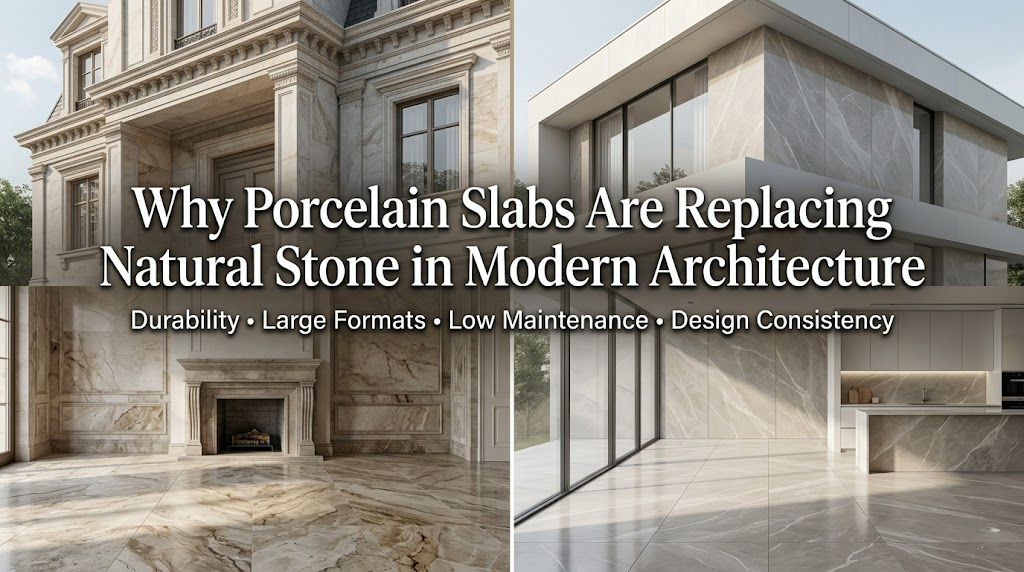
Because of these evolving requirements, the building materials industry is experiencing a gradual shift toward advanced engineered surfaces. Among these materials, large-format porcelain slabs have emerged as one of the most reliable alternatives to natural stone in modern construction.
Porcelain slabs replicate the visual elegance of natural minerals while delivering improved durability, predictable aesthetics, and minimal maintenance requirements. These characteristics are driving their growing use across residential, commercial, and hospitality architecture.
Industry researchon the global ceramic sector also highlights the rapid expansion of advanced porcelain manufacturing technologies in architectural materials.
The Traditional Role of Natural Stone in Architecture
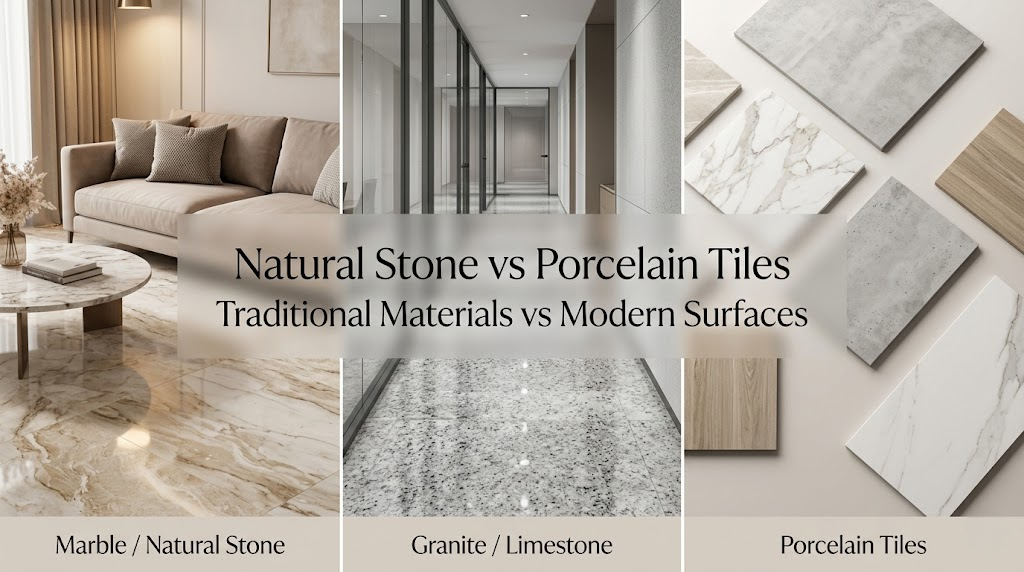
Natural stone has played a central role in architecture for thousands of years. Historic monuments, temples, and civic buildings were often constructed using marble, granite, and limestone because of their structural durability and aesthetic depth.
Marble became famous for its distinctive veining patterns and luxurious appearance. It has been widely used in sculptures, flooring, wall cladding, and luxury interiors.
Granite, on the other hand, gained popularity because of its exceptional durability. Its dense mineral composition makes it resistant to scratches and heat, which is why granite has traditionally been used for kitchen countertops and heavy-traffic flooring surfaces.
For decades, these materials were considered the benchmark for premium architectural surfaces. However, as construction techniques evolved and architectural designs became more complex, several limitations of natural stone became increasingly noticeable.
Limitations of Natural Stone in Modern Construction
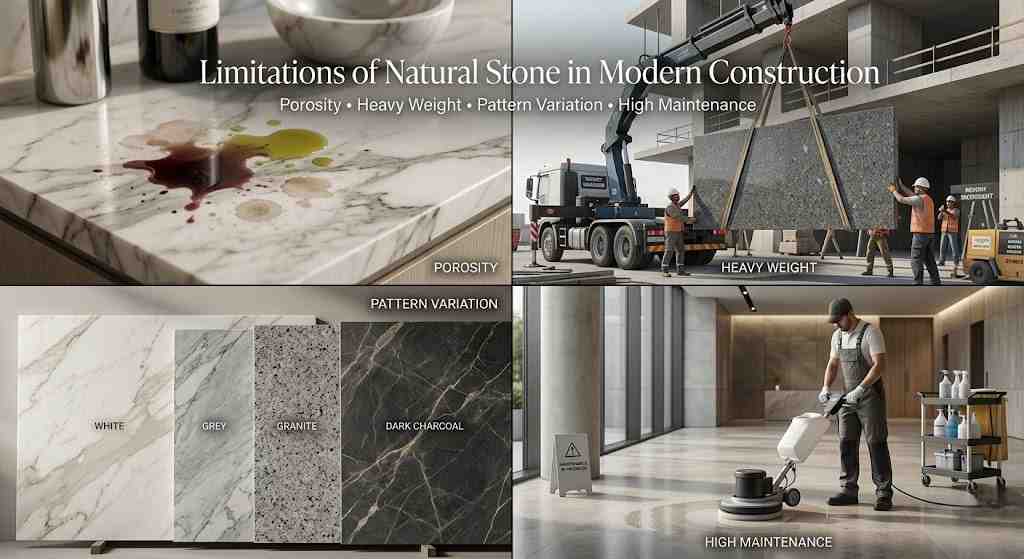
Despite its aesthetic appeal, natural stone presents several practical challenges in modern architectural projects.
Porosity and Staining
Many natural stones are porous, meaning they can absorb liquids such as oil, wine, or acidic substances. Over time, this may lead to staining or surface damage.
Because of this, natural stone surfaces typically require regular sealing and specialized maintenance.
Variation in Pattern and Color
Natural stone is quarried directly from the earth, which means each slab can vary in color, texture, and veining.
While this uniqueness can be visually appealing, it can create difficulties when architects need consistent visual patterns across large commercial installations.
Weight and Size Limitations
Natural stone slabs are extremely heavy and difficult to transport. Quarrying processes also limit slab dimensions, making it difficult to create seamless architectural surfaces.
These factors often increase installation complexity and project costs.
As a result, architects increasingly look for engineered materials that provide predictable performance and easier installation.
Why Modern Architecture Is Moving Toward Engineered Surfaces
Contemporary architectural design emphasizes clean lines, open spaces, and minimal visual interruptions. Architects frequently aim to create continuous surfaces that enhance spatial flow and visual harmony.
To achieve this, modern building materials must provide:
- high durability
- predictable quality
- minimal maintenance
- large-format installation capability
Engineered materials are manufactured under controlled conditions, allowing producers to optimize density, structural strength, and dimensional stability.
Among these materials, large-format porcelain slabs have emerged as one of the most advanced surface solutions for modern architectural applications.
Key Reasons Porcelain Slabs Are Replacing Natural Stone
Exceptional Durability
Porcelain slabs are manufactured by compressing natural minerals such as clay, feldspar, and silica under extremely high pressure. The material is then fired at temperatures exceeding 1200°C, creating a dense and highly durable structure.
Because of this manufacturing process, porcelain slabs offer excellent resistance to:
- scratches
- abrasion
- impacts
- heavy foot traffic
These properties allow architects to use porcelain slabs across multiple surfaces in a building. Designers often explore broader large-format porcelain slab applicationsin modern architecture when evaluating how these materials can be used for walls, floors, and architectural facades.
Non-Porous Surface and Low Maintenance
One of the most important advantages of porcelain slabs is their non-porous surface. Unlike natural stone, porcelain does not absorb liquids.
This means porcelain slabs naturally resist:
- stains
- moisture
- bacteria growth
Unlike marble or granite surfaces, porcelain slabs do not require periodic sealing. This significantly reduces long-term maintenance requirements and makes porcelain particularly suitable for kitchens, bathrooms, hospitality spaces, and healthcare environments.
Large Format Design Capabilities
Modern porcelain manufacturing technology allows slabs to be produced in extremely large sizes. Many slabs reach dimensions of 1600 × 3200 mm or larger, enabling architects to design expansive surfaces with minimal joints.
Large format porcelain slabs are commonly used for:
- seamless kitchen countertops
- large wall cladding panels
- continuous flooring surfaces
- modern architectural facades
Fewer joints improve both visual continuity and surface hygiene. Architects researching flooring materials frequently compare porcelain with other surfaces through guides discussing the best tiles for flooringin modern architecture.
Consistent and Controlled Aesthetics
Natural stone often varies significantly in pattern and color due to its geological formation. While this variation can create unique surfaces, it may also lead to inconsistencies in large installations.
Porcelain slabs use advanced digital printing technology that allows manufacturers to reproduce the appearance of natural marble, granite, or concrete with remarkable accuracy. Because the design is digitally controlled, multiple slabs can maintain a consistent pattern and color.
This consistency is particularly valuable for large architectural projects where designers need predictable visual results.
Resistance to Heat, UV, and Chemicals
Porcelain slabs are highly resistant to extreme environmental conditions. Their manufacturing process makes them capable of withstanding high temperatures without damage.
In addition, porcelain slabs are resistant to:
- chemical cleaners
- UV exposure
- moisture
- staining agents
These properties allow porcelain slabs to perform effectively in both interior and exterior architectural environments.
Porcelain Slabs vs Natural Stone
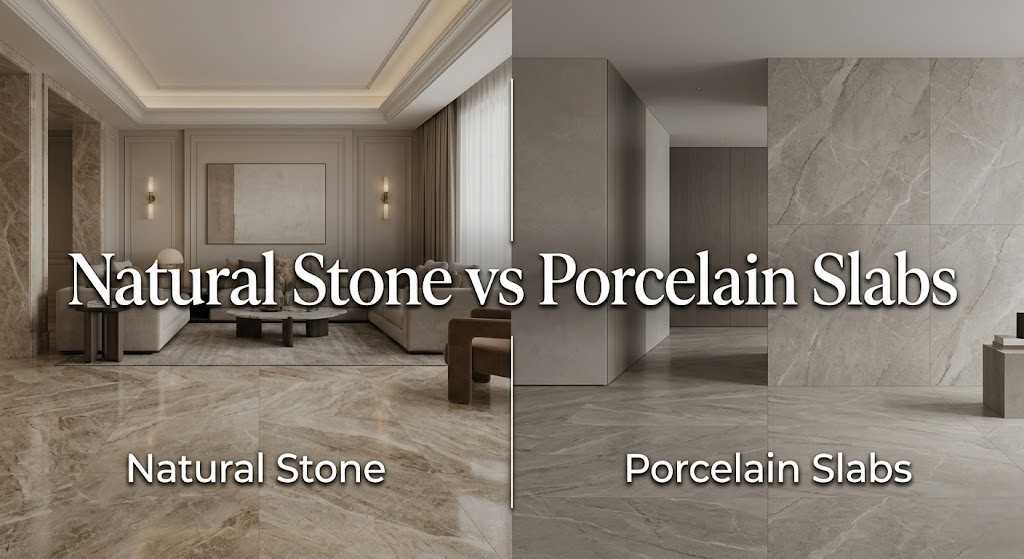
| Feature | Porcelain Slabs | Natural Stone |
| Porosity | Very Low | Medium to High |
| Maintenance | Low | High |
| Slab Size | Large formats available | Limited |
| Weight | Relatively lighter | Heavy |
| Pattern Consistency | Controlled | Variable |
Architectural Applications of Porcelain Slabs
Porcelain slabs are highly versatile materials used across a wide range of architectural surfaces. Their durability, large-format size, and design flexibility make them suitable for both interior and exterior construction applications.
Kitchen Countertops
Porcelain slabs are increasingly used for kitchen countertops because they resist heat, stains, and scratches. Their non-porous surface also helps maintain hygienic conditions, making them ideal for food preparation areas in modern kitchens.
Interior Wall Cladding
Large-format porcelain slabs create smooth wall surfaces with minimal joints, enhancing the visual impact of interior spaces. Designers frequently use them in living rooms, hotel lobbies, and luxury residential interiors to achieve a clean and contemporary aesthetic.
Large-Format Flooring
Porcelain slab flooring allows architects to create expansive surfaces with fewer grout lines. This improves visual continuity while also making floors easier to maintain in high-traffic environments such as commercial buildings and public spaces.
Exterior Facades
Porcelain slabs are widely used in ventilated facade systems because of their resistance to UV exposure, moisture, and temperature fluctuations. These properties make them suitable for exterior architectural cladding in modern buildings.
Sustainability Advantages of Porcelain Slabs
Sustainability has become a key priority in modern architecture.
Porcelain slabs contribute to sustainable construction because:
- they offer long material lifespans
- they require minimal maintenance chemicals
- they can incorporate recycled materials in production
These characteristics help reduce environmental impact over the lifecycle of a building.
Why Architects Are Choosing Porcelain Slabs
Architects and developers increasingly specify porcelain slabs because they provide a balance between durability, aesthetics, and installation efficiency.
Porcelain slabs offer predictable manufacturing quality, easier fabrication, and lower long-term maintenance compared to natural stone. At the same time, they preserve the sophisticated appearance designers expect from premium architectural materials.
Manufacturers such as Legato Porcelano specialize in large-format porcelain surfaces designed to support modern architectural projects with durable and versatile material solutions.
Conclusion
Natural stone has shaped architectural history for centuries. However, the demands of modern construction continue to evolve.
Today’s projects require materials that combine durability, design flexibility, and efficient installation. Porcelain slabs successfully merge the visual elegance of natural stone with the advantages of advanced ceramic manufacturing technology.
With their strength, large-format capabilities, and low maintenance requirements, porcelain slabs are becoming one of the most important surface materials in contemporary architecture.
As architectural trends continue to emphasize seamless design and long-term performance, porcelain slabs are expected to play an increasingly important role in shaping the future of building design.
FAQs
Porcelain slabs offer higher durability, zero porosity, and consistent design, making them more practical than natural stone for modern architecture.
No, porcelain slabs are non-porous and do not require sealing, making them much easier to maintain than natural stone.
Yes, porcelain slabs are heat-resistant, stain-proof, and hygienic, making them ideal for modern kitchen countertops.
Yes, porcelain slabs are UV-resistant, weatherproof, and durable, making them perfect for exterior cladding and ventilated facades.
Large format porcelain slabs allow seamless surfaces with fewer joints, improving both aesthetics and maintenance.
Yes, porcelain slabs are durable, recyclable, and require fewer chemicals, supporting sustainable construction practices.