Introduction
Kitchen countertops experience some of the most demanding conditions in any residential space. They are exposed daily to heat, moisture, spills, food preparation, and heavy use. Because of this, architects and designers must select materials that combine durability, hygiene, and long-term visual performance.
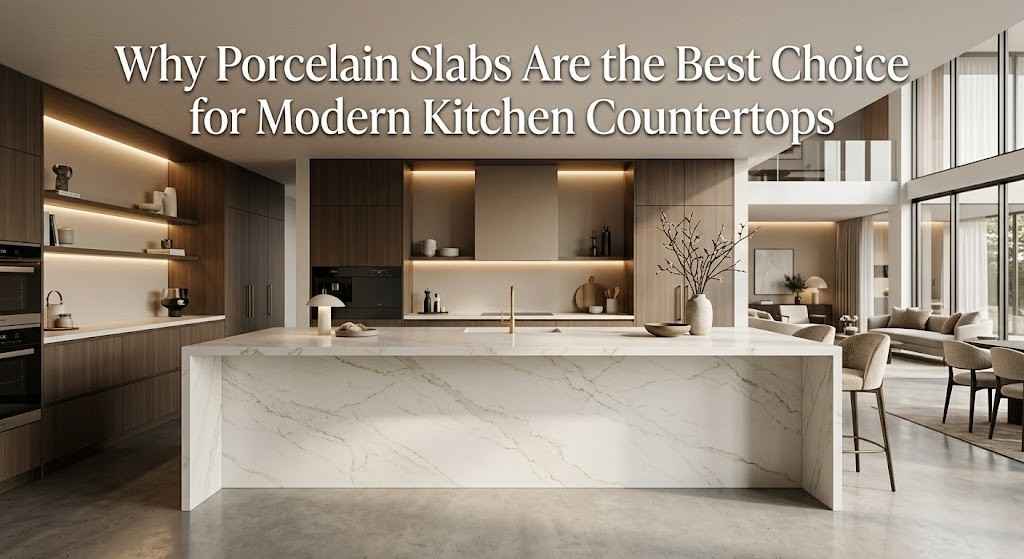
At the same time, kitchen design trends have evolved significantly. Open-concept layouts and large kitchen islands have turned countertops into one of the most prominent architectural surfaces in modern homes. Materials now need to deliver not only durability but also seamless aesthetics and minimal maintenance.
In response to these evolving design and performance demands, large-format porcelain slabs for kitchen countertops have emerged as a compelling solution. According to industry research on the global ceramics sector, porcelain surfaces represent one of the fastest-growing categories in architectural materials due to their durability and large-format design flexibility They offer the visual elegance of natural stone while delivering exceptional resistance to heat, stains, scratches, and UV exposure.
As a result, porcelain slabs are increasingly being specified in contemporary kitchen projects where both performance and design continuity are essential.
The Evolution of Kitchen Countertop Materials
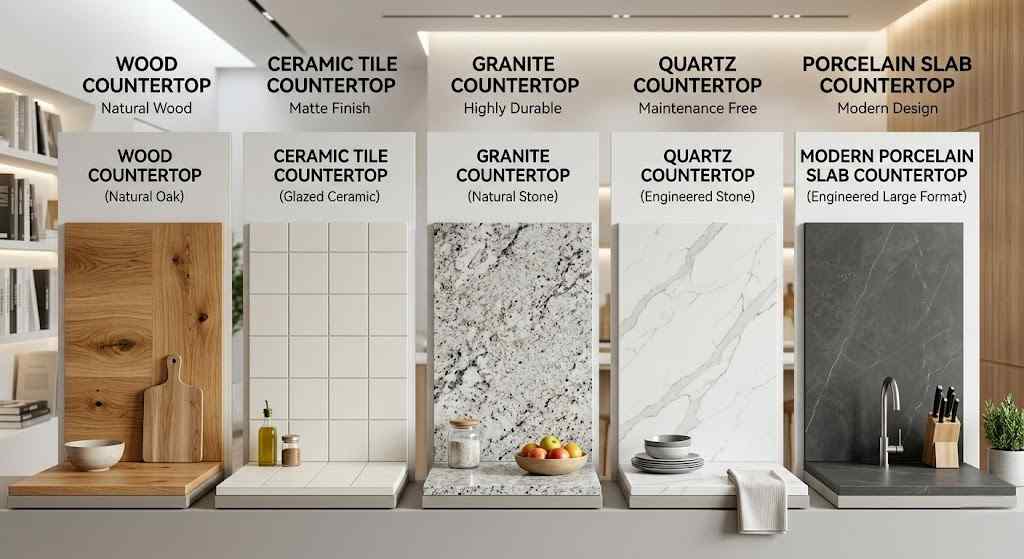
Kitchen countertop materials have evolved dramatically over the past several decades. Early kitchens often relied on simple surfaces like wood, laminate, or ceramic tile, which were affordable but limited in durability and aesthetics.
As kitchen design gained prominence in residential architecture, natural stone surfaces such as granite and marble became increasingly popular. Later, engineered materials like quartz countertops were introduced to address some of the maintenance issues associated with natural stone.
However, each of these materials still presents certain limitations.
Traditional Countertop Materials and Their Limitations
Granite Countertops
Granite became widely popular in the early 2000s because of its natural beauty and durability. Each slab features unique mineral patterns that create a distinctive appearance.
However, granite is naturally porous, which means it requires periodic sealing to prevent liquids and oils from penetrating the surface. Without proper maintenance, granite countertops can stain and harbor bacteria.
Quartz Countertops
Quartz countertops are engineered using crushed quartz minerals combined with polymer resins. This manufacturing process produces a non-porous and uniform surface that is resistant to stains.
Despite these advantages, quartz surfaces have a key limitation: the resin binders can be sensitive to high heat and prolonged UV exposure, making them less suitable for outdoor kitchens or spaces with strong sunlight.
Marble Countertops
Marble remains one of the most luxurious materials used in kitchen design. Its elegant veining patterns make it a favorite choice for high-end residential projects.
However, marble is relatively soft and chemically reactive. Acidic substances such as lemon juice or vinegar can cause etching, while everyday use may lead to scratches and stains. As a result, marble countertops require careful maintenance.
Why Porcelain Slabs Are Ideal for Modern Kitchen Countertops
As kitchen design has evolved, architects and designers increasingly look for materials that combine durability, low maintenance, and strong visual appeal. Countertops are exposed to heat, moisture, stains, and heavy daily use, so the surface material must perform well under demanding conditions.
Porcelain slabs have emerged as a practical solution because of their advanced manufacturing process and high-performance characteristics. The following features explain why porcelain slabs are becoming a preferred choice for modern kitchen countertops.
High Heat Resistance
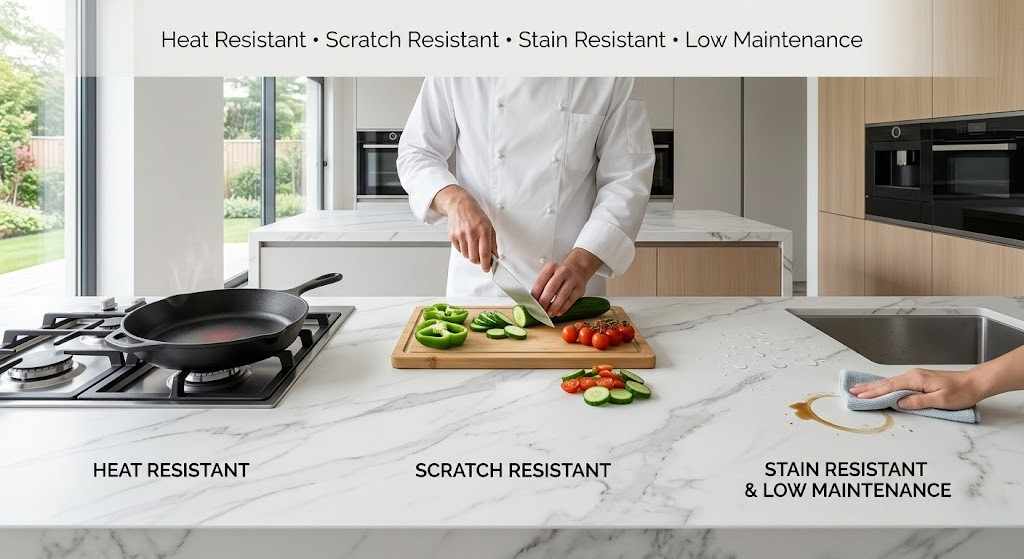
Because porcelain is produced at very high firing temperatures, the surface naturally tolerates heat exposure during everyday kitchen use.
Hot cookware can generally be placed on porcelain countertops without causing discoloration or surface damage.
Strong Scratch Resistance
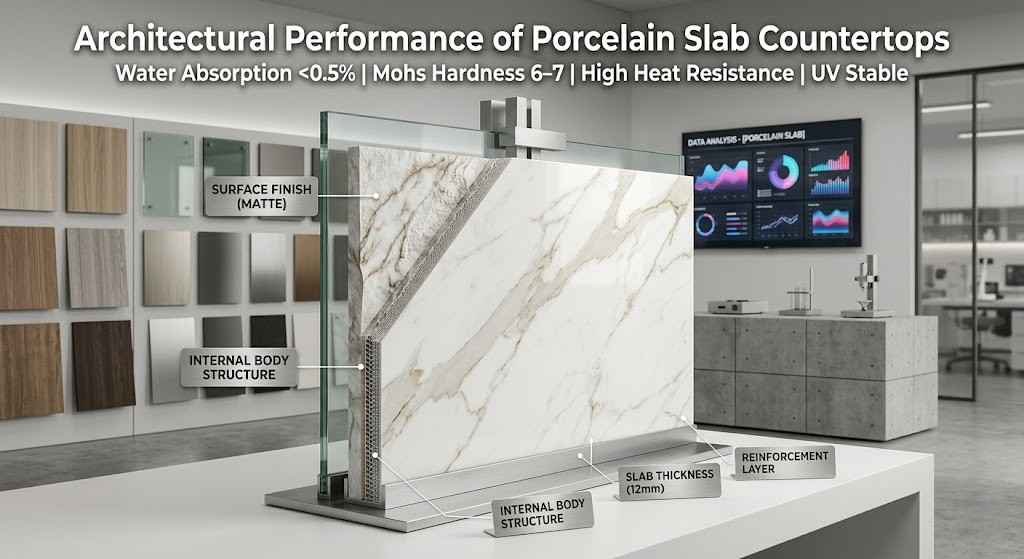
Porcelain surfaces typically rank between 6 and 7 on the Mohs hardness scale, providing strong resistance against scratches caused by kitchen utensils and daily food preparation.
Although cutting boards are recommended, the surface remains durable for long-term use.
Ultra-Dense Material Composition
Porcelain slabs are manufactured using natural minerals such as clay, feldspar, silica, and mineral pigments. These materials are compressed under extremely high pressure and fired at temperatures above 1200°C.
This process creates a dense vitrified structure that provides excellent durability and resistance to external damage.
Extremely Low Water Absorption
Porcelain slabs typically have water absorption rates below 0.5%, which makes them highly resistant to moisture penetration.
This low porosity helps prevent staining and reduces the risk of bacteria or mold developing within the material.
Large-Format Slab Sizes
Modern porcelain manufacturing technology allows slabs to be produced in large sizes, commonly reaching 1600 × 3200 mm.
These larger formats allow architects and designers to create:
- seamless kitchen islands
- countertops with minimal joints
- continuous backsplashes
- waterfall countertop designs
This helps achieve a cleaner and more modern kitchen aesthetic.
Advanced Surface Design
Digital printing technology allows porcelain slabs to replicate the appearance of natural materials such as Calacatta marble, Carrara marble, travertine, and concrete finishes.
These designs offer the visual appeal of natural stone while requiring significantly less maintenance.
Because of this combination of durability, design flexibility, and low maintenance, porcelain slabs are increasingly specified by architects and designers for modern kitchen countertop applications.
Architectural Specifications of Porcelain Slab Countertops
When architects evaluate porcelain slabs for kitchen countertops, they typically consider several technical properties that influence long-term performance.
Water Absorption
Ceramic industry standards classify materials with water absorption below 0.5% as porcelain-grade surfaces, which explains their strong resistance to moisture and staining. This extremely low absorption prevents moisture penetration and helps maintain hygienic kitchen surfaces.
Surface Hardness
With a Mohs hardness rating between 6 and 7, porcelain surfaces resist scratches caused by common kitchen tools and utensils.
Heat Resistance
Since porcelain slabs are fired at temperatures exceeding 1200°C, they naturally withstand high heat exposure during daily kitchen use.
UV Stability
Unlike some engineered materials, porcelain surfaces maintain color stability even under prolonged ultraviolet exposure. Because of this property, porcelain countertops also perform well in outdoor kitchens.
Flexural Strength
Porcelain slabs also demonstrate strong flexural strength, which helps them withstand bending stress during fabrication, transport, and installation.
Porcelain Slab Sizes and Thickness Options
Porcelain slabs are produced in large architectural formats that allow greater design flexibility.
Common slab sizes include:
- 1200 × 2400 mm
- 1200 × 2800 mm
- 1600 × 3200 mm
These dimensions allow designers to create large countertops or kitchen islands with minimal seams.
Thickness options typically include:
| Thickness | Typical Application |
|---|---|
| 6 mm | wall cladding and backsplashes |
| 9–12 mm | kitchen countertops |
| 15–20 mm | heavy-duty commercial surfaces |
Several manufacturers now produce these porcelain slab formats, including companies such as Legato Porcelano, which focuses on large-format porcelain surfaces for modern interior and architectural projects.
Design Possibilities with Large Format Porcelain Slabs
Porcelain slabs provide remarkable design flexibility for modern kitchens.
Seamless Kitchen Islands
Large slab sizes allow entire kitchen islands to be covered with a single continuous surface. Consequently, designers can eliminate visible seams and create a refined, minimalist appearance.
Full-Height Backsplashes
In addition, porcelain slabs can extend vertically from the countertop to the ceiling. This approach creates a dramatic architectural feature while maintaining material consistency throughout the kitchen.
Architects often explore broader applications of these surfaces through resources such as large-format porcelain slab applications
Marble-Look Porcelain Surfaces
Many porcelain slabs replicate premium marble patterns. As a result, designers can achieve the elegance of natural marble without worrying about etching or staining.
Waterfall Countertops
Waterfall edges remain one of the most popular design trends in modern kitchens. In this design, the countertop continues vertically down the sides of the cabinetry.
Because porcelain slabs allow precise mitered edges, designers can easily create seamless waterfall installations.
Porcelain Slabs vs Other Countertop Materials
| Feature | Porcelain Slabs | Granite | Quartz | Marble |
|---|---|---|---|---|
| Heat Resistance | Excellent | Good | Moderate | Good |
| Stain Resistance | Excellent | Moderate | Excellent | Poor |
| Maintenance | Very Low | Medium | Low | High |
| UV Resistance | Excellent | Good | Limited | Good |
| Sealing Required | No | Yes | No | Yes |
This comparison highlights why porcelain slabs are increasingly chosen for high-performance kitchen surfaces.
Fabrication and Installation Considerations
Precision Fabrication
Because porcelain slabs are extremely dense, fabricators must use specialized cutting tools such as diamond blades or water-jet technology. These advanced tools allow precise edge finishing and accurate countertop fabrication.
Proper Substrate Support
Installers typically place porcelain slabs over reinforced substrates such as plywood or cement board. This structural support ensures long-term durability and prevents unnecessary stress on the slab.
Why Porcelain Slabs Are the Future of Kitchen Countertops
Several factors explain the growing popularity of porcelain slabs in modern kitchen design.
Long-Term Durability
Porcelain surfaces resist heat, scratches, stains, chemicals, and UV exposure. Therefore, they maintain their appearance even after years of heavy use.
Design Versatility
Designers can use porcelain slabs across multiple surfaces, including countertops, walls, floors, and even exterior facades. This versatility allows architects to create cohesive interior spaces.
Sustainability
Porcelain slabs consist primarily of natural minerals and contain no harmful VOC emissions. Consequently, they represent an environmentally responsible surface material.
Alignment with Modern Architecture
Modern architecture emphasizes clean lines, minimalism, and large continuous surfaces. Porcelain slabs perfectly support these design principles, making them an ideal choice for contemporary kitchens.
When researching material options for contemporary interiors, architects often review resources discussing the best tiles for flooring to compare durability, maintenance, and design performance across different surfaces.
Factors to Consider When Choosing Porcelain Slabs for Countertops
When selecting porcelain slabs for kitchen countertops, architects and builders typically evaluate several practical considerations.
Slab Size
Large slab sizes allow designers to minimize visible seams. Formats such as 1600 × 3200 mm are often preferred for kitchen islands.
Thickness Selection
Most residential kitchen countertops use 12 mm slabs, which provide sufficient strength while remaining relatively lightweight for fabrication.
Surface Finish
Porcelain slabs are available in several finishes, including:
- polished
- matte
- satin
- textured
The choice of finish affects both aesthetics and slip resistance.
Pattern Consistency
Digital printing technology allows porcelain slabs to replicate natural materials such as marble or travertine while maintaining consistent patterns across multiple slabs. This helps designers achieve cohesive visual surfaces in larger kitchen layouts.
In additionally Porcelain slabs are typically cut using diamond blade saws or water-jet technology to achieve precise dimensions and minimize edge chipping.
For project-scale construction or commercial developments, architects and importers also evaluate sourcing reliability and manufacturing standards when choosing the right porcelain tile manufacturer.
Conclusion
As kitchen design continues to evolve, the demand for materials that combine performance, aesthetics, and longevity will only increase.
Porcelain slabs represent one of the most advanced countertop solutions available today. They deliver the beauty of natural stone, the durability of engineered materials, and the design flexibility required for modern architecture.
For homeowners, architects, and builders seeking a high-performance surface that balances style and functionality, porcelain slabs have become one of the most compelling choices for modern kitchen countertops.
Frequently Asked Questions (FAQs)
Yes, porcelain slabs are highly durable, heat-resistant, and non-porous, making them ideal for modern kitchen countertops. They offer the look of natural stone with significantly lower maintenance.
Porcelain slabs rank around 6–7 on the Mohs hardness scale, making them highly scratch-resistant during normal kitchen use. However, using cutting boards is recommended to protect knives.
Porcelain countertops offer superior heat resistance and UV stability compared to quartz, making them suitable for both indoor and outdoor kitchens. Quartz may discolor when exposed to high heat or sunlight.
No, porcelain countertops are non-porous and do not require sealing. Their surface naturally resists stains, moisture, and bacteria.
The most common thickness for kitchen countertops is 12 mm, offering the right balance of strength and weight. Thicker options like 20 mm are used for premium installations.
Porcelain slab countertops are typically priced similar to mid- to high-end quartz or granite, depending on fabrication and installation. Their durability and low maintenance often make them cost-effective long term.