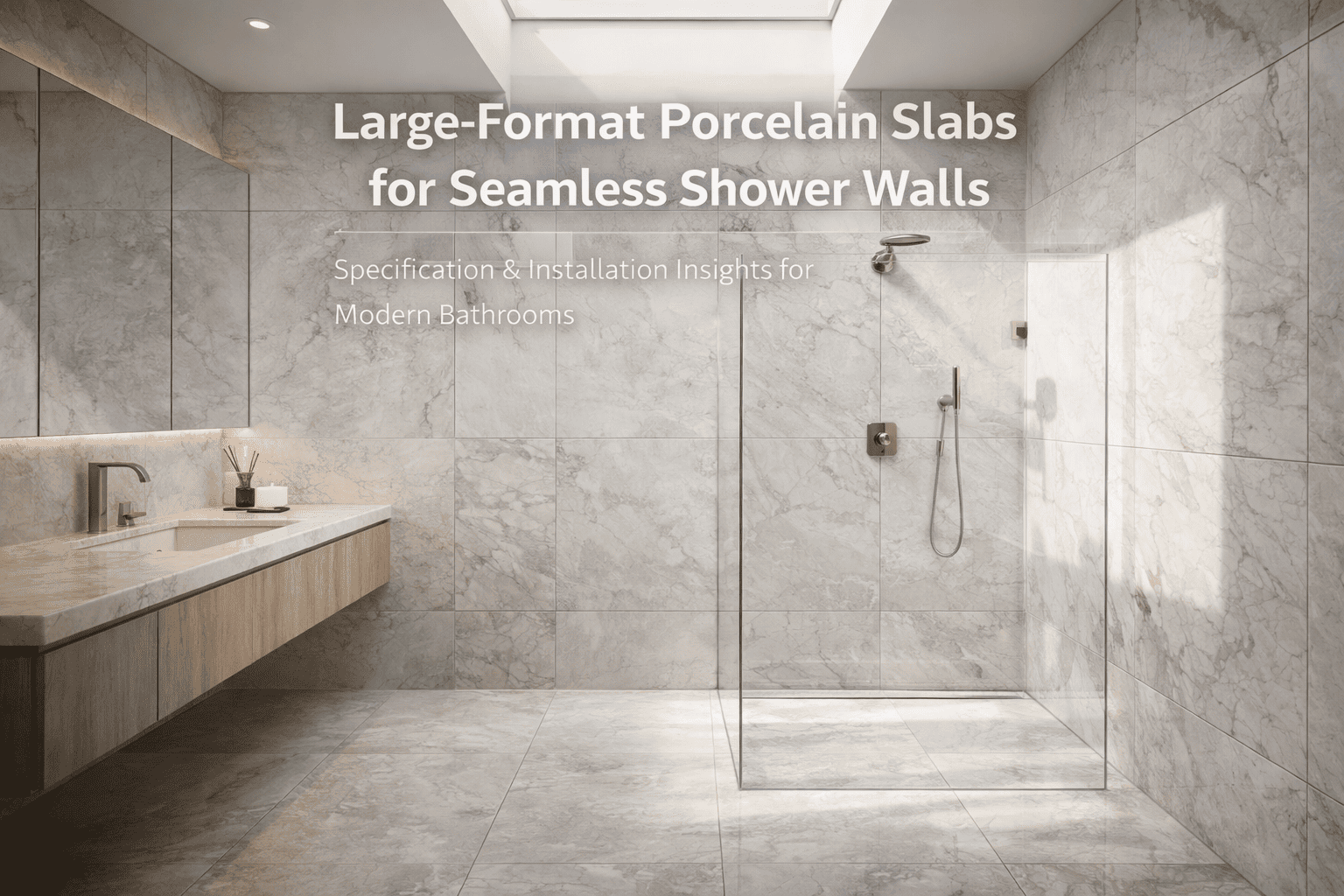
Large-format porcelain slabs are ideal for showers, bathroom vanities, and wet areas because they feature extremely low water absorption, high durability, and minimal grout lines. Their large dimensions allow seamless wall installations, improving waterproofing performance while creating elegant, easy-to-maintain bathroom surfaces.
Introduction
Modern bathroom design is evolving rapidly, particularly in high-end residential and hospitality architecture across the United States. Designers are moving away from small-format tiles and heavily grouted surfaces toward large, continuous materials that create cleaner visual lines and simplify maintenance.
Traditional tile installations often introduce dozens of grout joints in showers and wet areas. These joints can trap moisture, accumulate soap residue, and require ongoing maintenance to prevent mold or staining.
Large-format porcelain slabs provide a compelling alternative. Their expansive dimensions allow shower walls, bathroom vanities, and wet-area surfaces to be covered with minimal joints, creating seamless architectural finishes that are both durable and visually refined.
This article explains how architects and contractors specify large-format porcelain slabs for wet areas, including material performance, slab sizes, installation requirements, and design advantages for modern bathrooms.
India has also become a major global producer of ceramic materials, exporting large volumes of tiles and slabs worldwide as the industry continues expanding through advanced manufacturing technologies.
Understanding Large-Format Porcelain Slabs in Bathroom Architecture
Porcelain slabs are engineered ceramic panels produced using extremely high pressure and firing temperatures above 1200°C. This manufacturing process creates a dense, durable surface with excellent resistance to moisture, stains, and scratches.
Unlike traditional tiles, slabs are produced in very large dimensions.
Common Architectural Slab Sizes
| Slab Size | Typical Use |
| 1200 × 2400 mm | Bathroom walls and vanity panels |
| 1200 × 2700 mm | Full-height shower surrounds |
| 1600 × 3200 mm | Luxury bathrooms and hotel interiors |
These sizes allow architects to cover large vertical surfaces with only one or two panels.
The result is a seamless appearance with significantly fewer grout joints, which is particularly valuable in moisture-prone environments.
Architects exploring innovative surface materials often analyze real-world large-format porcelain slab applications before specifying them in projects.
What Makes Porcelain Slabs Ideal for Wet Areas
Bathrooms place unique performance demands on materials. Surfaces must resist moisture penetration, staining, and frequent cleaning.
Porcelain slabs meet these requirements through several technical characteristics.
Extremely Low Water Absorption
Porcelain typically has a water absorption rate below 0.5%, making it highly resistant to moisture infiltration. This makes it ideal for wet environments such as shower walls, steam rooms, bathroom floors, and vanity backsplashes.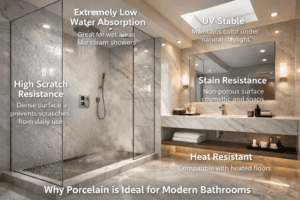
High Scratch Resistance
Porcelain surfaces are extremely dense, helping prevent scratches from daily use or cleaning tools. This durability ensures the surface maintains its original appearance for years.
Stain Resistance
Because porcelain is non-porous, cosmetics, shampoos, and cleaning products rarely penetrate the surface. This makes maintenance easy and keeps bathroom surfaces looking clean and hygienic.
UV Stability
Even in bathrooms with skylights or strong natural daylight, porcelain maintains excellent color stability. The surface does not fade or discolor over time.
Heat Resistance
Porcelain tolerates high temperatures, making it compatible with heated floors and steam showers. Its thermal stability ensures long-term performance in demanding environments.
Why Porcelain is Ideal for Modern Bathrooms
These characteristics make porcelain a preferred choice for modern bathrooms and spa environments. Architects and designers value its durability, hygiene, and low maintenance.
Sustainability Advantages in Modern Construction
Sustainability is also driving the adoption of porcelain surfaces in architecture. Studies on global ceramic material sustainability and lifecycle performance highlight that long-lasting materials such as porcelain can significantly reduce renovation cycles and construction waste in modern buildings.
Long Material Lifespan
Porcelain surfaces can last decades without replacement, reducing material waste over time. Their durability makes them a long-term architectural solution.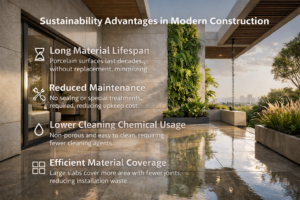
Reduced Maintenance
Unlike natural stone, porcelain usually does not require sealing or special treatments. This reduces maintenance effort and long-term costs.
Lower Cleaning Chemical Usage
Because porcelain is non-porous and easy to clean, fewer harsh chemicals are needed. This supports healthier indoor environments and sustainable building practices.
Efficient Material Coverage
Large porcelain slabs cover bigger areas with fewer joints and pieces. This reduces installation waste and creates a cleaner, more seamless design.
Growing Global Demand
Demand for ceramic materials continues to grow as production expands worldwide. Architects increasingly choose porcelain for its durability, aesthetics, and sustainability benefits.
Porcelain Slabs vs Other Bathroom Materials
Architects frequently compare porcelain slabs with other surfaces used in bathrooms.
| Material | Durability | Maintenance | Moisture Resistance | Design Variety |
| Porcelain Slabs | Very high | Low | Excellent | Wide range |
| Marble | Moderate | High | Porous | Natural stone |
| Quartz | High | Moderate | Good | Limited textures |
| Ceramic Tiles | Moderate | Moderate | Good | Small formats |
Why Porcelain Is Often Preferred
Porcelain combines the aesthetic flexibility of natural stone with the durability of engineered materials.
Key advantages include:
- minimal grout joints
- superior stain resistance
- large continuous surfaces
- easier long-term maintenance
Installation Insights for Shower Walls and Wet Areas
For best performance, many architects follow internationally recognized porcelain tile installation standards used in North American construction, which outline proper substrate preparation, adhesive selection, and panel handling techniques for large-format surfaces.
Surface Preparation
The substrate must be:
- perfectly level
- structurally stable
- fully waterproofed
Cement boards and waterproof membrane systems are commonly used behind shower walls.
Adhesive Requirements
Large-format slabs require high-performance polymer-modified adhesives to achieve full bonding strength.
Installers typically apply adhesive both to the wall surface and the slab itself to ensure full coverage.
Handling Large Panels
Because slabs can reach lengths of 3 meters or more, installers use:
- suction-cup lifting systems
- large rail cutting tools
- vibration systems to remove air pockets
Professional installers experienced with large-format slabs are essential for achieving accurate alignment and long-term performance.
When specifying materials, architects also evaluate choosing the right porcelain tile manufacturer to ensure consistent quality and reliable supply.
Bathroom Vanity and Countertop Applications
Beyond shower walls, porcelain slabs are increasingly used for bathroom vanities and countertops.
Typical thickness options include:
| Thickness | Application |
| 6 mm | wall panels |
| 9 mm | vertical cladding |
| 12 mm | countertops and vanities |
| 15–20 mm | heavy-duty surfaces |
Porcelain vanity tops provide several advantages:
- resistance to cosmetic stains
- seamless integrated backsplashes
- excellent durability
Because porcelain can mimic marble, terrazzo, or concrete textures, designers can maintain consistent materials across floors, walls, and countertops.
Architects often coordinate surfaces throughout the bathroom by studying the best tiles for flooring in modern architecture during the material selection phase.
Why Architects Are Increasingly Choosing Porcelain Slabs
Several architectural trends are driving the growth of porcelain slabs in wet-area design.
Seamless Visual Design
Large slabs create continuous surfaces that resemble natural stone slabs without excessive joints.
Hygienic Surfaces
Fewer grout lines reduce bacteria accumulation and simplify maintenance.
Design Flexibility
Advanced digital printing allows porcelain slabs to replicate:
- marble
- limestone
- terrazzo
- concrete
Global Manufacturing Advancements
Manufacturers such as Legato Porcelano produce engineered porcelain slabs designed for architectural interiors and wet-area applications.
These innovations are helping porcelain become one of the most versatile surface materials in contemporary architecture.
Conclusion
Large-format porcelain slabs are redefining bathroom design by enabling seamless shower walls, durable vanity surfaces, and high-performance wet-area installations.
Their extremely low water absorption, high durability, and large dimensions allow architects to create elegant spaces that are easier to maintain and more resistant to moisture damage.
As construction trends continue emphasizing hygiene, sustainability, and modern aesthetics, porcelain slabs are expected to remain a preferred material for bathrooms in both residential and commercial architecture.
Key Takeaways
- Large-format porcelain slabs reduce grout joints and create seamless shower wall surfaces.
- Their low water absorption makes them ideal for bathrooms and wet areas.
- Slabs up to 1600 × 3200 mm allow continuous architectural surfaces.
- Porcelain combines stone aesthetics with engineered durability.
- Proper installation is essential for long-term performance
FAQ’s Section
Are porcelain slabs waterproof for showers?
Porcelain slabs have extremely low water absorption, making them highly resistant to moisture. When installed correctly with waterproof substrates, they perform very well in shower environments.
What thickness porcelain slabs are used for bathroom vanities?
Bathroom vanity tops are typically fabricated using 12 mm or 20 mm porcelain slabs, which provide structural strength and durability.
Are large-format slabs difficult to install?
Yes. Because slabs are large and heavy, professional installers use specialized tools such as suction lifting frames and rail cutting systems.
Do porcelain slabs require sealing?
No. Unlike marble or natural stone, porcelain slabs are non-porous and generally do not require sealing.
Can porcelain slabs replace traditional tiles in bathrooms?
Yes. Large-format slabs can replace traditional tiles, reducing grout joints and creating a more seamless bathroom design.
