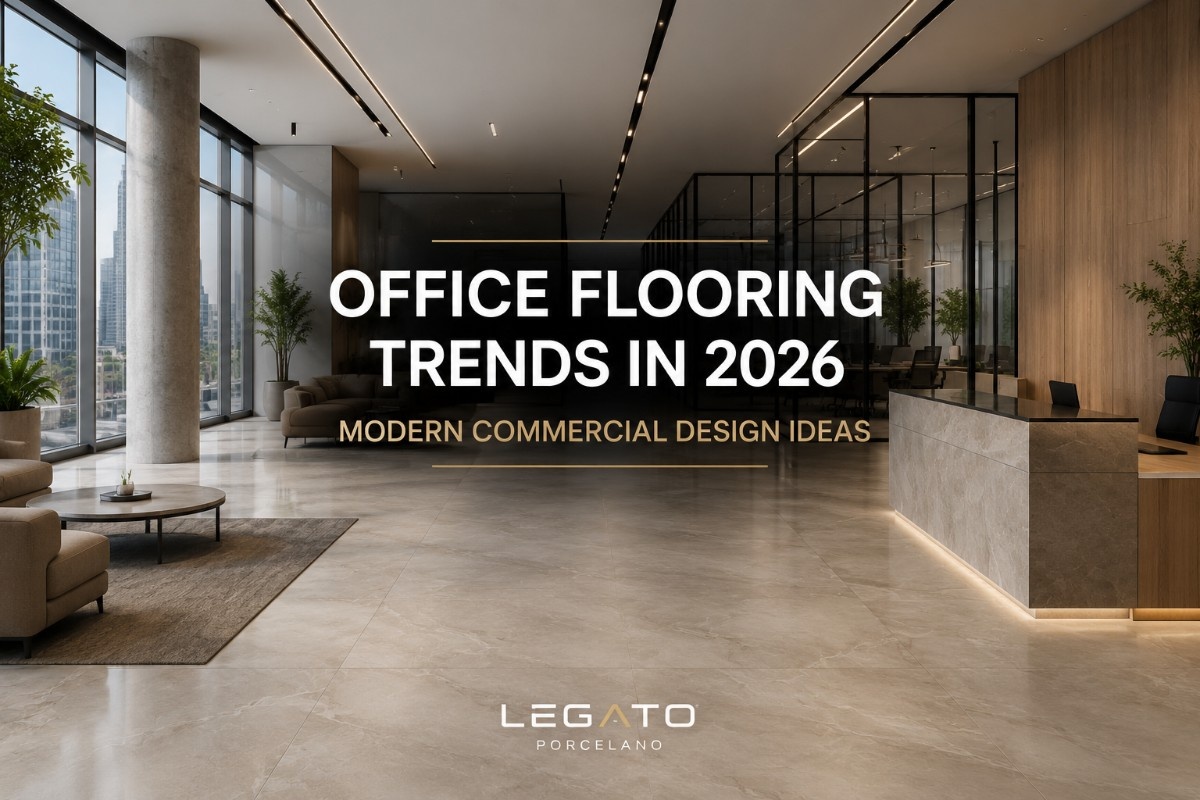
Office flooring has changed significantly over the last few years. Earlier, most commercial spaces focused only on durability and maintenance. Today, flooring plays a much bigger role in shaping workplace experience, brand identity, employee comfort, and even productivity.
Modern workplace research increasingly shows that office environments directly influence employee experience, productivity, and workplace satisfaction, especially in hybrid work models. This shift has completely changed the direction of commercial flooring design in 2026. Commercial interiors are now being designed around wellness, flexibility, and human-centered experiences rather than purely operational efficiency.
Architects and interior designers are moving toward materials that combine long-term performance with softer aesthetics. Large-format porcelain tiles, warm neutral tones, matte finishes, and biophilic textures are becoming the preferred choices across premium office projects.
This guide explores the biggest office flooring trends shaping commercial interiors in 2026 and explains why porcelain tile continues to dominate modern workspace design.
Why Office Flooring Trends Are Changing
The workplace itself has evolved. Modern offices are designed around employee experience rather than just operational functionality. Companies want spaces that encourage collaboration, improve comfort, and create a stronger first impression for both clients and employees.
As a result, flooring is no longer treated as a background surface. It has become part of the overall design language of the office.
In 2026, commercial flooring decisions are influenced by several key factors:
- sustainability
- low maintenance
- seamless visual design
- biophilic aesthetics
- flexible office layouts
- long-term durability
These priorities are pushing businesses away from older commercial flooring styles and toward more natural, experience-driven interiors.
Warm Neutral Tones Are Replacing Cool Grey Floors
One of the clearest changes in office flooring design is the decline of cool grey commercial interiors.
For years, grey flooring dominated office spaces because it looked modern and minimal. However, many businesses now feel these environments appear too cold, sterile, and impersonal.
In 2026, warm neutral palettes have become far more popular. Offices are increasingly choosing beige, greige, sand tones, warm stone finishes, and travertine-inspired porcelain tiles.
These colours create interiors that feel calmer and more inviting while still maintaining a professional appearance. Warm-toned flooring also works naturally with modern office materials such as wood furniture, glass partitions, black metal framing, and indoor plants.
This trend is closely connected to the rise of biophilic office design, where commercial interiors aim to feel more human-centered and naturally balanced.
Quote
“The era of cold corporate interiors is fading. Warm neutral flooring now helps offices feel more human, relaxed, and experience-driven.”
Large-Format Porcelain Tiles Continue to Dominate
Large-format porcelain flooring has become one of the defining features of modern commercial architecture.
Instead of smaller modular tiles, offices now prefer larger formats such as 600×1200mm and slab-style porcelain surfaces. These larger dimensions create cleaner visual flow across open spaces because they reduce grout lines and make floors appear more seamless.
The result is a workspace that feels larger, more premium, and architecturally refined.Large-format surfaces have become increasingly common in modern commercial architecture because they create cleaner visual continuity across open-plan interiors.
Large-format flooring is especially popular in:
- reception areas
- boardrooms
- commercial corridors
- coworking environments
- premium office lobbies
Beyond aesthetics, large-format porcelain also improves maintenance efficiency. Fewer grout joints mean easier cleaning and a more consistent appearance over time, which is important in high-traffic commercial spaces.
Insights:
“Large-format porcelain tiles create visual continuity across commercial interiors, reducing fragmentation and helping office spaces feel cleaner, calmer, and more spacious.”
Biophilic Flooring Is Becoming a Major Design Priority
Biophilic design continues to influence almost every part of modern office interiors, including flooring.
The idea behind biophilic flooring is not simply adding natural materials into a space. It is about creating environments that visually and emotionally feel connected to nature.
This is why stone-look porcelain, wood-look surfaces, textured finishes, and earthy colour palettes are becoming increasingly common in office projects.
Modern businesses want workplaces that reduce visual stress and create a more comfortable atmosphere for employees. Flooring plays an important role in achieving this because it covers such a large portion of the visual environment.
“Biophilic office design is no longer just an aesthetic trend. It has become part of how modern workplaces improve employee wellbeing and spatial comfort.”
Porcelain tile works particularly well for biophilic office design because it can realistically replicate natural materials while still offering the durability and low maintenance required in commercial environments.
Offices Are Using Flooring to Define Different Zones
Modern office layouts are far more flexible than traditional workplaces. Instead of rows of identical workstations, offices now include collaborative spaces, breakout zones, meeting rooms, quiet work areas, and informal lounges.
Because of this, flooring is increasingly being used to visually separate different functions within the same office.
Designers achieve this by changing:
- tile format
- surface texture
- colour tone
- layout pattern
- finish type
For example, an office may use matte stone-look porcelain in work areas while using polished marble-look tiles in the reception space. Collaborative areas may feature patterned layouts, while entrances use textured anti-slip surfaces for better safety.
This approach helps create clearer spatial organization without relying heavily on walls or physical barriers.
“In modern office design, flooring is increasingly being used as a navigation tool — subtly guiding movement and defining space without physical barriers.”
Matte Finishes Have Become the Commercial Standard
Glossy commercial floors are rapidly disappearing from mainstream office design.
In 2026, matte porcelain finishes have become the preferred choice for most commercial environments because they offer a better balance between aesthetics and practicality.
Matte flooring creates a softer and more natural appearance while also reducing glare from artificial lighting and large office windows. It is also easier to maintain because it does not show footprints, dust, or cleaning marks as visibly as high-gloss surfaces.
This makes matte porcelain particularly suitable for:
- open-plan offices
- coworking spaces
- corridors
- meeting areas
- high-traffic commercial floors
Glossy PGVT tiles are still used selectively in premium reception spaces or feature walls, but matte finishes now dominate most office flooring specifications.
Textured Surfaces Are Adding More Depth to Commercial Interiors
Modern commercial flooring is becoming more tactile and visually layered.
Advancements in porcelain manufacturing now allow tiles to realistically replicate the texture of limestone, travertine, natural stone, wood grain, and raw concrete.
These textured finishes create more depth and authenticity within office interiors. Instead of looking flat or artificial, surfaces feel more natural and architecturally detailed.
Texture also improves functionality. Slightly textured matte surfaces generally provide better slip resistance compared to polished flooring, making them more suitable for busy commercial environments.
In 2026, offices are prioritizing flooring that feels subtle, refined, and natural rather than overly glossy or decorative.
Sustainability Is Now a Core Flooring Requirement
Sustainability is no longer treated as a secondary feature in commercial construction projects. It has become a core specification requirement.
Modern office projects increasingly prioritize materials that offer:
- long service life
- low maintenance
- fewer replacement cycles
- low VOC emissions
- environmentally responsible manufacturing
Porcelain tile performs exceptionally well in this area because it is highly durable and can last for decades in commercial environments without requiring frequent replacement.
Compared to softer flooring materials such as carpet or vinyl, porcelain significantly reduces long-term maintenance and material waste over the life of a building.
For businesses focused on operational efficiency and sustainable architecture, this makes porcelain one of the most practical long-term flooring investments available today.
Pattern Layouts Are Returning in Modern Office Design
While seamless large-format flooring remains dominant, patterned tile layouts are making a comeback in selected commercial spaces.
Designers are increasingly using layouts such as herringbone, chevron, diagonal placement, and running bond patterns to create stronger visual identity within offices.
These layouts are commonly used in:
- reception areas
- executive spaces
- creative work environments
- collaborative zones
Pattern-based flooring helps add movement and architectural character without introducing excessive visual complexity.
“Designers are increasingly using flooring layouts to create identity within open-plan workspaces without overwhelming the overall aesthetic.”
Many offices now use the same tile in different layouts across multiple zones to create subtle transitions throughout the workspace.
Older Commercial Flooring Trends Are Fading
Several office flooring styles that once dominated commercial interiors are now rapidly losing relevance.
Cool monochrome grey floors, excessive glossy finishes, and small-format tiles are increasingly seen as outdated. Uniform flooring across every part of the office is also becoming less common as businesses move toward more dynamic and flexible interiors.
The modern direction is clearly focused on warmth, texture, natural aesthetics, and user experience.
Why Porcelain Tile Continues to Lead Commercial Office Design
Porcelain tile remains one of the strongest commercial flooring materials because it successfully combines performance with modern aesthetics.
It offers:
- long-term durability
- low maintenance
- large-format flexibility
- matte and textured finishes
- realistic natural-material designs
- excellent suitability for high-traffic environments
Modern manufacturers such as Legato Porcelano now offer extensive GVT and PGVT collections specifically designed for contemporary commercial architecture.
From warm stone-inspired surfaces to seamless large-format porcelain, these collections align perfectly with the direction office flooring design is taking in 2026.
Conclusion
Office flooring trends in 2026 are centered around creating spaces that feel more natural, comfortable, and visually refined.
Commercial interiors are moving away from cold corporate aesthetics and toward warmer, more experience-driven environments. Large-format porcelain tiles, matte finishes, textured surfaces, and biophilic materials are now shaping the future of workplace design.
At the same time, businesses continue to prioritize durability, low maintenance, and sustainability — all areas where porcelain tile performs exceptionally well.
“The future of office flooring is no longer purely functional. The most successful commercial interiors now combine performance, sustainability, and human-centered design in a single surface strategy.”
As office environments continue to evolve, flooring will remain one of the most important elements in defining how modern commercial spaces look, function, and feel.
Frequently Asked Questions(FAQ’s)
Large-format porcelain tiles with warm neutral colours and matte finishes are among the biggest office flooring trends in 2026.
Warm tones create offices that feel more welcoming, comfortable, and visually balanced compared to cold grey commercial interiors.
Yes, large-format porcelain tiles are highly suitable for busy office environments due to their strength, seamless appearance, and easy maintenance. Many architects and designers choose surfaces from Legato Porcelano for modern commercial interiors focused on both performance and visual consistency.
Porcelain tile offers durability, low maintenance, modern aesthetics, and excellent performance in high-traffic commercial spaces.
Porcelain tile is one of the most preferred choices for modern offices because it combines durability, low maintenance, and premium aesthetics. Collections from Legato Porcelano are commonly used in commercial spaces that require large-format and contemporary surface designs.
Biophilic flooring uses natural-looking colours, textures, and materials that help create more calming and nature-inspired work environments.
Office Flooring Trends in 2026: Modern Commercial Design Ideas
Discover the biggest office flooring trends in 2026, including large-format porcelain tiles, warm neutral palettes, matte finishes, and biophilic commercial design ideas.
