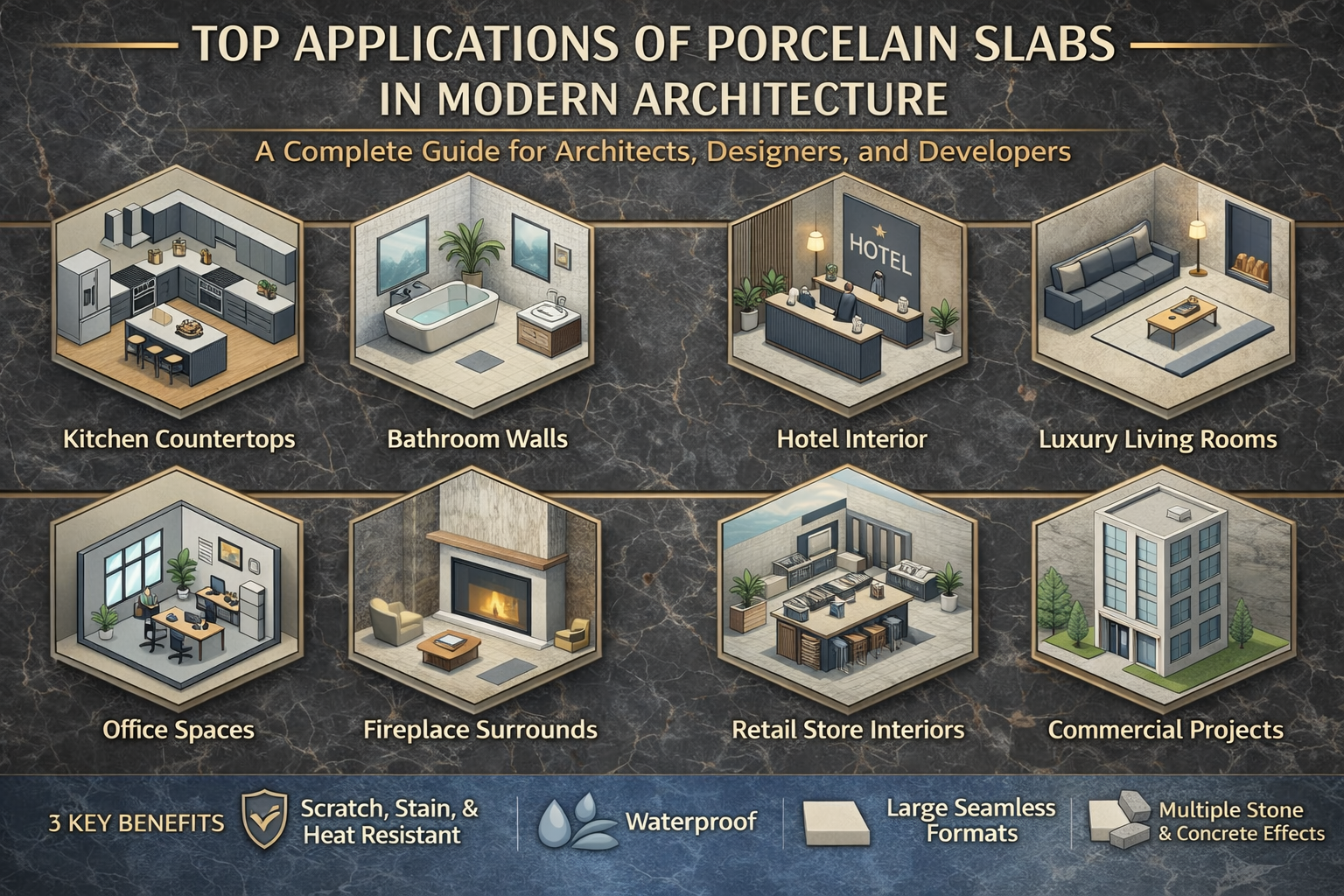
Why Architects Specify Porcelain Slabs
Porcelain slabs are preferred in architectural specification because they deliver:
- Hardness and abrasion resistance rated for commercial environments
- Water absorption below 0.5% for wet and outdoor use
- No sealing requirement — lower maintenance than natural stone
- Large seamless formats that reduce grout lines and simplify cleaning
- Marble, granite, limestone, and concrete effects without the material’s structural limitations
| Application | Key Benefits |
| Kitchen Countertops | Heat resistant, stain resistant, scratch resistant surface that handles daily cooking activities without requiring sealing. |
| Bathroom Walls | Waterproof, mold resistant, and easy to clean surfaces with fewer grout lines when large slabs are used. |
| Living Room Feature Walls | Creates seamless luxury interior design with marble-look finishes and dramatic book-matched patterns. |
| Hotel Interiors | Highly durable surfaces that withstand heavy foot traffic while maintaining a premium aesthetic. |
| Office Spaces | Modern professional appearance with large seamless panels that require minimal maintenance. |
| Retail Store Interiors | Abrasion resistant material that maintains its finish even under high customer foot traffic. |
| Fireplace Surrounds | Heat resistant material suitable for fireplace walls and hearth surrounds without cracking or discoloration. |
| Outdoor Kitchens & Facades | UV stable, weather resistant, and frost resistant surfaces suitable for exterior architectural applications. |
| Building Facades | Lightweight cladding panels that resist UV, freeze-thaw cycles, and pollution while maintaining visual precision. |
| Commercial Projects | Scalable surface solutions for airports, hospitals, and retail complexes with consistent finish across large areas. |
Introduction
Modern architecture demands materials that hold up under pressure — literally and aesthetically. Porcelain slabs have moved from niche specification to standard practice across residential, hospitality, and commercial construction, and for clear reasons: they combine structural density, near-zero water absorption, and design range that few other surface materials can match.
Manufactured by firing refined clay and mineral compounds at temperatures exceeding 1,200°C, porcelain develops a vitrified matrix that is resistant to stains, heat, chemicals, and abrasion. The Tile Council of North America (TCNA) classifies porcelain tile by its water absorption rate below 0.5% — a threshold that makes it suitable for wet, outdoor, and heavy-use environments where softer stones or natural surfaces deteriorate quickly.
This guide covers the eight most specified porcelain slab applications in modern architecture, the performance properties that drive those specifications, and answers to the questions architects, project managers, and interior designers ask most often before committing to this material.
Why Porcelain Slabs Are Specified in Architecture
Before examining specific applications, it helps to understand the four properties that make porcelain slabs a recurring choice across project types.
1. Exceptional Durability
Porcelain slabs score 7 or higher on the mohs hardness scale. That translates to surfaces that resist scratches from daily use, wheeled furniture, and cleaning equipment without losing their finish — a key consideration for floors, countertops, and reception desks in high-traffic buildings.
2. Low Water Absorption
Water absorption below 0.5% means porcelain does not absorb moisture, cleaning chemicals, or food acids. This prevents the staining, cracking, and bacterial growth that plague porous natural stones in wet environments. Bathrooms, outdoor surfaces, and food preparation areas all benefit from this directly.
3. Large Seamless Formats
Contemporary porcelain manufacturing produces slabs up to 3,200 × 1,600 mm and beyond. Fewer joints means fewer grout lines to clean, simpler fabrication, and a visual continuity that smaller tiles cannot achieve — particularly on feature walls, kitchen islands, and facade panels.
4. Design Versatility
Digital printing technology allows porcelain slabs to replicate the appearance of:
- Marble and travertine
- Granite and quartzite
- Limestone and sandstone
- Concrete and metal
The result is a material that delivers luxury visual quality while outperforming natural stone on durability and maintenance. Cerame-Unie, the European ceramic industry body, highlights the long service life and low lifecycle maintenance cost of ceramic products in construction as primary drivers of specification growth.
1. Porcelain Slabs for Kitchen Countertops
Kitchens place hard demands on surface materials: direct contact with heat, acidic foods, cutting pressure, and daily cleaning chemicals. Porcelain slab countertops handle all of this without the need for periodic sealing that natural marble and granite require.
Common kitchen applications include:
- Kitchen countertops and prep surfaces
- Kitchen islands
- Backsplash panels behind hobs and sinks
- Integrated full-height kitchen wall panels
Because slabs run from worktop to ceiling in a single sheet, fabricators eliminate the horizontal grout joint that collects grease in traditional tile layouts. This makes porcelain countertops a hygiene-driven choice in professional kitchens as well as residential projects.
In high-end residential design, marble-look porcelain slabs — particularly Calcutta and Statuaries effects — are specified where clients want the visual richness of natural stone without the staining risk near sinks and hobs.
2. Porcelain Slabs for Bathroom Walls
Bathrooms are the most moisture-intensive room in any building. Water from showers, baths, and steam accumulates on every surface. Materials that absorb moisture — and the cleaning products used to maintain them — eventually crack, discolor, or harbor mould.
Porcelain slabs are specified in bathrooms for:
- Full-height shower enclosures
- Vanity and sink backsplashes
- Bath surrounds and wet room walls
- Spa and wellness area surfaces
The shift from small tiles to large-format porcelain panels is particularly visible in luxury bathroom design. A single slab running floor to ceiling removes the visual noise of multiple grout lines, creates an impression of greater space, and is significantly faster to clean.
Hotel bathroom specifications frequently call for book-matched porcelain slabs — two mirrored slabs placed side by side to create a symmetrical stone effect — which is impossible to achieve with natural stone at scale without significant cost and quarry waste.
3. Porcelain Slabs for Living Room Feature Walls
Feature walls in residential interiors create a primary visual anchor in the room. Porcelain slabs offer an alternative to wallpaper, timber paneling, and natural stone that is durable, stain resistant, and maintenance-free
Residential living room applications include:
- TV backdrop walls behind media units
- Fireplace feature walls and hearth surrounds
- Staircase wall cladding
- Entrance lobby feature panels
Book-matched marble-effect porcelain slabs produce the dramatic, symmetrical vein patterns that define luxury residential interiors — at a fraction of the cost and weight of natural marble panels. Large formats reduce the number of panels needed, which means fewer visible joints and a cleaner presentation on walls exceeding 3m in height.
4. Porcelain Slabs for Hotel Interior Design
Hospitality architecture places premium value on visual impact at entry, long service life, and resistance to the daily wear of hundreds of guests. Porcelain slabs address all three requirements.
Hotel specification areas include:
- Lobby and reception flooring
- Reception desk cladding and tops
- Guest room bathroom walls and floors
- Restaurant and bar surfaces
- Spa wet areas
Hotel operators value materials that retain their appearance across cleaning cycles. Unlike natural marble, which requires quarterly sealing and shows etching from acidic cleaning products, porcelain does not etch, does not require sealing, and holds its surface finish through years of commercial cleaning schedules.
The ability to specify the same slab design across lobby flooring, reception surfaces, and bathroom walls gives hospitality interiors a cohesive visual language that is difficult to achieve with a mix of material types.
5. Porcelain Slabs for Office Spaces
Corporate fit-outs are evaluated on first impression, material longevity, and ongoing maintenance cost. Porcelain slabs for offices address all three by combining a premium finish with a surface that requires only routine cleaning to maintain.
Office application areas:
- Main reception and lobby walls
- Conference room feature panels
- Executive bathroom surfaces
- Breakout area flooring and kitchen surfaces
The clean geometry of large-format porcelain panels complements the open-plan, glass-partition office aesthetic that dominates contemporary corporate architecture. Minimal grout lines and monolithic surface runs reinforce the precision that high-end workplace design demands.
6. Porcelain Slabs for Retail Store Interiors
A retail interior functions as a brand environment. Every surface communicates quality and intention. Luxury retail brands — jewellery, fashion, and premium homewards — consistently specify marble-effect porcelain for floors and wall panels because the material holds its appearance under heavy footfall without the vulnerability to scratching that natural stone carries.
Retail applications include:
- Showroom and boutique flooring
- Feature wall panels and product display backgrounds
- Service counter and cashier desk surfaces
- Window display base and platform surfaces
High-traffic ground floors in retail see thousands of footfall contacts per day. Porcelain’s abrasion resistance means the flooring finish that launches a store on opening day is the same finish customers encounter three years later.
7. Porcelain Slabs for Fireplace Surrounds
Fireplaces are the most visible feature in a living room. The surround material sets the tone for the entire space. Porcelain slabs for fireplace surrounds offer heat resistance, structural stability at thin thicknesses, and a design range that spans rustic stone effects to polished marble.
Fireplace application details:
- Full fireplace wall cladding from floor to ceiling
- Hearth platforms and floor surrounds
- Fireplace breast and over mantel panels
A single large-format slab used as a full fireplace wall — running from the hearth to the ceiling — has become a standard feature in contemporary residential interiors and high-end show homes. The absence of joints creates a visual drama that paneled or tiled finishes cannot match.
8. Porcelain Slabs for Outdoor Kitchens and Exterior Surfaces
Exterior applications test surface materials harder than any indoor environment. Materials must hold up to UV exposure, frost cycles, rain, and direct sunlight without fading, cracking, or becoming slippery. Frost-resistant porcelain slabs are manufactured specifically for outdoor use.
Outdoor porcelain slab applications include:
- Outdoor kitchen countertops and barbecue surrounds
- Terrace and patio floor tiles
- Exterior facade cladding panels
- Garden furniture and feature surface tops
The frost resistance and UV stability of technical porcelain slabs means colour and texture hold across seasonal temperature swings. Exterior facades clad in porcelain panels are also faster to clean than brick or render, which reduces maintenance cost over the building’s life.
9 Porcelain Slabs in Commercial Projects
Commercial spaces require materials that maintain their appearance under constant public use. Porcelain slabs are widely used in commercial architecture because they offer high abrasion resistance, durability, and easy maintenance.
Typical commercial applications include:
- Shopping mall floors and wall panels
- Corporate lobby feature walls
- Restaurant and hospitality interiors
- Public washrooms and service areas
Their non-porous surface allows for fast cleaning and long-term durability, making them a practical choice for high-traffic commercial environments.
10 Porcelain Slabs for Outdoor Kitchens
Outdoor kitchens demand materials that withstand heat, sunlight, and changing weather conditions. Porcelain slabs perform well outdoors due to their UV stability, frost resistance, and low water absorption.
Common outdoor kitchen uses include:
- Outdoor countertops and prep surfaces
- Barbecue surrounds
- Outdoor dining table tops
- Exterior backsplash panels
Because porcelain is non-porous and stain resistant, it maintains its appearance while remaining easy to clean in outdoor cooking environments.
Conclusion
Porcelain slabs appear across the full spectrum of architectural work — residential kitchens and bathrooms, hotel lobbies, office receptions, retail floors, fireplace walls, and exterior facades — because they solve the core problem every surface specification faces: combining visual quality with long-term performance at manageable cost.
Where natural stone delivers aesthetics but imposes maintenance, and where engineered stone offers durability but limited format size, large-format porcelain slabs occupy the intersection: surfaces that look premium, perform reliably, and require minimal intervention to maintain over the building’s life.
For architects, interior designers, and developers specifying surface materials for new builds, hospitality fit-outs, or residential renovations, the range of available porcelain slab designs from Legato Porcelano spans stone effects, concrete finishes, and full-polish marble looks — all manufactured to the dimensional tolerances and performance standards that contemporary construction demands.
Frequently Asked Questions (FAQ’s)
What are porcelain slabs used for in modern architecture?
Porcelain slabs are widely used for kitchen countertops, bathroom walls, feature walls, flooring, building facades, and commercial interiors because of their durability, large format size, and minimal grout lines.
Why do architects prefer porcelain slabs for modern buildings?
Architects prefer porcelain slabs because they offer high durability, stain resistance, low water absorption, and realistic stone finishes while providing large seamless surfaces suitable for contemporary architectural designs.
Are porcelain slabs suitable for kitchen countertops?
Yes, porcelain slabs are ideal for kitchen countertops because they are heat resistant, scratch resistant, and non-porous, making them hygienic and easy to maintain in both residential and commercial kitchens.
Can porcelain slabs be used for exterior building facades?
Yes, porcelain slabs are suitable for exterior facades because they are UV resistant, weather resistant, and highly durable, making them a reliable cladding material for modern architectural projects.
Are porcelain slabs better than natural stone for interiors?
Porcelain slabs often outperform natural stone because they require no sealing, resist stains and scratches, and provide consistent patterns while maintaining the appearance of marble, granite, or other natural materials.
Do porcelain slabs require special maintenance?
No, porcelain slabs require minimal maintenance. Their non-porous surface prevents stains and moisture absorption, allowing easy cleaning with mild detergent and water without the need for sealing.